Why Do Dog Beds Flatten? Science + Fixes
Table of Contents
- Why Do Dog Beds Flatten? The Simple Physics of Foam Failure
- Why Cheap Polyester Fill Loses Loft in Weeks
- The Hidden Culprits: Moisture, Heat, and Your Dog's Weight
- Signs a Dog Bed Needs Replacing (And Why It Matters for Joint Health)
- The Real Benefits of Orthopedic Memory Foam for Dogs
- How to Choose Durable Dog Beds for Chewers and Heavy Sleepers
- Can You Restore a Flattened Bed? Maintenance Tips That Work
- Conclusion: Invest in the Base, Not Just the Cover
- Frequently Asked Questions
Last Updated: September 7, 2026
Why Do Dog Beds Flatten? The Simple Physics of Foam Failure
Every dog owner has watched it happen: you buy a plush, inviting bed, and within weeks it resembles a pancake. Your dog still sleeps on it, but the cushioning that once supported their joints is gone. Understanding why do dog beds flatten quickly starts with one concept: the material inside isn't just "worn out," it has undergone a physical change called compression set.
Compression set is the permanent deformation of foam when it cannot recover its original shape after pressure is removed. When a dog weighing 50 pounds or more sleeps in the same spot for eight hours nightly, the foam cells are crushed beyond their elastic limit. The difference between a bed that lasts years and one that lasts weeks almost always comes down to density and foam type.

Compression Set: When Foam Loses Its Spring
Compression set is the technical term for foam that has permanently lost its loft. Low-density polyurethane foam, often found in budget beds, has large air pockets with thin cell walls. Under repeated weight, those walls collapse and cannot rebound, leaving a permanent dent that deepens with each use.
Fiberfill vs. High-Density Foam: A Structural Comparison
Fiberfill, the fluffy polyester stuffing in many soft beds, behaves differently. It is a mass of loose fibers that slide against each other, matting down and clumping over time. High-density foam, by contrast, uses a closed-cell structure that resists compression and maintains its shape far longer.
Why Cheap Polyester Fill Loses Loft in Weeks
Cheap polyester fill is the most common culprit behind dog beds flatten quickly. These fibers lack the resilience of higher-quality materials and are prone to material fatigue, a process where repeated bending and crushing breaks down the fiber structure itself.
The economics of cheap beds explain why. Manufacturers use the lightest, lowest-cost fill possible to hit a price point. A bed that costs $40 might contain less than a pound of loose fiberfill. When your dog's weight distributes across that thin layer, the fibers compress against the floor with no supportive base beneath them. The bed isn't failing because your dog is heavy; it is failing because the construction was never designed to hold up.
The Hidden Culprits: Moisture, Heat, and Your Dog's Weight
Moisture is the silent killer of dog bed foam. Dogs lose heat through their paws and panting, and that moisture seeps into the bedding materials overnight. Over time, moisture absorption breaks down the cellular structure, accelerating foam degradation and compression set.
Body heat compounds the problem. Warmth softens polyurethane foam, making it more susceptible to permanent deformation under weight. This is why the center of the bed, where your dog curls up, flattens first. Weight distribution matters too. A 70-pound dog concentrates most of its mass on a small surface area, creating pressure far exceeding what the foam was rated to handle.
The Overlooked Role of Floor Surface and Ambient Humidity
The environment around the bed is just as critical. On a hardwood or tile floor, a bed's base is exposed to cooler, denser air that can trap condensation underneath, especially in basements or rooms with poor airflow, creating a microclimate of dampness that wicks upward into the foam core. On carpet, the bed has some insulation, but carpet can harbor dust mites and allergens that can affect the cover fabric's integrity over time.
Ambient humidity is another factor. In regions with high average relative humidity, think the Southeast or Gulf Coast, foam absorbs more moisture from the air alone, even without a dog in the bed. Ambient humidity is another factor. In regions with high average relative humidity, think the Southeast or Gulf Coast, foam absorbs more moisture from the air alone, even without a dog in the bed. This is why a bed in a humid, non-air-conditioned room will flatten faster than the same bed in a dry, climate-controlled home.
The Pressure Map: Why Your Dog's Sleeping Position Matters
Weight alone isn't the full story; it's weight concentrated on specific points. A dog that sleeps curled in a ball places all its mass on a small footprint, often the hips and shoulders. This creates localized pressure that can exceed 5 pounds per square inch (psi) on the foam. For comparison, a 150-pound human lying flat distributes roughly 0.5 psi. That concentrated pressure crushes the foam cells in that specific zone, which is why you often see a single deep indentation rather than an even sag.
Dogs that stretch out on their side spread their weight more evenly, but they also cover more surface area, which can accelerate wear across the entire bed. The fix isn't just a denser foam; it's a foam with a higher Indentation Load Deflection (ILD) rating, which measures how much force is needed to compress the foam by 25%. A bed with an ILD of 30-35 is ideal for most medium to large dogs because it resists that concentrated psi without feeling like a rock.
Why Your Dog's Age and Health Change the Equation
A young, healthy dog may not flatten a bed as quickly because it shifts positions more during sleep. Older dogs, especially those with arthritis or hip dysplasia, tend to stay in one position for longer periods to avoid joint pain. This extended, static pressure is far more damaging to foam than the intermittent pressure of a restless sleeper, making a strong argument for upgrading to a higher-density foam bed before your dog shows signs of discomfort, not after.
Signs a Dog Bed Needs Replacing (And Why It Matters for Joint Health)
Signs a dog bed needs replacing include visible sagging, a permanent indentation in the center, and your dog choosing to sleep on the floor instead. When the bed no longer provides cushioning, your dog's joints rest directly against the floor, aggravating joint health issues, especially in aging dogs.
Orthopedic support is not a luxury feature; it is a functional requirement for dogs with arthritis or hip dysplasia. A flattened bed offers no pressure point relief, forcing your dog's hips and elbows to bear the full weight. If you can press your hand into the bed and feel the floor beneath, the bed has failed its purpose.
The Real Benefits of Orthopedic Memory Foam for Dogs
Orthopedic memory foam for dogs works by distributing weight evenly across the sleeping surface, reducing pressure on sensitive joints. High-density memory foam, typically rated at 4 to 5 pounds per cubic foot, conforms to your dog's body while maintaining structural integrity underneath.
The key is density. High-density foam resists compression set because its cell walls are thicker and more numerous. This is why a quality orthopedic bed costs more: the raw material itself is significantly more expensive than low-grade foam or polyester fill. Memory foam also offers thermal regulation benefits, as open-cell formulations allow better airflow than traditional foam.

How to Choose Durable Dog Beds for Chewers and Heavy Sleepers
Choosing durable dog beds for chewers requires evaluating the entire construction, not just the cushion. The cover fabric must resist claws and teeth, but the internal structure determines longevity. A bed with a removable, washable cover protects the foam core, but the core itself must be dense enough to survive daily use.
Weight-to-density ratio is the metric most guides ignore. A 60-pound dog needs a bed with a substantial foam core, not a thin cushion over a wooden base. For dogs that dig or circle excessively before lying down, look for reinforced seams and a waterproof barrier to protect the foam from both moisture and accidents.
| Dog Weight | Minimum Foam Density | Recommended Bed Style | Key Feature |
|---|---|---|---|
| Under 20 lbs | 2.0 lb/cubic ft | Round or bolster | Easy entry, cozy walls |
| 20-50 lbs | 3.0 lb/cubic ft | Rectangular lounge | Balance of support and space |
| 50-80 lbs | 4.0 lb/cubic ft | Orthopedic flat | Pressure relief for joints |
| Over 80 lbs | 5.0 lb/cubic ft | High-density orthopedic | Maximum structural support |
Can You Restore a Flattened Bed? Maintenance Tips That Work
Restoring a flattened dog bed is possible only if the foam has not reached full compression set. If the foam has a permanent dent that doesn't bounce back after 24 hours of no weight, it's likely beyond saving. But if the bed is just tired, not dead, these restoration techniques can extend its life by months.
The Heat and Steam Method for Memory Foam
Memory foam responds to heat. The viscoelastic properties that make it conform to your dog's body also make it pliable when warmed. Start by removing the cover and placing the foam in direct sunlight for 2-3 hours; the UV light helps kill bacteria, and the warmth helps the foam cells expand. For a deeper restoration, use a handheld garment steamer held 6-8 inches away, passing it slowly over the flattened areas. Do not soak the foam, excess water will damage it. After steaming, let the foam air dry completely for 24-48 hours in a well-ventilated room.
The Tennis Ball Dryer Trick for Fiberfill
For fiberfill beds, the best maintenance is regular fluffing. Put the bed in a dryer on an air-only cycle with a couple of tennis balls, which act as agitators to separate matted fibers and restore air pockets. Run the dryer for 20-30 minutes, checking periodically to ensure the fill isn't bunching. If the bed is too large for a home dryer, use a clean, dry pillowcase and a hair dryer on a cool setting, manually working the fibers with your hands.
The Rotation and Flipping Protocol
Foam beds need rotation, not just flipping. Most dog beds have a single-sided design, so flipping isn't an option. Instead, rotate the bed 180 degrees every two weeks to shift pressure points and even out wear. If your dog has a favorite corner, rotate weekly. Mark the underside with a permanent marker to track which end is which.
The Waterproof Barrier: Your First Line of Defense
The single most effective maintenance step is preventing moisture from reaching the foam in the first place. A waterproof liner is a necessity, not an option. Look for a liner made of polyurethane laminate (PUL) or a breathable waterproof membrane, which block liquid while allowing air circulation. If your bed doesn't have a built-in liner, purchase a separate waterproof mattress protector designed for dog beds; they cost $15-$30 and can double the lifespan of a $100+ foam bed.
When Restoration Fails: The Insert Replacement Option
If the foam core is beyond saving but the cover is still in good condition, consider replacing just the insert. If the foam core is beyond saving but the cover is still in good condition, consider replacing just the insert. Measure the original insert dimensions and order a high-density foam replacement. This gives you a like-new bed for a fraction of the cost of a full replacement.

The Maintenance Schedule That Works
Here's a practical schedule to keep any bed in top shape:
| Frequency | Action | Purpose |
|---|---|---|
| Weekly | Vacuum the cover and spot-clean stains | Removes dirt and dander that break down fabric fibers |
| Bi-weekly | Rotate the bed 180 degrees | Distributes wear evenly across the foam |
| Monthly | Air out the foam core in a dry, shaded area | Releases trapped moisture and odors |
| Quarterly | Machine-wash the cover (if removable) | Removes deep-set oils and allergens |
| Annually | Deep-restore with steam or replace the insert | Reinvigorates foam cells or refreshes the support layer |
Conclusion: Invest in the Base, Not Just the Cover
The reason dog beds flatten quickly is rarely a mystery: low-density materials, moisture exposure, and insufficient structural support. The fix is to prioritize the internal construction over the exterior aesthetics. A beautiful cover over cheap fill will disappoint within months.
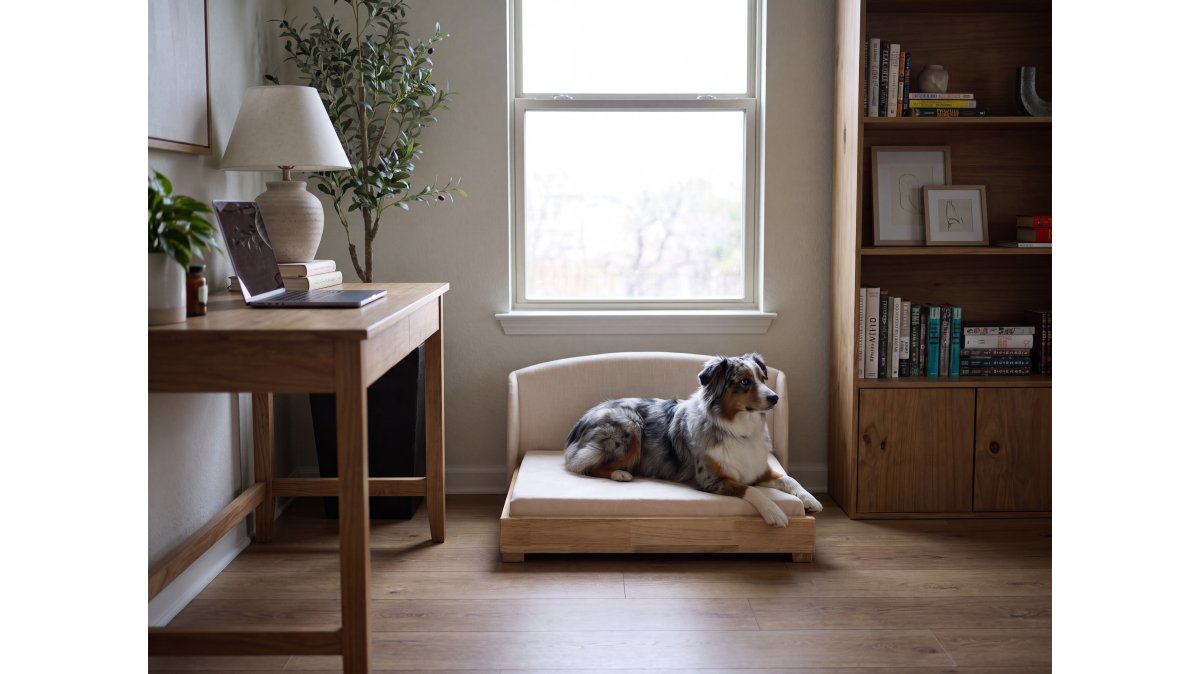
This is why Mafé Pets builds beds around a high-density foam core and orthopedic memory foam, protected by a waterproof liner and a machine-washable cover. The solid North American hardwood frame on our Haven model provides a supportive base that prevents the mattress from sagging against the floor, backed by a ten-year structural warranty. When you invest in the base, you buy a bed that holds its shape for years, not weeks. Shop the Haven and give your dog the support they deserve.
Frequently Asked Questions
Does the density of foam affect how quickly a dog bed flattens?
Yes, density is the single most important factor. Low-density foam, often found in budget beds, has larger air pockets that collapse under pressure and cannot rebound. This leads to a compression set, where the foam permanently stays flattened. High-density foam, typically measured in pounds per cubic foot, has tighter cell structure that resists this permanent deformation. For example, a high-density foam core will hold its shape for years, while a low-density poly-fill bed can flatten within weeks of regular use by a medium-sized dog.
How can you tell if a dog bed is losing its orthopedic support?
Run your hand across the sleeping surface. If you feel a permanent indentation in the shape of your dog, the foam has developed a compression set and is no longer providing proper support. Another test is to place your dog's favorite toy in the center; if the bed does not bounce back after your dog gets up, the material has fatigued. When the base can no longer distribute weight evenly, pressure points develop, which is a primary reason to look for signs a dog bed needs replacing.
What materials are used in long-lasting, furniture-grade dog beds?
Long-lasting beds use a supportive base of high-density foam or orthopedic memory foam, not loose fiberfill. The foam should be encased in a waterproof liner to block moisture and urine from degrading the core. The outer cover should be a durable, tightly woven fabric. For structure, a solid hardwood frame, rather than particleboard, prevents the bed from sagging at the edges. These materials resist compression set and maintain their shape and orthopedic benefits over several years, unlike standard poly-fill options.
Do dogs prefer flat beds or bolstered beds?
Preference varies by breed, age, and personality. Bolstered beds, with raised edges, appeal to dogs that like to rest their heads or feel secure, mimicking the den environment. Flat beds are often preferred by dogs that sleep sprawled out to cool down, or by senior dogs who may struggle to climb over a bolster. For joint health, the flat sleeping surface matters most; it must be supportive regardless of whether it has a bolster. A flat, high-density foam bed often serves senior and active dogs best.