Waterproof Dog Beds for Senior Pets: A 2026 Buying Guide
Table of Contents
- Why Senior Pets Need a Waterproof Orthopedic Bed
- What to Look For in Waterproof Dog Beds for Senior Pets
- The Haven: Furniture-Grade Support for Aging Dogs
- The Modern Day Bed: Low-Profile Comfort for Stiff Joints
- The Circle: A Compact Spot for Small Senior Companions
- Choosing an Orthopedic Dog Bed for Incontinence
- How to Clean Waterproof Dog Bed Covers Properly
- Senior Pet Wellness: When to Upgrade Your Dog's Bed
- Frequently Asked Questions
Last Updated: September 6, 2026
Why Senior Pets Need a Waterproof Orthopedic Bed
As dogs enter their senior years, arthritis, hip dysplasia, and general stiffness make firm, supportive surfaces essential, while age-related incontinence becomes a genuine possibility. A waterproof dog bed for senior pets addresses both realities at once: it provides joint relief while protecting the mattress core from accidents that would ruin an ordinary bed.
At Mafé Pets, we design furniture-grade beds specifically for this stage of a dog's life. A standard bed with a removable cover is not the same as one with a true waterproof lining. Without a moisture barrier, urine and spills soak into the foam, causing odor retention, bacterial growth, and rapid breakdown of the cushioning material. A quality waterproof bed keeps the support structure dry and intact, lasting years longer than conventional alternatives.
Senior pet wellness depends on consistent, high-quality rest, which requires a bed engineered for the specific challenges of aging: pressure point relief, easy entry, and simple hygiene.
Joint Pain, Incontinence, and the Case for Waterproofing
An older dog with arthritis needs high-density memory foam to support the hips and maintain spine alignment. That same dog may develop incontinence from medication, reduced mobility, or age-related muscle weakness. When accidents occur on a non-waterproof bed, the foam absorbs moisture and loses its structural integrity, flattening where support matters most.
What to Look For in Waterproof Dog Beds for Senior Pets
The most critical feature is a true waterproof mattress liner that sits between the foam core and the outer cover. This liner, not the cover itself, protects the support structure from moisture. A removable machine-washable cover adds convenience, but without the liner beneath it, the bed remains vulnerable.
High-density orthopedic memory foam forms the second pillar. Look for foam that offers firmness without hardness, distributing weight evenly to relieve pressure on arthritic joints. The foam should hold its shape over time rather than developing permanent indentations. This supportive cushioning reduces pain signals from pressure points and allows deeper, more restorative sleep for dogs managing arthritis or hip dysplasia.
A non-slip base, breathable fabric, and bolster support round out the essentials. For senior pets with mobility issues, a low-profile design allows stiff joints to step on and off without strain, which is why many owners prefer lounge-style options over high-sided traditional beds.

The Haven: Furniture-Grade Support for Aging Dogs
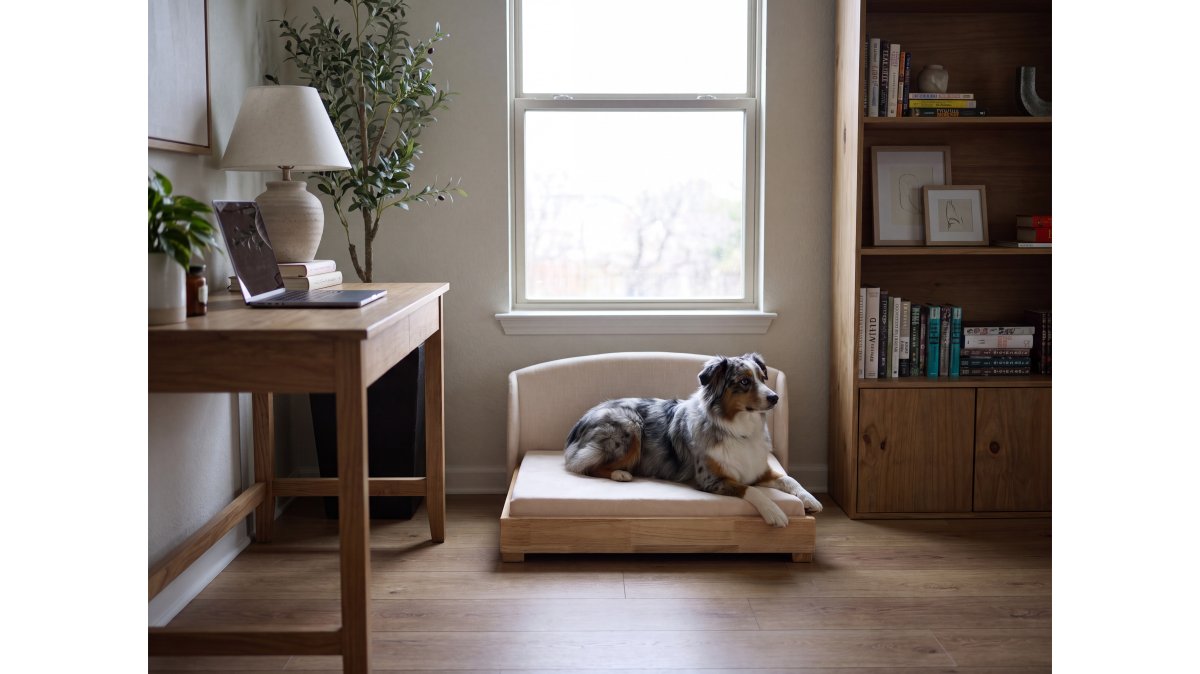
Our top recommendation for senior pets is The Haven, a handcrafted bed combining orthopedic memory foam with a solid North American hardwood frame. Built with real joinery rather than particleboard, it provides a stable, elevated platform that makes getting up and down easier for dogs with stiff joints. The high-density foam mattress relieves pressure on hips and elbows, while the waterproof liner protects the core from accidents.

What sets The Haven apart is its ten-year structural warranty. The Haven is designed to outlast ordinary dog beds by years. The machine-washable cover comes in Cream and Cocoa, and the frame is hand-finished to complement your decor. Priced at $360.00 with free FedEx shipping, it fits dogs up to roughly 55 pounds and represents a durable investment.
The Modern Day Bed: Low-Profile Comfort for Stiff Joints
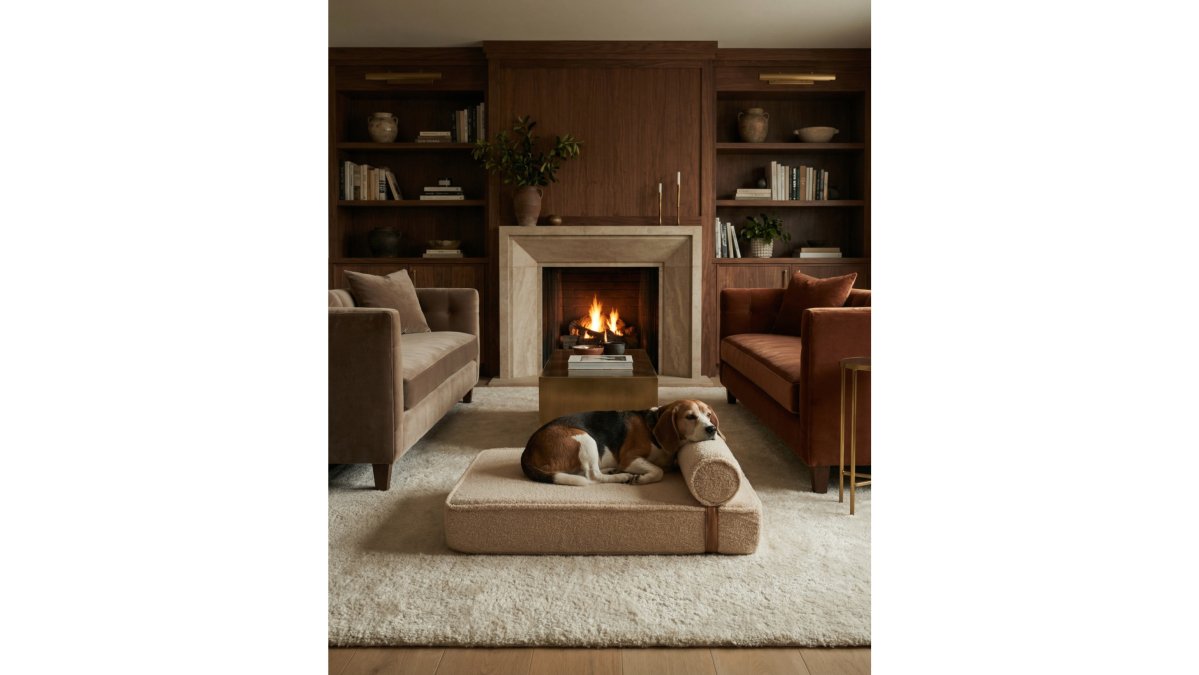
For senior dogs that struggle with climbing onto elevated surfaces, The Modern Day Bed offers a low-profile lounge design that sits closer to the floor. At $175.00, it delivers high-density foam cushioning and a bolster backrest for resting the head. The waterproof mattress liner protects the foam core, and the zip-off cover is fully machine-washable.
The boucle fabric exterior fits naturally into modern interiors, while the low height addresses the difficulty older dogs face stepping up into traditional beds. If your dog hesitates before jumping onto furniture or shows stiffness after rising, a ground-level option removes that barrier entirely. It suits medium breeds and holds its shape well under daily use.
The Circle: A Compact Spot for Small Senior Companions
Smaller senior dogs have the same joint and incontinence needs as larger breeds but require a smaller footprint. The Circle, priced at $125.00, is a sculptural round bed with a high-density foam core, a waterproof lined mattress, and a zip-off machine-washable cover. Its compact silhouette works well where floor space is limited.

The ottoman-style design functions as a comfortable resting spot and as furniture that belongs in the middle of the room. For small breeds with arthritis, the supportive foam core provides the same pressure point relief as larger models, scaled down to size. The waterproof liner ensures accidents do not compromise the foam.
Choosing an Orthopedic Dog Bed for Incontinence
When incontinence is a known issue, an orthopedic dog bed must have three non-negotiable features: a true waterproof liner, a cover that survives repeated washing, and a foam core dense enough to resist moisture damage even if the liner is compromised. Many owners choose a bed based on comfort alone, only to find the support structure deteriorates after the first few accidents.
Prioritize the liner above all else. Test whether it is genuinely waterproof by checking if it is sealed at the seams, not just coated on the surface. Seams are the weakest point in any moisture barrier. Pair this with a durable, easy-clean cover that holds up to frequent washing without pilling.
How to Clean Waterproof Dog Bed Covers Properly
A proper cleaning routine is essential for maintaining your bed. The details matter, especially with a waterproof liner and high-density foam that should never go in the washing machine.
Step-by-Step Cleaning Protocol
Start by unzipping the cover completely and removing it from the foam core. Shake it outdoors to remove loose hair and debris. Check the manufacturer's tag for temperature guidance; most Mafé Pets covers are safe on a gentle cycle with cold or warm water. Hot water can break down the waterproof coating over time, so err on the side of cooler temperatures unless the tag says otherwise.
Use a mild, enzyme-based detergent. Enzymatic cleaners break down urine proteins, the root cause of lingering odors. Standard detergents may leave residue that traps odor molecules. Avoid fabric softeners, bleach, and optical brighteners, all three degrade the waterproof membrane and reduce the cover's lifespan.
Air-dry the cover whenever possible. If using a dryer, set it to low heat and remove the cover while still slightly damp. High heat can warp the waterproof backing and cause it to peel or crack. Never iron or dry-clean the cover, as dry-cleaning chemicals will destroy the moisture barrier.
How to Handle Accidents Between Full Washes
For a fresh accident, act immediately. Blot with a clean, dry towel to absorb moisture, do not rub, as that pushes liquid deeper. Spot-clean with mild detergent and cool water, then blot again. For urine, a 50/50 white vinegar and water solution neutralizes odor; let it sit for five minutes before blotting. Allow the spot to air-dry completely before letting your dog back on the bed.
What to Do When Odors Persist
If a cover still smells after washing, the issue is likely in the foam core. Remove the cover and inspect the foam. If the liner did its job, the foam should be dry and odor-free. If you detect a smell, the liner may have been compromised at a seam. Lightly mist the affected area with water and white vinegar, then allow it to air out in a well-ventilated room for 24 to 48 hours. Do not submerge the foam, it will absorb moisture and lose its structural integrity.
How Often Should You Wash the Cover?
For a senior dog with incontinence, wash the cover at least once a week, even without visible stains. Urine residue accumulates invisibly and breaks down fabric fibers. For dogs without incontinence, a wash every two to four weeks is sufficient. Between washes, vacuum the cover with an upholstery attachment to remove hair and dander.
Extending the Life of the Waterproof Liner
The liner is the most critical component and requires minimal maintenance if handled correctly. When removing the cover, be gentle around the liner's seams, pulling or stretching can create micro-tears that allow moisture through. Inspect the liner monthly for wear, especially at the corners. If you notice a tear, address it immediately with a waterproof repair patch rather than waiting for full failure.
A consistent cleaning routine does more than keep the bed hygienic, it protects your investment. A cover washed correctly maintains its waterproof integrity for years, while a mistreated cover fails within months, exposing the foam to moisture.
Senior Pet Wellness: When to Upgrade Your Dog's Bed
Most owners wait until a bed is visibly flattened or smells before replacing it, but by then, the foam has already lost its supportive properties. Recognizing early signs of failure is essential for senior pet wellness, but so is understanding the true cost of your decision.
The Hidden Cost of Cheap Beds: A Cost-Per-Year Breakdown
The real metric is cost per year of useful life. Over five years, you could spend $250 to $335 on beds that offer diminishing orthopedic support.
A furniture-grade bed like The Haven, priced at $360 with a ten-year structural warranty, costs $36 per year over its guaranteed lifespan, with consistent high-density foam support throughout. The Modern Day Bed at $175 offers high-density foam and a waterproof liner.
The Math on Replacement Intervals
Consider a common pattern: a senior dog develops incontinence at age 10. Over the dog's remaining three to four years, an owner might spend $300 to $400 on replacements. A $360 waterproof bed with a sealed liner would handle accidents without compromising the foam, and it would still be functional after the dog passes, potentially serving a future pet.
Beyond Cost: Functional Signs of Bed Failure
Cost analysis matters, but it should not override functional signals. Upgrade your dog's bed immediately if you observe any of the following:
- Visible flattening: If you can press your hand into the sleeping surface and it does not spring back within a few seconds, the foam has lost its density.
- Persistent odor: If washing the cover no longer eliminates the smell, moisture has likely reached the foam core.
- Your dog sleeps elsewhere: Dogs are pragmatic. If your senior pet chooses the floor or a hard surface over their bed, the bed is no longer providing comfort.
- Difficulty rising: If your dog hesitates before getting up or shows stiffness after resting, the bed may not be offering adequate pressure relief.
- Visible wear on the cover: Rips, thinning fabric, or a peeling waterproof backing indicate the bed is nearing the end of its useful life.
The Investment Mindset
A quality bed is not an expense, it is a healthcare decision. The American Veterinary Medical Association recognizes that consistent, supportive rest is a cornerstone of managing arthritis and joint disease in aging dogs. A bed that maintains its structure for a decade supports mobility, sleep quality, and comfort. When you calculate cost per year, the premium option can be a more economical choice.
When to Make the Switch Immediately
If your dog has recently been diagnosed with incontinence, arthritis, or hip dysplasia, do not wait for the current bed to fail. The moment a non-waterproof bed absorbs an accident, the foam begins to degrade. Switching to a waterproof orthopedic bed at the time of diagnosis protects your dog's joints from the very first accident and prevents the need for a mid-stream replacement. The right time to upgrade is not when the old bed breaks down, it is when your dog's medical needs change.
Frequently Asked Questions
What makes a waterproof dog bed different from a water-resistant one?
A waterproof bed uses a true moisture barrier, usually a liner between the cover and the foam core, that stops liquids from soaking through. Water-resistant fabrics only repel light moisture and will eventually allow urine to penetrate. For senior pets with incontinence, a genuine waterproof liner is essential to protect the foam from odor and bacteria, extending the bed's life and keeping your home hygienic.
Is a waterproof liner enough for a dog with incontinence?
A waterproof liner is the critical first line of defense, but it is not the only factor. You also need a removable, machine-washable cover for easy cleaning, and a high-density foam core that resists odor even if moisture gets through. For heavy incontinence, consider a bed with a liner that is designed to prevent any liquid from reaching the structural core.
How often should I replace my senior dog's orthopedic bed?
A high-quality orthopedic bed with high-density memory foam should last several years, but you should inspect it every six months. Replace it when the foam begins to show a permanent indentation where your dog sleeps, as this means it is no longer providing proper joint support and pressure relief. If the waterproof liner is damaged or the bed develops a persistent odor that cleaning cannot remove, it is time for a new one.
Can memory foam beds be fully waterproof?
Yes, a memory foam bed can be fully waterproof if the foam core is completely encased in a waterproof liner. This is different from a bed that only has a water-resistant cover. In a fully waterproof design, the liner is sealed around the foam, protecting it from accidents, spills, and moisture. This construction is vital for senior pets with incontinence, as it prevents urine from reaching the foam where it would cause odors and degrade the material.