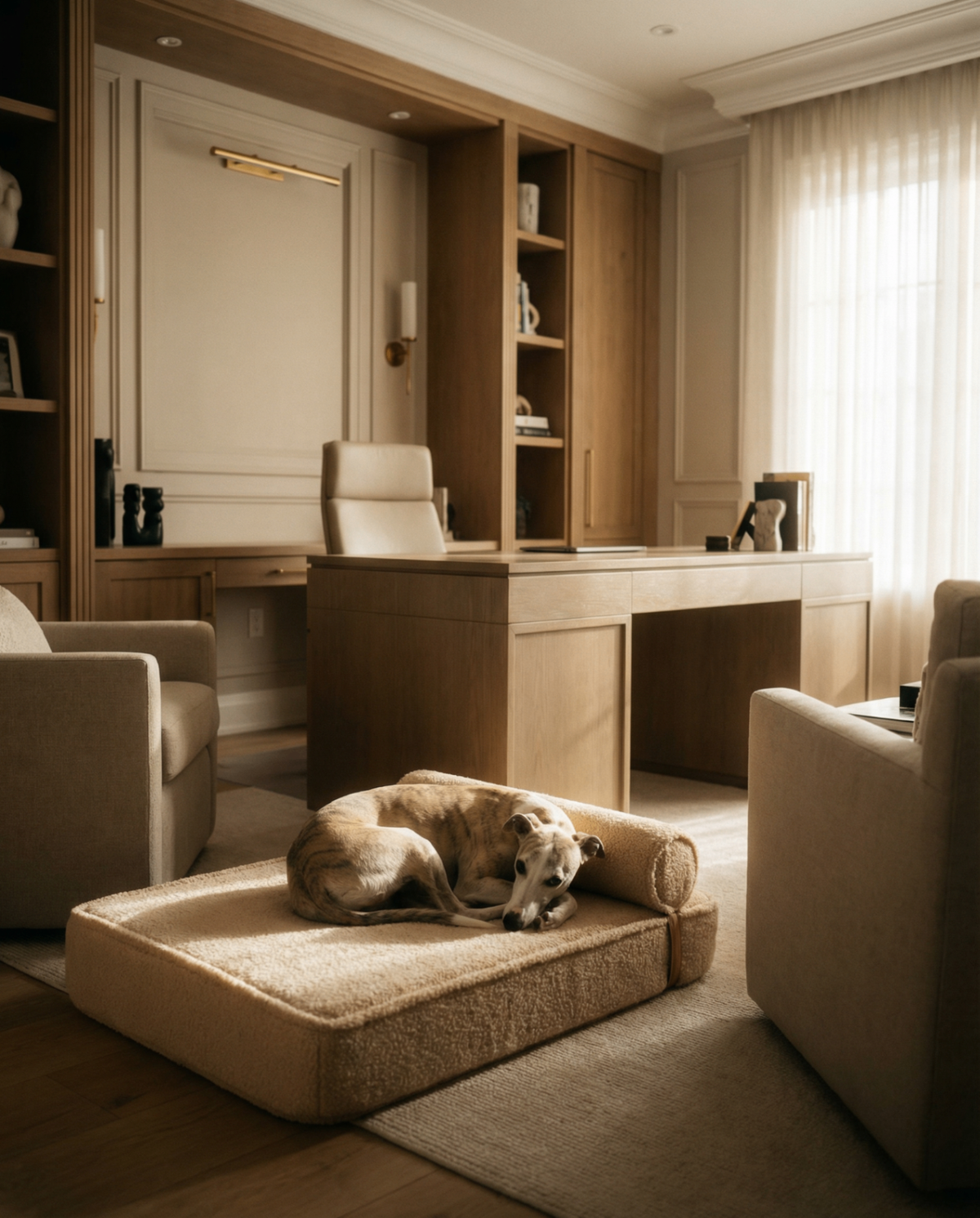
Durable Dog Beds for Chewers and Scratchers
Table of Contents
- What Actually Makes Durable Dog Beds Hold Up to Chewers
- Chew-Resistant Dog Bed Materials That Actually Last
- How to Stop Your Dog from Chewing Their Bed
- Safety, Maintenance, and Repair for Durable Dog Beds
- Orthopedic Support and Non-Toxic Materials: What to Verify
- The Environmental Side of Synthetic Chew-Resistant Fabrics
- Is a Furniture-Grade Dog Bed Worth the Investment?
- Conclusion
Last Updated: August 29, 2026
Most dog owners have bought multiple beds before finding one that survives the week. At Mafé Pets, we hear this constantly: a dog destroys a new bed within days, the owner replaces it with something cheaper, and the cycle repeats. The real problem isn't that durable dog beds don't exist, it's that most buyers don't know what construction details to look for. This guide breaks down exactly what separates a bed that lasts from one that doesn't, covering materials, behavioral triggers, maintenance, and when a furniture-grade investment makes sense.
What Actually Makes Durable Dog Beds Hold Up to Chewers
A chew-proof dog bed works when the fabric, seam construction, and frame function as a system. No single element does the job alone. Durability comes from bite-force resistance, structural integrity, and design that limits access to vulnerable edges.
The most common failure point is the corners and seams. Dogs typically start chewing at an edge, find a loose thread or zipper, and work inward. Beds with reinforced corners, triple-stitched seams, and no exposed zippers survive significantly longer.
Frame vs. Mat Style: Which Survives Longer
Frame-style beds with a raised perimeter, made from powder-coated steel, aircraft-grade aluminum, or solid hardwood, outlast flat mat-style beds for most chewing dogs. The structural frame keeps the sleeping surface taut and limits the dog's ability to get purchase with their teeth.
Mat-style beds give a dog the ability to pick up and carry the entire bed, mouth it, and shake it. For teething puppies or dogs with separation anxiety, this makes a mat an easy target.
A dog that chews the frame itself needs a different solution. Solid hardwood frames resist this better than hollow aluminum tubes, which can be crushed or splintered under persistent bite pressure.
Occasional Chewer vs. Aggressive Chewer: Why the Distinction Matters
Occasional chewers, dogs that mouth or knead their bed as part of nesting behavior, can typically use a reinforced canvas or upholstery-grade fabric bed. The chewing is exploratory rather than destructive.
Aggressive chewers apply sustained bite force with intent to tear. For this group, the minimum viable spec is a fabric with a denier rating above 1,000, triple-stitched seams, and no accessible stuffing. Look for brands that publish fabric denier ratings and offer a genuine chew-proof guarantee or replacement policy.
Chew-Resistant Dog Bed Materials That Actually Last
The right material is the single biggest factor in how long a bed survives. Fabric denier, weave type, and coating determine how well a surface resists puncture, tearing, and sustained abrasion.

Ballistic Nylon and Ripstop Fabrics
Ballistic nylon is a thick, tightly woven synthetic fabric originally developed for military use. Fabrics rated at 1,000 denier or above are the standard for beds marketed to aggressive chewers.
Ripstop fabric uses a reinforced grid weave that prevents small tears from propagating. If a dog's nail or tooth creates a small puncture, the ripstop grid stops the damage from spreading. It's lighter than ballistic nylon, making it more suitable for portable kennel mats and travel beds.
Ballistic nylon is better for stationary beds under sustained chewing pressure, while ripstop is better for lightweight, portable beds.
Reinforced Canvas and Upholstery-Grade Covers
Reinforced canvas works well for occasional chewers and dogs that primarily scratch rather than bite. It's more breathable than ballistic nylon and has a more natural texture. Canvas beds with double or triple-stitched seams and reinforced corners hold up well under normal use.
Upholstery-grade covers are the premium tier for design-conscious homes. These fabrics resist staining and abrasion and outlast standard polyester covers by a significant margin.
According to the American Kennel Club's guide to dog behavior and destructive chewing, fabric texture and scent play a role in whether a dog targets a particular item.
Solid Hardwood Frames vs. Aircraft-Grade Aluminum
Solid hardwood frames offer the best resistance to gnawing behavior. Hardwood is dense enough that most dogs lose interest quickly. Frames built with real joinery, rather than screws into MDF or particle board, also resist racking forces when a large dog shifts weight.
Aircraft-grade aluminum frames are lighter and rust-proof, making them ideal for outdoor use or humid environments. The trade-off is that hollow aluminum profiles can be dented or bent by a very large, persistent chewer.
For indoor use, solid hardwood is the stronger long-term choice.
How to Stop Your Dog from Chewing Their Bed
Chewing behavior is a symptom, not a personality trait. Address the underlying cause and most dogs reduce or stop destructive behavior entirely.
Psychological Triggers: Separation Anxiety, Teething, and Boredom
The three most common triggers for destructive chewing are separation anxiety, teething, and under-stimulation.
Separation anxiety produces chewing as a self-soothing response. Dogs with separation anxiety often target items that carry the owner's scent. As documented in the ASPCA's resources on separation anxiety in dogs, graduated desensitization and counter-conditioning are the most effective approaches.
Teething puppies chew because their gums are uncomfortable. This phase typically runs from three to six months of age. Providing appropriate chew toys, frozen treats, and supervised access to the bed reduces damage significantly.
Boredom and under-stimulation are the most overlooked triggers. A dog that doesn't receive adequate physical and mental exercise will find its own stimulation. Before investing in a more durable bed, increase exercise and enrichment.
Crate Training Integration
Crate training is one of the most effective ways to protect a bed from destructive behavior while addressing the anxiety that drives it. A crate creates a den-like space that many dogs find inherently calming.
Start with a simple kennel mat rather than a premium bed, let the dog establish the crate as a safe space before introducing higher-value bedding. A durable dog bed placed inside a crate also benefits from the physical constraint of the crate walls, which limits the dog's ability to flip or carry the bed.
Safety, Maintenance, and Repair for Durable Dog Beds
Washable Covers and Waterproof Liners
A washable cover is a hygiene requirement. Dog beds accumulate dander, oils, bacteria, and odor at a rate that makes regular washing necessary. The CDC guidance on pet hygiene and household cleanliness recommends regular cleaning of pet bedding as part of standard household hygiene practice.
A waterproof liner protects the foam core from accidents, which is the more critical failure point. Foam that absorbs urine cannot be fully cleaned and retains odor permanently. A waterproof liner between the cover and the foam prevents this entirely.
| Feature | Why It Matters | What to Look For |
|---|---|---|
| Machine-washable cover | Removes allergens, bacteria, and odor | Removable, zipper-free or hidden-zipper design |
| Waterproof liner | Protects foam core from accidents | Fully encased, not just a partial barrier |
| Triple-stitched seams | Prevents seam failure under washing stress | Visible reinforced stitching at corners |
| Dense foam core | Retains shape after repeated washing cycles | High-density rating, not shredded foam fill |
| Non-toxic materials | Safe if dog mouths or chews cover | Certifications or explicit non-toxic labeling |
Patch and Repair Guide for Minor Damage
Minor damage doesn't mean a bed is finished. A small tear in a canvas or nylon cover can be repaired quickly, extending the bed's life significantly.
For ballistic nylon or ripstop fabric, iron-on repair patches designed for outdoor gear work well. Clean the area around the tear, allow it to dry completely, cut the patch at least 2 cm larger than the damage on all sides, and apply heat according to the patch manufacturer's instructions.
For canvas covers, a fabric repair adhesive or a hand-stitched patch using matching canvas fabric is the most reliable fix. Stitch in a tight cross-pattern rather than a simple running stitch to distribute stress across more thread contact points.
Frame damage to solid hardwood can often be sanded and refinished. Structural joint failure requires wood glue and clamping, but is fully repairable in most cases.
Orthopedic Support and Non-Toxic Materials: What to Verify
Orthopedic support benefits any dog that spends significant time lying down. This applies to active adult dogs recovering from exercise, large breeds prone to hip dysplasia, and any dog over five years old.
High-density memory foam is the benchmark for orthopedic support. It conforms to the dog's body, reduces pressure points, and returns to its original shape after use. Shredded foam fill compresses unevenly and loses its supportive properties within months.
When evaluating non-toxic materials, look for beds that explicitly state their foam and fabric components are free from harmful chemicals. Ask the manufacturer directly about foam composition, particularly regarding flame retardants and off-gassing.
Mafé Pets uses high-density orthopedic memory foam in a construction designed to maintain its supportive properties over years of use. The ten-year structural warranty reflects confidence in how that foam and frame hold up together.
The Environmental Side of Synthetic Chew-Resistant Fabrics
Ballistic nylon, ripstop fabric, and most synthetic chew-resistant materials are petroleum-derived and don't biodegrade meaningfully in landfill conditions. This is the honest trade-off of choosing durability over environmental impact.
The counterargument is also worth stating plainly: a bed that lasts ten years has a lower total environmental cost than ten cheap beds that each last a year. The lifecycle calculation favors durability, provided the bed is genuinely built to last.
For owners who prioritize environmental considerations, natural canvas and hemp covers biodegrade and are renewable, though they offer less chew resistance. Some manufacturers now offer recycled nylon options that maintain high denier ratings while using post-consumer material.
The most sustainable choice is the one you don't have to replace.
Is a Furniture-Grade Dog Bed Worth the Investment?
The honest answer is: yes, for most owners who are past the replacement cycle.

A furniture-grade dog bed is built to the same standards as the furniture around it: solid wood construction, real joinery, premium fabric, and a design that doesn't look out of place in a well-considered room. The cost is higher upfront, but the math changes when you factor in replacement frequency.
Most owners who reach out to Mafé Pets have already spent more on a series of cheaper beds than they would have on a single furniture-grade piece. The frustration isn't just financial, it's the time spent, the waste generated, and the fact that their dog still doesn't have a bed that actually works.
The specific features that justify a higher price point are verifiable: solid North American hardwood frame with real joinery, high-density orthopedic memory foam, a waterproof liner, and a machine-washable cover. A ten-year structural warranty is the clearest signal that a manufacturer stands behind the construction.
The aesthetic argument is also legitimate. A bed that blends with your home's design is one you're more likely to keep in a central location, which means your dog uses it consistently rather than defaulting to the sofa.
The hardest part of buying a durable dog bed isn't finding options, it's knowing which construction details actually matter. Mafé Pets builds furniture-grade dog beds from solid North American hardwood and high-density orthopedic memory foam, with a waterproof liner, machine-washable cover, and a ten-year structural warranty that backs every claim made here. If you're ready to stop replacing beds and start investing in one that lasts, shop the Haven and see the construction for yourself.
Frequently Asked Questions
Q: What material is best for a dog bed that won't be destroyed?
A: High-denier ballistic nylon and ripstop fabric are the most tear-resistant textile options for chewers, while reinforced canvas holds up well for dogs that dig and scratch. For the frame, solid hardwood with real joinery outlasts hollow or particleboard alternatives. A waterproof liner underneath the cover adds a second layer of protection if a chewer does manage to breach the outer fabric. The best setups combine a tough cover with a dense foam interior that doesn't compress into nothing after a few months.
Q: What is the difference between a chew-resistant and chew-proof dog bed?
A: Chew-resistant means the materials slow down or discourage chewing, high-denier fabrics, triple-stitched seams, and reinforced corners make destruction harder but not impossible. Chew-proof is a marketing term; no bed is truly indestructible against a determined aggressive chewer with a strong bite force. Some brands back the claim with a replacement policy rather than a material guarantee. If your dog has extreme destructive behavior, address the root cause, anxiety, boredom, or teething, alongside choosing a durable dog bed.
Q: Are orthopedic memory foam beds durable enough for heavy chewers?
A: Dense, high-quality memory foam is actually more resistant to compression and tearing than standard polyester fill, which shreds easily. The foam itself is rarely the first point of failure, the cover fabric is. A durable dog bed that pairs high-density orthopedic memory foam with a puncture-resistant, washable cover gives you both joint support and longevity. This matters beyond senior dogs: active dogs under five years old benefit from proper spinal alignment and pressure relief, especially larger and medium-sized breeds.
Q: How do I stop my dog from scratching and chewing their bed?
A: Destructive chewing usually traces back to separation anxiety, excess energy, or teething in younger dogs. Increasing physical exercise and mental stimulation before crating or leaving the dog alone reduces the urge significantly. Introducing the bed gradually during crate training, rather than leaving the dog unsupervised with it immediately, builds positive association. Bitter-apple spray on fabric edges discourages initial chewing. If the behavior persists despite enrichment, a consultation with a certified applied animal behaviorist is worth pursuing.
This article was written using GrandRanker