Relieve Pressure on Aging Dog Joints with Online Furniture
Table of Contents
- Why Aging Dog Joints Need More Than a Standard Bed
- Orthopedic Dog Bed for Senior Dogs: What to Look For
- Memory Foam Dog Bed for Joint Support: How It Works
- Senior Dog Home Modifications: A Room-by-Room Setup
- Choosing a Dog Bed for Arthritis by Size and Condition
- Preventing Falls and Measuring Comfort Outcomes
- Frequently Asked Questions
Last Updated: October 9, 2026
Why Aging Dog Joints Need More Than a Standard Bed
A standard dog bed does almost nothing for aging dog joints.

This guide from Mafé Pets covers what to look for in an orthopedic dog bed for senior dogs, how memory foam works, and a room-by-room setup you can finish in a weekend.

Joint health in dogs is the ability of cartilage, fluid, and surrounding tissue to cushion movement without pain. As dogs age, that cushioning thins.
The fix is not one product. It is a system: the right bed, the right access, and the right traction.
Orthopedic Dog Bed for Senior Dogs: What to Look For
An orthopedic dog bed for senior dogs needs three things: dense foam that holds its shape, enough thickness to clear the floor, and a cover you can actually wash. Most beds sold as "orthopedic" use low-density fill that flattens under a 50-pound dog. Here is what separates a real one:
- Foam density: High-density foam resists compression. Low-density fill does not.
- Thickness: Thin beds bottom out. Pressure lands straight on hips and elbows.
- Cover: A zip-off, machine-washable cover keeps the foam clean and odor-free.
Foam Density and Thickness That Actually Support Joints
Foam density is the weight of foam per cubic foot, and it decides how long a bed keeps its shape: higher density means more support for longer, while thin, low-density beds feel soft on day one and flat by month six. Thickness matters just as much, a bed needs enough depth to keep a dog's body off the hard floor, because when a bed bottoms out, the floor does the work.
Memory Foam Dog Bed for Joint Support: How It Works
A memory foam dog bed for joint support spreads a dog's weight across the whole sleeping surface instead of loading it onto hips, elbows, and shoulders.
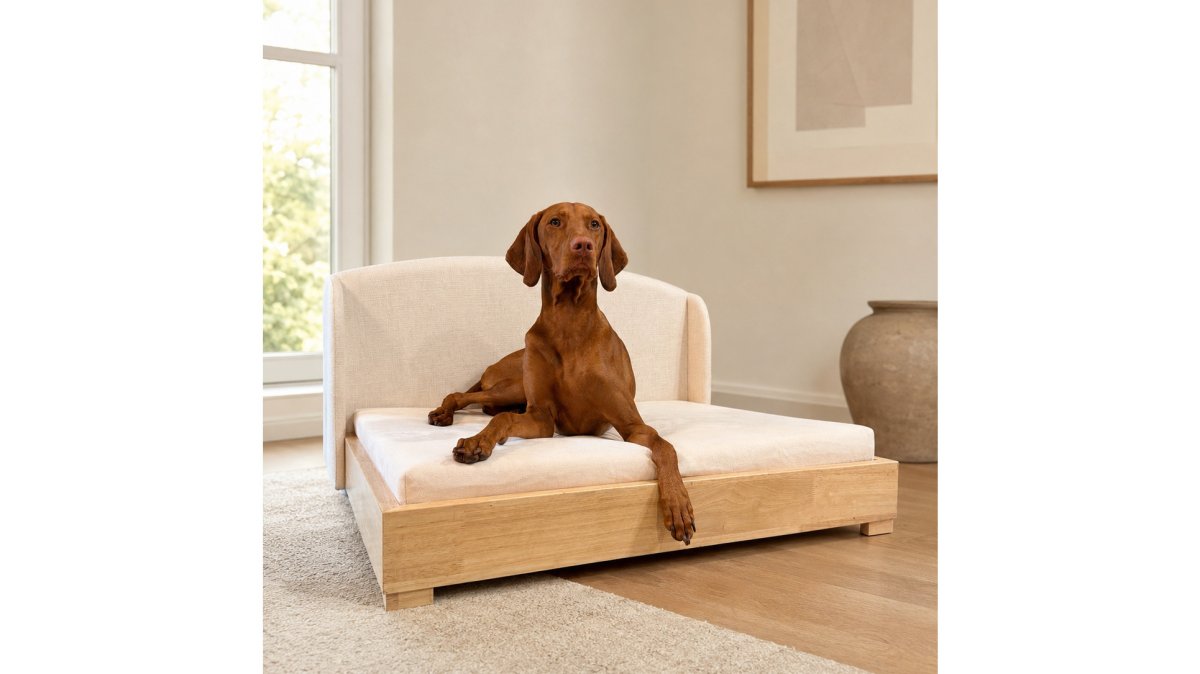
What most guides miss is the base under the foam. A hardwood frame keeps the mattress from sagging into a hammock shape. Sag pulls a dog's spine out of line and undoes the foam's work.
Senior Dog Home Modifications: A Room-by-Room Setup
Senior dog home modifications are small changes that remove the daily jumps, slips, and hard landings that wear down sore joints. You do not need a renovation.
Most guides stop at "add a ramp and a mat." The furniture itself is where the real work happens. A couch, a bed frame, and a chair each have an entry height, a landing zone, and a surface your dog has to push off from.
Step 1: Measure Every Surface Your Dog Uses
Before you buy anything, measure three numbers per piece of furniture:
- Entry height: floor to the top of the seat or mattress. This is the jump your dog is making today.
- Landing depth: how much flat surface your dog has to stand on once they arrive. A narrow cushion edge is a fall waiting to happen.
- Push-off surface: what your dog's paws grip when they rise. Sofa fabric, leather, and low-pile rugs behave very differently.
Owners often measure the jump but not the landing. A dog who can climb onto a low ottoman still needs a wide, flat spot to stand on before they turn around.
Step 2: Set Up the Living Room
Sofa and chairs. The goal is to convert a jump into a walk.
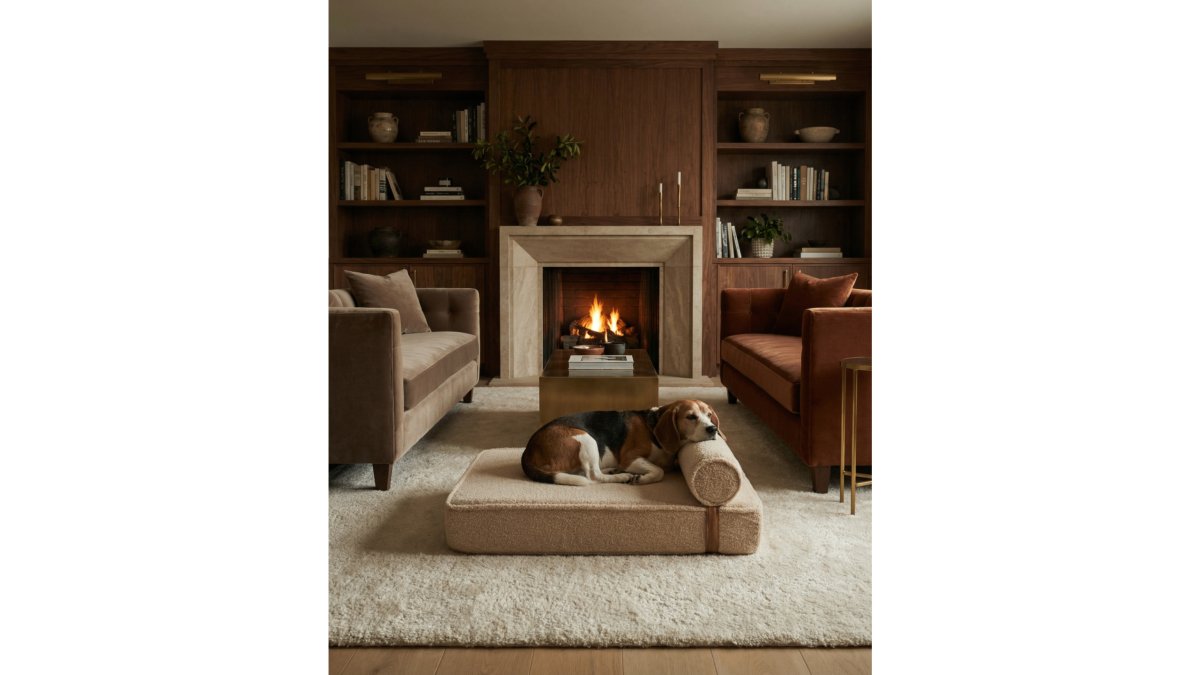
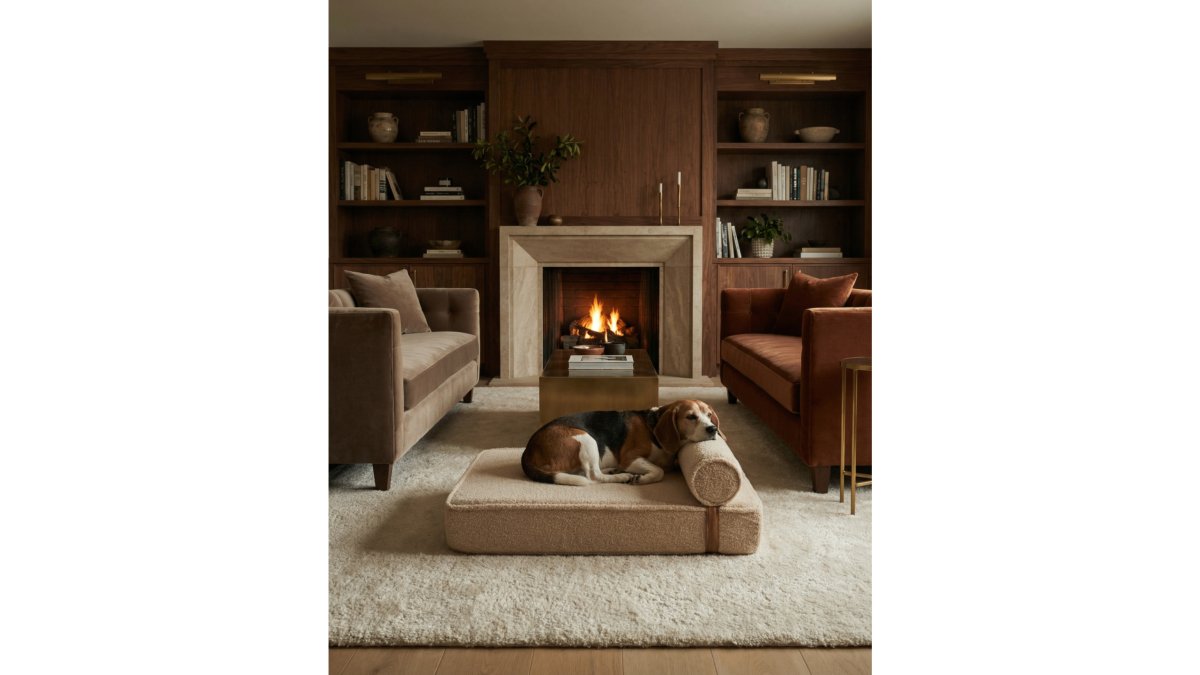
The main bed. Put it where the family gathers, not in a corner, a dog that stays near people moves more, and gentle movement keeps joints from locking up. Set the bed against a wall or furniture so it cannot slide when your dog pushes off it.
Step 3: Set Up the Bedroom
A second bed beside yours stops the nighttime pacing that comes from discomfort, since dogs with sore joints often struggle to settle on a hard floor at 2 a.m.
If your dog sleeps on your bed, the same entry-height math applies. Carpeted pet steps with a wide top platform are safer than a single tall step, because the dog never has to balance on a narrow edge.
Step 4: Set Up the Kitchen, Halls, and Entry
Kitchen and halls. Non-slip mats give traction on tile and hardwood. Slick floors cause splay, and splay strains hips, so run mats along the paths your dog actually uses, from the bed to the food bowl, from the food bowl to the door, not just in one spot.
Entry and stairs. Block or gate the stairs when you are not there to help. If your dog must use them, a carpet runner adds grip on every step, and a gate at the top prevents a tired dog from starting down alone.
The Haven | Solid Hardwood Orthopedic Dog Bed →
- Ramps for furniture and vehicles remove the jump entirely
- Non-slip mats at food bowls, doorways, and beds
- A bed in every room your dog rests in
Step 5: Decide When to Block Furniture Instead of Adapting It
Not every piece of furniture should be made accessible. If your dog has had a fall, wobbles when they stand, or cannot reliably land on a cushion, block access and give them a floor-level bed instead. A supportive bed on the floor beats a risky climb onto the couch every time, the point of a room-by-room setup is comfort, not access for its own sake.
Choosing a Dog Bed for Arthritis by Size and Condition
A dog bed for arthritis should match your dog's size, sleep style, and how far the condition has progressed. The right pick for a 15-pound terrier is not the right pick for a 50-pound retriever with stiff hips.
Use this as a starting point:
| Dog Profile | What Matters Most | Bed Style to Choose |
|---|---|---|
| Small dog, mild stiffness | Easy step-up, washable cover | Low-profile foam cushion |
| Medium dog, daily stiffness | Foam density, waterproof liner | Bolster bed with dense foam |
| Large dog, limited mobility | Thickness, firm frame, low entry | Hardwood-framed orthopedic bed |
| Dog with accidents | Sealed liner, washable cover | Any bed with a zip-off cover |
Size decides the sleep surface. Condition decides the foam and the frame. A dog who struggles to stand needs a bed that is easy to step onto and firm enough to push off from.
Preventing Falls and Measuring Comfort Outcomes
Fall prevention is the part most owners skip, and it protects a dog from a sudden, serious setback, a single bad landing on a slick floor or a missed jump off the couch can undo months of careful management. Furniture is the highest-risk zone in the house for a senior dog, because it combines height, a narrow landing, and a surface that shifts. Walk your home and remove the risks:
- Cover slick floors along your dog's main paths
- Add a ramp or steps to every piece of furniture your dog uses
- Keep the floor clear of toys and cords your dog must step over
Furniture-Specific Fall Prevention
A ramp only helps if it cannot move. Check these before you trust one:
- Stability: Push the ramp sideways with your hand. If it shifts, it needs a non-slip base or a strap to the furniture frame.
- Surface: Carpeted or rubberized beats smooth plastic. Paws need something to grip on the way up and on the way down.
- Side rails: Raised edges stop a paw from slipping off the side.
For beds and sofas, the edge is the danger. A dog who hangs a hip over the side is one shift away from a fall. Push the bed against a wall, and choose furniture with a firm edge rather than a soft, collapsing one.
A Simple Way to Track Whether It Is Working
You do not need a spreadsheet. Pick a fixed time each week, say Sunday morning, and score three things on a 1-to-5 scale, where 1 is "struggles" and 5 is "easy."
- Getting up: Is it faster and smoother than a month ago?
- Settling: Does your dog lie down without circling and readjusting?
- Sleep: Are the nights quieter, with less pacing?
Write the three numbers down. A single good day means little; a trend over three or four weeks tells you whether your setup is working. If the numbers are flat or falling, revisit the bed first, support is usually the missing piece, then the access route, then the traction.
When to Call Your Veterinarian
Home changes support comfort; they do not treat disease. Contact your veterinarian if you see:
- A sudden change in mobility rather than a gradual one
- Crying, panting, or restlessness at night that does not improve
- A refusal to rise, or a leg that drags or gives way
- A fall, a yelp, or a visible limp that lasts more than a day or two
For dogs carrying extra weight, talk with your veterinarian. The Association for Pet Obesity Prevention explains how excess weight adds load to already sore joints, and how steady weight loss eases that pressure. The Merck Veterinary Manual's overview of degenerative joint disease in dogs covers how joint changes progress and why comfort care matters at every stage. Pair any home changes with your vet's advice on low-impact exercise and joint supplements.
Environmental support, the right bed, safe access, and good traction, relieves pressure on aging joints, but it is not a substitute for veterinary care. Use your weekly scores to spot trends, and let your veterinarian handle diagnosis, pain management, and any supplement or medication decisions.
Frequently Asked Questions
Do orthopedic dog beds help relieve pressure on a dog's joints?
Yes. High-density memory foam spreads a dog's weight across the sleeping surface instead of concentrating it on hips, elbows, and shoulders. For aging dog joints, this reduces the pressure points that cause stiffness after rest. The key is foam density: low-density fill compresses flat within months, while high-density orthopedic foam holds its shape and keeps supporting joints over years of daily use.
What type of dog bed is best for an older dog with joint pain?
Look for a bed with high-density orthopedic memory foam, a waterproof liner, and a machine-washable cover. A bolster backrest gives senior dogs something to lean against when getting up, which takes strain off the hips. For dogs up to 55 lb, a bed like the Haven combines solid hardwood construction with orthopedic foam and a ten-year frame guarantee, so it outlasts the replace-every-year cycle of standard beds.
How can I make my home more comfortable for a dog with arthritis?
Start with the floor: non-slip mats or runners on hard surfaces give aging dog joints better traction and reduce slipping. Add a ramp to any furniture your dog still jumps onto, and place a supportive bed in every room where your dog rests. Keep food and water bowls elevated slightly to reduce neck and shoulder strain. These senior dog home modifications are inexpensive and make a daily difference.
When should I take my dog to the veterinarian for joint pain?
See a veterinarian when you notice persistent stiffness, reluctance to climb stairs, limping, or a drop in activity that lasts more than a few days. These signs can point to osteoarthritis or another condition that needs diagnosis. A vet can recommend weight management, low-impact exercise, joint supplements, or anti-inflammatory support. Furniture and bedding changes help manage comfort at home, but they work alongside veterinary care, not instead of it.
Aging joints change how your dog moves through your home, and the furniture around them either helps or hurts. At Mafé Pets, we build beds that hold their shape: solid North American hardwood frames, high-density orthopedic memory foam, a sealed waterproof liner, and a machine-washable cover. Each Haven bed is guaranteed for ten years, so it supports your dog through every stage instead of flattening in a year. Shop the Haven and give your dog a surface that finally takes the pressure off.