Orthopedic Dog Bed Structural Integrity Guide
Table of Contents
- Why Structural Integrity Matters More Than Cushion Thickness
- How to Test Dog Bed Foam Density Before You Buy
- Frame Materials and Joint Support: Does the Base Change Everything?
- Signs of Dog Bed Structural Failure to Watch For
- Best Orthopedic Dog Beds for Large Breeds: What Separates Them
- Weight-to-Support Ratios: Matching Bed to Dog
- Conclusion
- Frequently Asked Questions
Last Updated: September 10, 2026
Why Structural Integrity Matters More Than Cushion Thickness
Dog bed structural integrity is a bed's ability to hold its shape, distribute weight evenly, and keep joints in a neutral position over years of daily use. Thick cushioning feels impressive in the store, but thickness without density and a supportive base is just air and soft foam waiting to collapse.
That distinction matters more than most buyers realize. The American Kennel Club notes that large and giant breeds carry significant weight on their joints, and hip and elbow conditions are common in these dogs as they age. A bed that compresses flat within months stops providing pressure relief long before the cover wears out.
At Mafé Pets, we build beds around this principle: a solid North American hardwood frame paired with high-density orthopedic memory foam, backed by a ten-year structural warranty. Below, we'll show you exactly how to test foam density, read a spec sheet, and spot the early signs of a bed losing its structure, so you spend once instead of replacing a flattened bed every year.

How to Test Dog Bed Foam Density Before You Buy
Foam density is measured in pounds per cubic foot (PCF), and it is the single best predictor of how long a bed will hold its shape. Higher density means more foam material packed into the same space, which resists compression and rebounds instead of staying flattened. Most orthopedic dog beds sold in the United States fall between 1.5 PCF and 5 PCF; anything marketed as "orthopedic" below roughly 2.5 PCF is a comfort cushion, not a support surface.
The hand-press test is the fastest field check. Press your palm firmly into the center of the mattress and hold for five seconds, then release. Quality orthopedic foam springs back within a second or two. Foam that stays dented, or that you can push straight through to the floor, has low density or no supportive base beneath it.
Reading foam specs requires two numbers, not one. Density (PCF) tells you how much material is there and how long it will last. ILD, or Indentation Load Deflection, tells you how firm the foam feels under pressure. ILD is measured by pressing a circular plate into a foam sample and recording the force required to compress it by 25 percent of its thickness, expressed in pounds of force. A bed can have high density and low ILD (soft but durable) or low density and high ILD (firm at first, then collapses).
A practical way to think about the two numbers together:
| Foam Type | Typical Density (PCF) | Typical ILD Range | Real-World Behavior |
|---|---|---|---|
| Egg-crate / convoluted | 1.0-1.5 | 10-20 | Softens within months under a medium dog |
| Standard poly-fill | 1.5-2.0 | 20-30 | Holds shape for a year or two, then packs down |
| Entry orthopedic memory foam | 2.5-3.0 | 20-30 | Good initial support; may soften in 18-24 months |
| High-density orthopedic memory foam | 4.0-5.0 | 30-45 | Retains loft for years under large breeds |
| High-resilience (HR) foam | 2.5-3.5 | 30-50 | Fast rebound, firm feel, less heat retention |
How to test ILD without a lab. You cannot measure ILD at home, but you can approximate it. Place a bathroom scale on a hard floor, set the bare mattress on top, and press a dinner plate (roughly 8 inches across) into the foam with steady downward force. Read the scale at the moment the foam compresses about one-quarter of its thickness. That number, in pounds, is a rough proxy for the foam's ILD at that spot. Repeat in three locations: center, edge, and the corner your dog favors. A mattress that reads consistently across all three is built with uniform foam; one that reads soft in the center and firm at the edges has a zoned or layered construction, which is not automatically bad but should be disclosed.
What to ask before you buy. A manufacturer confident in its foam will publish PCF and ILD, name the foam supplier or type, and state the foam's warranty separately from the frame's. If a spec sheet lists only "high-density memory foam" with no number, treat it as a marketing claim. The same goes for "orthopedic-grade", that phrase has no legal definition in the United States and is used on beds ranging from 1.5 PCF to 5 PCF.
A common mistake is judging a bed by how plush it feels on day one. Soft, low-density foam feels luxurious in the showroom and flattens within months under a large dog. The two numbers on the spec sheet, not the showroom feel, are what predict year-three performance.
Frame Materials and Joint Support: Does the Base Change Everything?
The base determines whether the foam can do its job. Foam needs a rigid, flat surface underneath it; otherwise it sags into the gap and your dog's weight sinks into a hammock shape that pulls joints out of alignment.
Particleboard and thin plywood bases flex under repeated loading and are prone to moisture damage. Solid hardwood frames with real joinery hold their geometry, which is why furniture makers have used them for generations. A supportive base also improves weight distribution across the mattress, so pressure points at the hips and elbows get relief rather than concentrated load.
Signs of Dog Bed Structural Failure to Watch For
Watch for a visible dip where your dog always lies, foam that no longer rebounds after a few seconds, a frame that rocks or creaks when your dog steps on it, and a mattress that slides or bunches inside the cover.

These signs of dog bed structural integrity loss show up gradually, which is why owners often miss them. A bed that has lost 30 to 40 percent of its original loft is no longer providing therapeutic support, even if it still looks acceptable from across the room. If your dog starts avoiding the bed, shifting position constantly, or choosing the floor instead, the bed has likely already failed.
Best Orthopedic Dog Beds for Large Breeds: What Separates Them
Large breeds need three things ordinary beds rarely deliver together: high-density foam that resists compression under real weight, a rigid frame that will not bow, and a cover system that survives regular washing without degrading the mattress.
When evaluating the best orthopedic dog beds for large breeds, check the foam density first, then the base material, then whether the mattress has a waterproof liner. A waterproof liner is not a luxury; it is what keeps moisture out of the foam core, and moisture is what turns a supportive mattress into a compressed, mold-prone slab.
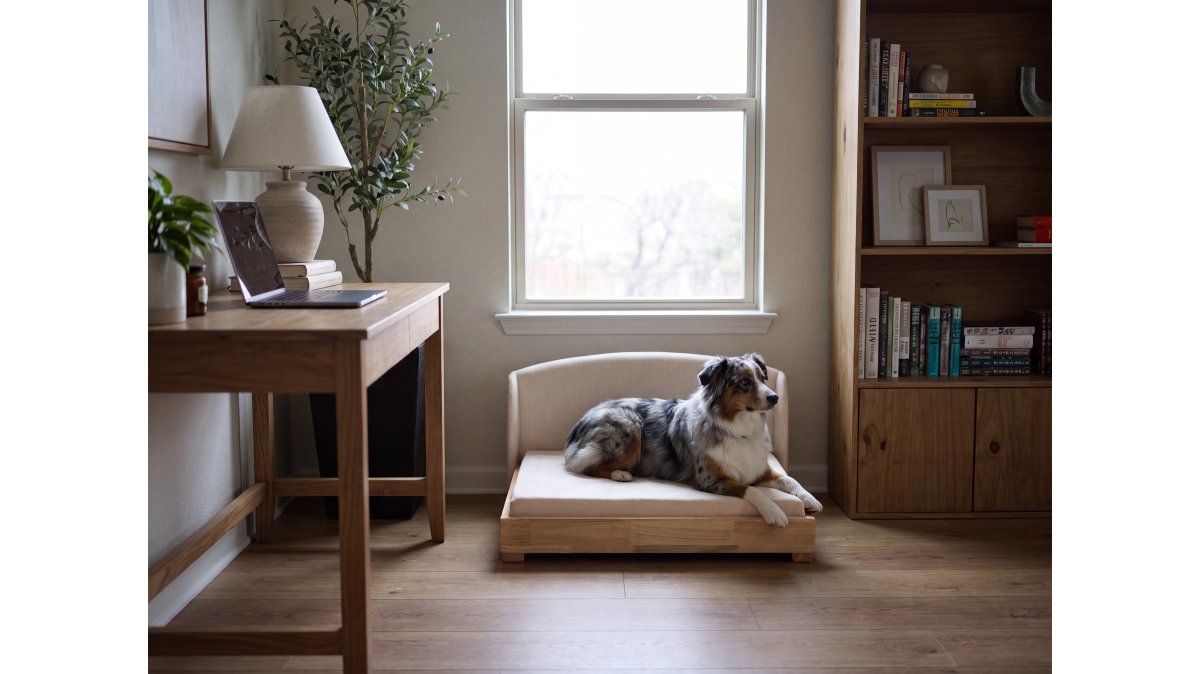
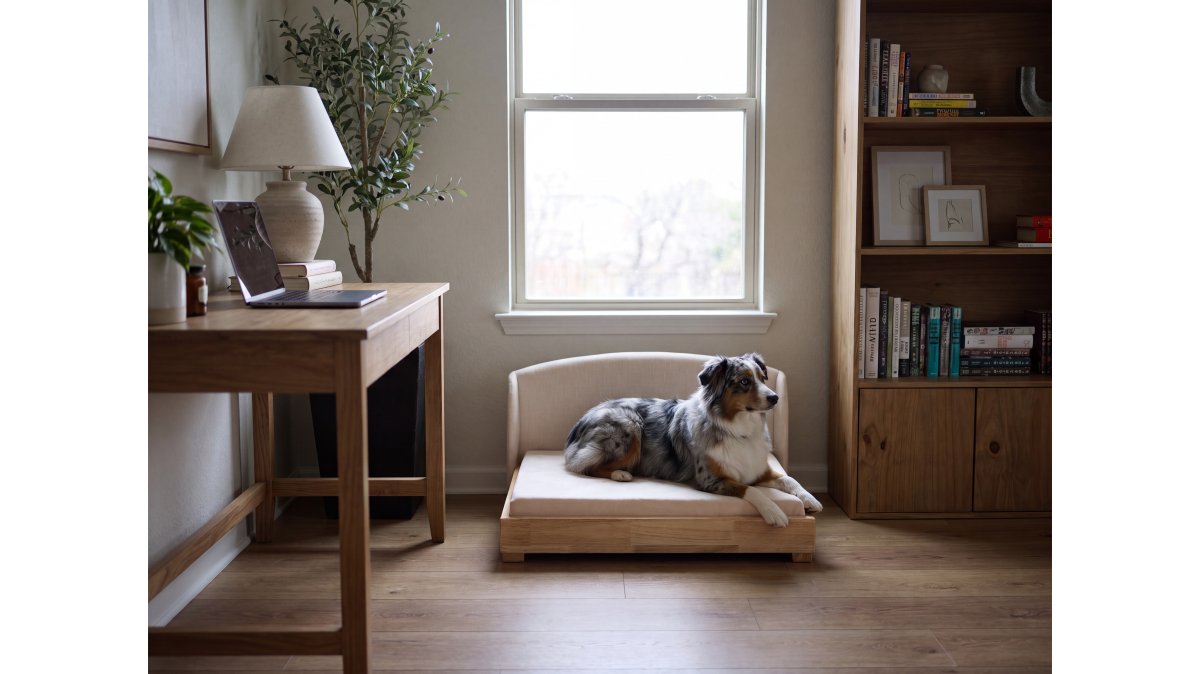
Mafé Pets's Haven pairs a solid hardwood frame with joinery construction and a high-density orthopedic memory foam mattress with a waterproof liner and machine-washable cover. The ten-year structural warranty covers the frame, which is the part most beds never guarantee.
Weight-to-Support Ratios: Matching Bed to Dog
Match the bed to your dog's weight, not just their length. A useful rule of thumb: for every 10 pounds of dog, the mattress should maintain at least 1.5 inches of uncompressed foam above the base, and the frame should be rated to hold at least twice the dog's weight. The 2× factor accounts for dynamic load, a dog stepping onto the bed, flopping down, or pushing off to stand briefly applies more force than its resting weight.
| Dog Weight | Minimum Foam Height | Frame Load Rating | Typical Failure Risk |
|---|---|---|---|
| Under 25 lbs | 2 inches | 50 lbs | Low |
| 25-60 lbs | 3 inches | 120 lbs | Moderate |
| 60-100 lbs | 4 inches | 200 lbs | High |
| Over 100 lbs | 5 inches | 250 lbs | Very high |
Why the numbers work. Foam supports weight by compressing a little and pushing back. The push-back force is proportional to how much foam is compressed, which is why a thin mattress bottoms out: once the foam is fully compressed, the dog is resting on the base, and the base is not designed to cushion joints. A 90-pound dog lying on its side spreads load across roughly 1.5 to 2 square feet of contact area, so the foam under the ribs and hips sees concentrated pressure. Four inches of 4 PCF foam compresses less under that load than four inches of 2 PCF foam, which is why density and thickness have to be specified together.
How to verify a frame's load rating. Most manufacturers do not publish one, so ask directly. A frame rated for 200 pounds should be tested by the maker at that load, not estimated. If the seller cannot answer, look at the construction: solid hardwood rails at least 1 inch thick, corner blocks or doweled joinery, and a slat or platform base with no more than 3 inches of unsupported span between slats. Thin plywood and particleboard flex under repeated load and are the most common cause of a bed that sags in the middle after a year.
Sleep posture changes the math. A dog that curls in one spot concentrates load in a small area, which accelerates compression and creates the dip that eventually pulls joints out of alignment. A dog that sprawls distributes load but stresses the frame's edges. Rotating the mattress every few months spreads that load and extends bed longevity; rotating the frame 180 degrees once a year does the same for the base.
A note on weight distribution vs. raw capacity. A 120-pound frame rating does not mean a 120-pound dog will be comfortable. It means the frame will not fail. Comfort depends on the foam above it. Two dogs of the same weight can need different beds if one is a lean, bony senior and the other is a thick-coated young adult. When in doubt, size up on foam thickness, not down.
Conclusion
Structural failure is quiet. It happens over months, not days, and by the time your dog avoids the bed, the damage is already done. The fix is to buy on density, frame material, and weight-to-support math instead of cushion thickness.
Mafé Pets builds beds for exactly this problem: solid North American hardwood frames with real joinery, high-density orthopedic memory foam, a waterproof liner, a machine-washable cover, and a ten-year structural warranty. If you want a bed that still supports your dog's joints years from now, not months, shop the Haven and invest once.
Frequently Asked Questions
How can you tell if an orthopedic dog bed is high quality?
Check three things: foam density (look for 3+ lb/ft³), frame material (solid hardwood, not particleboard), and warranty length. A high-quality orthopedic dog bed like The Haven uses high-density memory foam and a solid North American hardwood frame with real joinery, backed by a ten-year structural warranty. Press the foam with your hand; if it springs back quickly and feels dense rather than spongy, it will hold up over time.
What materials provide the best structural support for large dogs?
Solid hardwood frames and high-density memory foam (3+ lb/ft³ density) offer the best support. Particleboard and low-density egg-crate foam collapse under large breeds within months. Look for joinery-crafted frames rather than stapled or glued particleboard. A waterproof liner also protects the foam from moisture damage that weakens structural integrity. Mafé's orthopedic dog beds for large breeds combine solid North American hardwood with high-density memory foam for lasting support.
How often should you replace an orthopedic dog bed?
A well-built orthopedic dog bed with high-density foam and a solid wood frame should last 8-10 years. Cheaper beds with low-density foam often flatten in 6-12 months. Watch for visible sagging, loss of loft, or the foam compressing to less than 50% of its original height. If your dog avoids the bed or shifts frequently during sleep, the foam has likely lost its pressure-relieving properties.
Does bed frame material affect orthopedic support for dogs?
Yes. A solid wood frame maintains its shape and prevents the mattress from sagging at the edges, which is where most beds fail first. Particleboard frames absorb moisture, warp, and lose structural integrity within a year or two. Real joinery (dovetail, mortise-and-tenon) holds up far better than staples or glue. The frame is the foundation; if it flexes or breaks, the foam cannot do its job.
What are the signs of a failing orthopedic dog bed?
Key signs include visible sagging or body impressions that don't recover, foam that feels compressed or crumbly, a frame that creaks or flexes, and your dog refusing to use the bed or shifting constantly. A washable cover that no longer fits snugly also signals foam breakdown. If the bed fails the hand-press test (pressing down and watching for slow or incomplete rebound), it's time to replace it.