Durable Furniture Grade Dog Beds: Built to Last
Table of Contents
- What Makes a Dog Bed Furniture-Grade?
- Durable Dog Beds for Chewers: Materials That Survive
- Orthopedic Dog Beds for Joint Support: The Foam Difference
- How to Choose a Dog Bed Size That Fits Your Space
- The Mafé Pets Standard: A Comparison of Our Furniture-Grade Beds
- Repairability vs. Replacement: The Long-Term Value
- Cleaning and Maintenance: Protecting Your Investment
- Final Verdict: Which One Should You Pick?
- Frequently Asked Questions
Last Updated: September 9, 2026
What Makes a Dog Bed Furniture-Grade?
A furniture grade dog bed is a pet accessory constructed to the same standards as the human furniture in your home, rather than to the standards of a disposable pet product, and furniture grade dog beds are built to last. Most dog beds on the market are built with particleboard, thin foam, and fabric that cannot survive daily use. At Mafé Pets, we build our beds with solid North American hardwood, real joinery, and high-density foam because we believe a dog bed should be an investment piece, not a temporary solution.
The term "furniture-grade" signals more than aesthetics: it means the piece uses materials that hold up under weight, resists sagging, and maintains its appearance for years. The structural difference is visible in the frame, joinery-crafted hardwood instead of pressboard, and a waterproof liner protecting the foam core instead of a thin fabric shell. These choices determine whether a bed lasts five years or five months.
Durable Dog Beds for Chewers: Materials That Survive
Chew-resistant construction starts with materials that physically resist damage, not just fabrics that feel tough. For heavy chewers, the weak points are almost always the seams, the zippers, and the corners. Furniture-grade beds address these with triple-stitched seams and reinforced edges, but the real defense is the frame itself: a solid hardwood structure a dog cannot collapse or deform.
Ripstop and tear-resistant textiles stop small punctures from becoming large tears, while chew-proof zippers prevent a determined dog from accessing the foam core. A common mistake is focusing only on the cover fabric while ignoring what is underneath. If a dog breaches the outer layer, the waterproof liner is the second line of defense, protecting the high-density foam from urine and saliva.
But materials alone will not solve the problem. Even the most durable bed can be destroyed by a dog determined to chew, which is why addressing the root cause is essential. Destructive chewing is rarely random, it is almost always a symptom of separation anxiety, boredom, or teething discomfort in puppies.
Separation anxiety is the most common driver of destructive behavior in adult dogs. A dog that chews its bed when you leave is not being spiteful; it is self-soothing through chewing, which releases endorphins that help the dog cope with stress. For these dogs, the bed is not the problem, the anxiety is. Addressing this requires counter-conditioning, gradual desensitization to departure cues, and, in some cases, consultation with a veterinary behaviorist. Products like puzzle feeders or long-lasting chews (such as a frozen Kong stuffed with peanut butter) can redirect the chewing impulse.
Boredom is the second most common cause. High-energy breeds, working dogs like Border Collies, Australian Shepherds, and Belgian Malinois, need physical and mental stimulation. A dog that is under-exercised will find its own entertainment, and a bed is an easy target. Increasing daily exercise, adding training sessions, and providing interactive toys can dramatically reduce destructive chewing.
Teething is the primary cause in puppies. Between four and eight months, puppies experience significant discomfort as their adult teeth come in, and the soft, plush surface of a dog bed is an appealing target. Providing appropriate chew toys that can be frozen (the cold numbs the gums) is often more effective than relying on a durable bed cover. A puppy's chewing behavior often subsides once teething is complete, so a durable bed is a temporary safeguard rather than a permanent solution.
For owners working through these behavioral issues, the modular design of a furniture-grade bed is a practical advantage: if a dog damages the cover, you can replace just the cover, not the entire bed. This is more economical and sustainable than buying a new bed every few months, and it gives you time to address the underlying behavior without watching a costly investment get destroyed.
Orthopedic Dog Beds for Joint Support: The Foam Difference
Orthopedic support is not a marketing term; it refers to the density and recovery rate of the foam inside the bed. High-density memory foam distributes a dog's weight evenly across the sleeping surface, reducing pressure on hips, elbows, and shoulders. This pressure relief is especially important for aging dogs or breeds prone to joint health issues.
The distinction between high-density foam and standard polyfill is measurable. Low-quality foam flattens within months, leaving the dog on a hard surface that exacerbates joint pain. High-density foam holds its shape over time and provides consistent support. The waterproof liner preserves the foam's structural integrity by preventing moisture from reaching it. For active dogs without joint discomfort, orthopedic support is preventative, maintaining healthy joint alignment before issues develop.
How to Choose a Dog Bed Size That Fits Your Space
Choosing the right size requires measuring both your dog and your room, because a bed that fits the dog but overwhelms the space will not last in your home. Measure your dog from nose to tail while stretched out in their natural sleeping position, then add several inches for clearance. A bed that is too small will discourage use; one that is excessively large wastes floor space and can feel less secure.
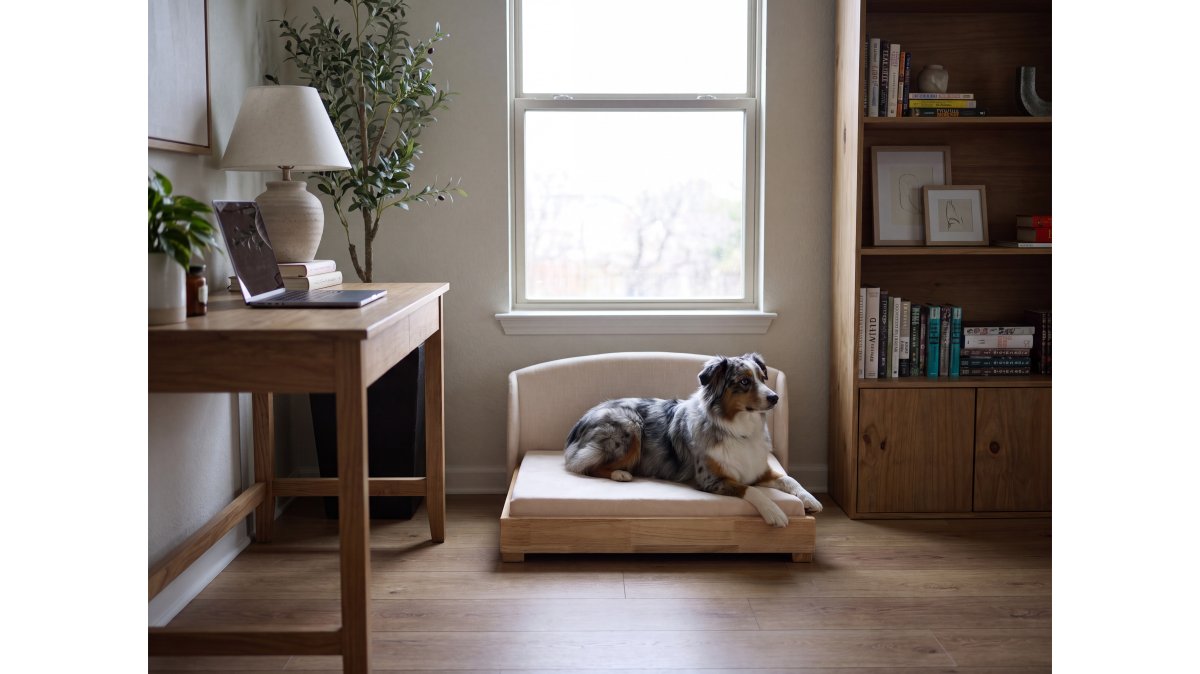
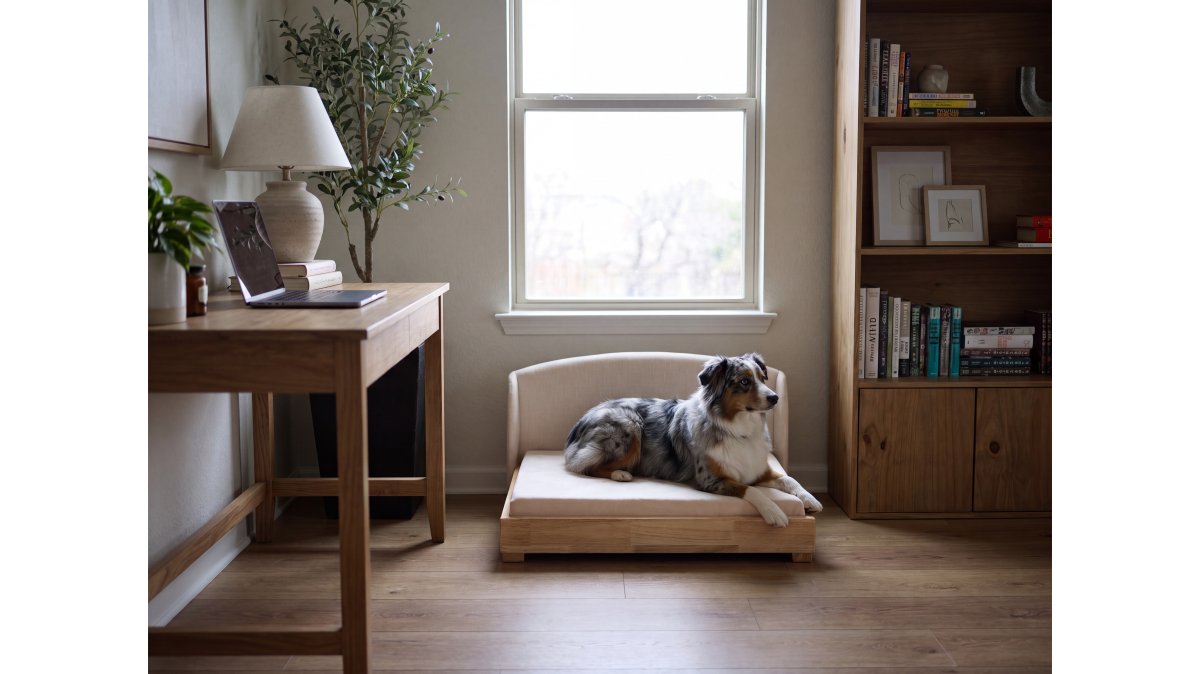
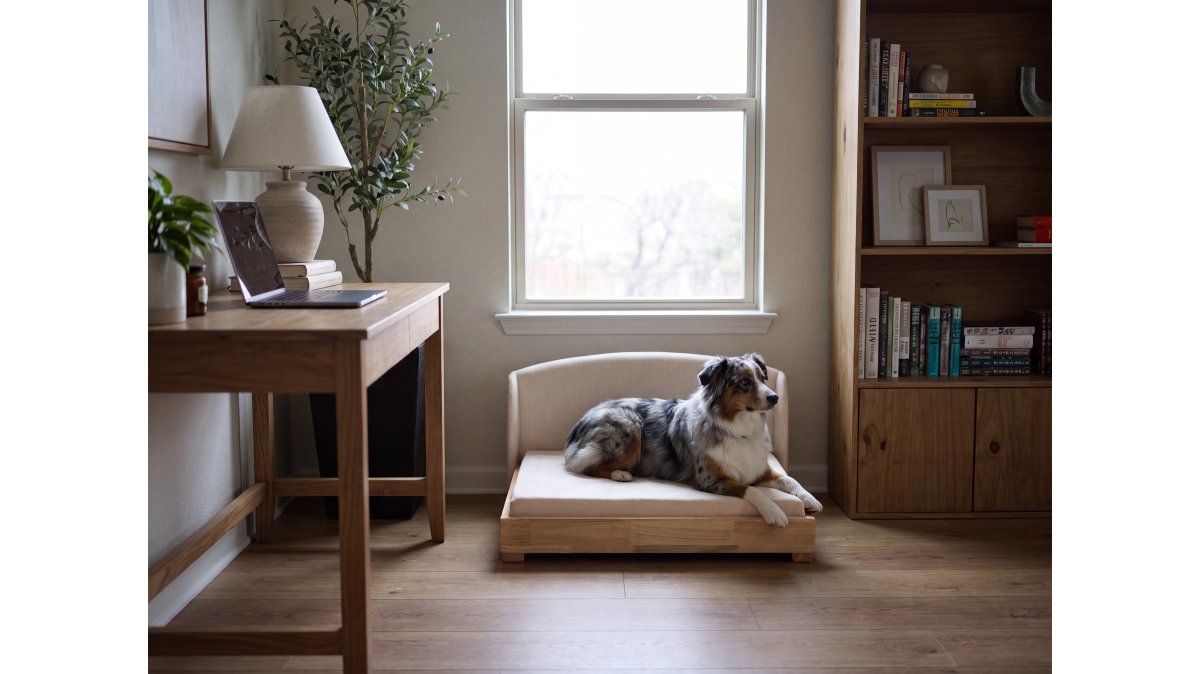
The footprint is equally important. A sculptural round bed like The Circle works as a centerpiece, while a low-profile lounge design suits tight spaces under windows or against walls. The Haven, with its 35-inch width and 26-inch depth, is sized for dogs up to roughly 55 pounds and reads like a piece of accent furniture. Before purchasing, mark the dimensions on your floor with tape to confirm the bed fits without blocking walkways.

The Mafé Pets Standard: A Comparison of Our Furniture-Grade Beds

Each Mafé Pets bed is built to the same standard: solid hardwood or high-density foam cores, waterproof liners, and machine-washable covers. The differences come down to silhouette, function, and how each piece fits your space. We design for dogs up to roughly 55 pounds, with small-batch manufacturing that prioritizes quality control over volume.
| Bed | Price | Core Material | Best For | Key Feature |
|---|---|---|---|---|
| The Haven | $360 | Orthopedic memory foam | Dogs up to ~55 lbs | Solid wood frame, 10-year warranty |
| The Circle | $125 | High-density foam | Small dogs, centerpiece placement | Sculptural round ottoman design |
| The Modern Day Bed | $175 | High-density foam | Medium dogs, lounging | Bolster backrest for head support |
The Haven: Solid Wood Frame and Orthopedic Core
The Haven is our flagship piece and the clear choice for owners who want true furniture construction. Its solid North American hardwood frame is joinery-crafted, not assembled with particleboard and glue, which is why it carries a ten-year structural warranty, the longest in the category. The orthopedic memory foam mattress provides pressure relief for hips and joints, and the waterproof liner ensures accidents do not reach the foam. The machine-washable cover comes in two colorways, Cream and Cocoa.
The Circle: A Sculptural Ottoman for Center-Stage Comfort
The Circle takes a different approach: instead of blending into a corner, it is designed to sit in the middle of the room. Its round, ottoman-style silhouette works as a decorative element that also happens to be a dog bed, ideal for owners who want the bed visible without sacrificing style. The high-density foam core holds its shape over time, and the zip-off, machine-washable cover keeps maintenance simple.
The Modern Day Bed: Low-Profile Lounge with Bolster Support
The Modern Day Bed brings low-profile, lounge-style comfort to modern spaces. Its defining feature is the bolster backrest, which gives dogs a place to rest their head and feel secure, mimicking the comfort of a human daybed. The high-density foam cushion is paired with a waterproof liner and a zip-off, machine-washable boucle cover. This is the best option for medium dogs that like to stretch out with their head propped.
Repairability vs. Replacement: The Long-Term Value
The most overlooked factor in the cost of a dog bed is whether it can be repaired. A $100 bed that must be replaced every year costs more over a decade than a $360 bed that lasts ten years, especially when you account for the inconvenience of repeated purchases.
The practical difference comes down to replaceable parts. A machine-washable cover can be removed and cleaned or replaced if it wears out, while the waterproof liner protects the foam core so it does not need replacement. This modular design means a single accident or worn cover does not destroy the entire bed. The ten-year structural warranty on The Haven reflects this philosophy: we stand behind the frame because it is built to be repaired, not discarded.
Cleaning and Maintenance: Protecting Your Investment
A furniture-grade dog bed is a high-investment item, and protecting it requires a maintenance routine beyond a quick wipe-down. The covers on Mafé Pets beds are fully removable and machine-washable, but how you wash them matters. Most manufacturers, including us, recommend a gentle cycle with cold water and a mild, pet-safe detergent. Hot water can break down fibers in performance textiles over time, and fabric softeners should be avoided entirely, they coat the fibers and reduce water-resistance and durability.
Air drying is the safest method for all covers. High heat from a dryer can shrink the fabric or damage the waterproof backing. For covers prone to clinging pet hair, a dryer sheet on a no-heat or low-heat setting can help, but the best defense is prevention: vacuuming the cover weekly with an upholstery attachment removes the hair and debris that cause premature wear.
Spot-cleaning is your first line of defense for accidents. The key is to blot, not rub, rubbing pushes the stain deeper and can break the fibers. For urine or drool, blot with a clean cloth, then apply a solution of one part white vinegar to three parts water to neutralize odors. Let it sit for five minutes, then blot again. For tougher stains, a small amount of enzyme-based cleaner is effective without being harsh. Always test any cleaner on an inconspicuous spot first.
The waterproof liner is the critical component that keeps the foam core safe. After an accident, wipe it down with a damp cloth and mild soap. Do not submerge the liner or put it in the washing machine, this can compromise its waterproof seal. If the liner develops a tear, replace it before the next accident, because once moisture reaches the foam, its structural integrity is compromised. Saturated high-density foam will break down, losing support and developing an odor that is nearly impossible to remove.
A common maintenance mistake is waiting too long between deep cleans. Even if the cover looks clean, dander, oils, and microscopic debris accumulate in the fabric. A quarterly deep clean, removing the cover, washing it, and wiping down the liner, will extend the life of the bed significantly. For dogs that shed heavily or spend time outdoors, a monthly schedule is more realistic.
Finally, inspect the bed regularly for signs of wear. Check the seams, the zipper track, and the corners where dogs often scratch before settling. Catching a loose thread or slightly worn seam early allows you to address it before it becomes a tear. A furniture-grade bed is designed to last for years, but only with the same level of care you would give a high-end sofa.
Final Verdict: Which One Should You Pick?
The right furniture grade dog bed depends on your space, your dog's size, and the role you want the bed to play in your home. For true furniture construction and maximum longevity, The Haven is the definitive choice, with its solid hardwood frame, orthopedic memory foam, and ten-year warranty. For smaller spaces or a design-forward statement piece, The Circle offers sculptural appeal at a lower price point. The Modern Day Bed is the middle ground, combining lounge comfort with bolster support.

All three share the qualities that define durable furniture grade dog beds: high-density support cores, waterproof liners, and machine-washable covers. The investment is justified by the longevity, the joint health benefits for your dog, and the fact that the bed complements rather than detracts from your interior design.
Frequently Asked Questions
Are furniture grade dog beds worth the investment?
Yes, when you factor in lifespan and repairability. A typical soft bed may flatten within a year, requiring replacement. A furniture grade dog bed with a solid hardwood frame and high-density foam core holds its shape for years. The Mafé Haven, for example, includes a 10-year structural warranty, meaning the frame is built to last through multiple cover replacements. This shifts the cost from a recurring expense to a one-time purchase for a piece that functions as both pet furniture and home decor.
What is the toughest material for dog beds?
For the frame, solid hardwood with real joinery is the most durable option, far surpassing particleboard or plastic. For the sleeping surface, look for high-density foam cores, which resist flattening, and ripstop or boucle fabrics with triple-stitched seams. A waterproof liner is also critical for protecting the foam core from accidents. These materials together create a bed that resists both physical wear from chewing and structural breakdown from daily use.
How do I choose a dog bed that matches my home decor?
Treat the bed as furniture, not an accessory. Look for pieces that use the same materials and construction as your existing furniture, such as solid wood frames and upholstery-grade fabrics like boucle. Consider the silhouette: a round ottoman style works as a centerpiece, while a low-profile day bed fits under a window or against a wall. Mafé offers colorways like Cream and Cocoa that coordinate with neutral palettes.
How do I know the foam won't flatten like other dog beds?
Check the foam density and construction. Many beds use low-density polyurethane that compresses permanently under a dog's weight. High-density foam cores, like those used in The Circle and The Modern Day Bed, are designed to hold their shape. For orthopedic support, memory foam provides pressure relief but must be thick enough to avoid bottoming out. A waterproof liner also prevents moisture from breaking down the foam structure over time.
A furniture-grade dog bed is a purchase you should make once, not repeatedly. The challenge is finding a piece that delivers on both durability and design, which is why Mafé Pets builds each bed with solid hardwood frames, high-density orthopedic foam, and waterproof-lined, machine-washable covers. Every bed ships free via FedEx and is backed by a ten-year structural warranty on The Haven. Get started with Mafé Pets and give your dog a bed that will last as long as your furniture.