Lenoof vs. Luxury Dog Beds: What Actually Matters
Table of Contents
- Lenoof vs. Luxury Dog Beds: A Side-by-Side Comparison
- Why Foam Density and Orthopedic Memory Foam Dog Beds Win for Joint Health
- Durable Dog Bed Materials: How to Spot a Bed That Won't Flatten
-
How to Choose a Luxury Dog Bed Based on Your Home and Dog
- Sleep Position Analysis: The Missing First Step
- Breed-Specific Sizing: Beyond Nose-to-Tail Measurements
- The 6-to-12-Month Reality Check: What Actually Fails
- Home Integration: The Design Criteria That Actually Matter
- The Climate Consideration
- The Long-Term Cost Model
- The Allergy Factor: A Gap Most Luxury Reviews Miss
- The Mafé Pets Alternative: Furniture-Grade Construction With a 10-Year Warranty
- The Verdict: Is the Price Gap Justified?
- Frequently Asked Questions
Last Updated: September 9, 2026
Lenoof vs. Luxury Dog Beds: A Side-by-Side Comparison
When comparing Lenoof vs luxury dog beds, the core difference isn't just price; it's the engineering beneath the fabric. Luxury dog beds are defined by high-density foam, solid frames, and materials that hold their shape for years, not months. A bed that pancakes into a lumpy mat within a season offers zero orthopedic support.
Why Foam Density and Orthopedic Memory Foam Dog Beds Win for Joint Health
Orthopedic memory foam dog beds are the single most important upgrade for a dog over four years old, and the deciding factor is foam density. High-density foam distributes weight evenly, cradling hips and elbows and reducing stress on aging joints.
A common mistake is assuming all "orthopedic" beds are equal. Many brands slap that label on a one-inch topper. True orthopedic support requires a thick core of high-density memory foam that supports proper weight distribution and thermal regulation, preventing your dog from sinking into a heat-trapping pit. For young, active dogs, this support delays the onset of joint issues; for seniors, it can visibly improve mobility and comfort. Veterinary guidance consistently points to supportive cushioning as essential for managing arthritis and hip dysplasia in dogs American Veterinary Medical Association resources on pet arthritis care.
Durable Dog Bed Materials: How to Spot a Bed That Won't Flatten
Durable dog bed materials determine whether your purchase lasts three years or three months. Evaluate three layers: the cover fabric, the internal foam core, and the frame or base structure.
The Cover Fabric: Beyond "Tear-Resistant"
Most brands claim tear resistance, but few specify the fabric weight, weave density, or fiber type. Look for these markers:
- Fabric weight: A quality cover typically weighs 300 to 500 grams per square meter (GSM). Anything below 200 GSM is essentially a bedsheet and will abrade or rip within weeks of enthusiastic scratching or nesting behavior.
- Weave structure: Basket weaves and twill weaves distribute stress across multiple yarns, making them significantly more puncture-resistant than plain weaves. Canvas-weight cotton or polyester blends with a tight twill construction are the industry standard for high-durability pet textiles.
- Fiber content: Solution-dyed polyester or nylon outperforms cotton in abrasion resistance and colorfastness. A 65/35 polyester-cotton blend offers a practical balance of softness and durability.
- Zipper quality: The zipper is almost always the first failure point. Look for YKK-brand zippers with metal or nylon teeth, not cheap plastic coils. A zipper guard flap prevents hair and debris from clogging the track.
The Foam Core: Density, ILD, and Recovery
Foam quality is about density (PCF) and indentation load deflection (ILD), which measures the pounds of force required to compress foam by 25%.
- High-density polyurethane foam for pet beds typically ranges from 1.8 to 2.5 PCF. Below 1.5 PCF, you're dealing with furniture-grade foam that will lose its shape within months under a 50-pound dog.
- Memory foam should be at least 3.0 PCF for genuine pressure relief. Lower-density foam (2.0-2.5 PCF) collapses and retains body impressions, creating a permanent crater.
- ILD ratings: For a medium-firm orthopedic bed, look for an ILD between 30 and 40. Below 25 ILD, the foam is too soft to support joints properly; above 50 ILD, it feels like sleeping on concrete.
- Recovery time: High-quality memory foam should take 3 to 5 seconds to return to shape. If it snaps back instantly, it's likely low-density polyurethane with a topper; if it takes more than 10 seconds, the foam is degrading.
The Frame: Where Most "Luxury" Beds Cut Corners
If a bed has wooden structure, verify it's solid hardwood assembled with real joinery (dowels, mortise-and-tenon, or dovetail), not particleboard or MDF held by staples and glue. Stapled frames pull out under stress. Legs should be bolted through the frame with metal brackets, not screwed into wood.
The Waterproof Liner: Your Foam's Only Defense
A waterproof liner is non-negotiable. Look for a TPU (thermoplastic polyurethane) laminated liner rather than PVC, which off-gasses and becomes brittle. The liner should be fully encased, not just a bottom layer, accidents wick sideways if it doesn't wrap up the sides.
The Sustainability Angle Competitors Ignore
A bed that lasts five years instead of one keeps 4 out of 5 beds out of landfills. Push further by looking for:
- GREENGUARD Gold certification: Verifies low chemical emissions, meaning no VOCs off-gassing from foam or adhesives.
- CertiPUR-US certified foam: Verifies foam is free from heavy metals, formaldehyde, and phthalates, and meets low-emission standards.
- OEKO-TEX Standard 100: Tests for harmful substances across the entire textile, including the cover fabric and thread.
- Recycled or plant-based fabrics: Some premium brands offer covers made from recycled PET or plant-based fibers like Tencel lyocell, which perform comparably to virgin polyester while reducing petroleum dependence.
For a dog that spends 12 to 16 hours per day on their bed, low-quality foam and adhesives can off-gas VOCs for months. Third-party certifications protect both your dog's respiratory health and your family's indoor environment.
How to Choose a Luxury Dog Bed Based on Your Home and Dog
Choosing a luxury dog bed requires matching the bed's engineering to your dog's size, age, sleep style, and habits, then integrating the design into your space.
Sleep Position Analysis: The Missing First Step
Observe how your dog sleeps over a 48-hour period to determine which bed style provides real support:
- The Curler: Dogs that sleep in a tight ball need a bolster or donut bed with raised edges for a chin rest and security.
- The Sprawler: Dogs that sleep on their side with legs extended need a completely flat, open surface; bolsters will annoy them.
- The Superhero: Dogs that sleep on their stomach with legs splayed need a low-profile bed with firm support to avoid hip strain.
- The Leaner: Dogs that prop their head against furniture need a bed with a tall, firm backrest.
Breed-Specific Sizing: Beyond Nose-to-Tail Measurements
The "add 6 to 12 inches" rule fails for many breeds because it doesn't account for body mass distribution or sleeping posture.
| Breed Category | Weight Range | Minimum Bed Dimensions (L x W) | Why It Matters |
|---|---|---|---|
| Toy breeds (Chihuahua, Yorkie) | Under 10 lbs | 18" x 18" | Small dogs lose body heat quickly; a snug bed with raised sides retains warmth |
| Small breeds (Corgi, French Bulldog) | 10-25 lbs | 24" x 18" | These breeds have long spines relative to their height; they need length to stretch without curling |
| Medium breeds (Beagle, Border Collie) | 25-50 lbs | 36" x 24" | Active medium breeds often sleep in multiple positions; they need room to transition between curl and sprawl |
| Large breeds (Labrador, German Shepherd) | 50-90 lbs | 42" x 30" | Large breeds carry significant weight on their joints; they need thick foam (at least 4 inches) to prevent pressure points |
| Giant breeds (Great Dane, Mastiff) | 90+ lbs | 52" x 36" | Giant breeds are prone to hip dysplasia and elbow hygromas; they need the highest density foam available (2.5+ PCF) and a solid frame that won't flex |
The 6-to-12-Month Reality Check: What Actually Fails
Most luxury bed reviews are written within days of unboxing. The real test is what happens after six months of daily use:
- Foam compression at the entry point: Dogs launch onto beds, subjecting the impact zone to 3 to 5 times their body weight. After 6 months, low-density foam (under 2.0 PCF) compresses permanently, creating a slope.
- Cover pilling at contact points: After 3 to 4 months, low-GSM fabrics (under 250 GSM) begin to pill and thin at elbows and hips.
- Zipper failure from hair accumulation: Pet hair jams zipper tracks. A zipper guard flap prevents this; without it, expect failure between months 4 and 8.
- Foam odor retention: Even with a waterproof liner, foam can develop odors if the liner has pinhole defects. Ask whether manufacturers pressure-test their liners.
Home Integration: The Design Criteria That Actually Matter
For design-conscious homeowners, the bed should complement your decor, but aesthetics must not override function.
- Color and pattern: Patterned fabrics (herringbone, tweed, subtle geometrics) hide hair and dirt far better than solid colors.
- Scale and proportion: Measure the intended corner or wall space before shopping; a 42-inch bed in a small apartment will overwhelm the space.
- Multi-function design: Some luxury beds double as side tables or ottomans, but verify the top surface is genuinely weight-bearing for human use.
- Floor interaction: Anti-slip bases are essential on hardwood and tile. A full rubberized bottom is more durable than silicone dots, which fail as they collect hair.
The Climate Consideration
Where you live in the U.S. should influence your material choices:
- Hot climates (Southwest, Southeast, Gulf Coast): Look for gel-infused memory foam or breathable, moisture-wicking covers. Avoid thick bolsters that trap heat.
- Cold climates (Northeast, Midwest, Mountain West): A bed with a raised frame that creates an air gap beneath the mattress provides insulation. Some offer removable fleece toppers for winter.
- Humid climates (Pacific Northwest, Southeast): Look for foam with antimicrobial treatments and covers that dry quickly. Avoid solid wood frames in humid basements.
The Long-Term Cost Model
A luxury bed is a 5-to-10-year purchase. Evaluate the true cost:
- Replacement frequency: A $60 budget bed lasts 12 to 18 months. Over 5 years, that's 3 to 4 replacements, totaling $180 to $240.
- Warranty coverage: Many "10-year warranties" only cover manufacturing defects, not foam compression. A meaningful warranty covers structural failure and visible foam flattening beyond 20-25%.
- Replacement parts: If the manufacturer doesn't sell replacement covers and foam cores separately, a torn cover means buying an entirely new bed.
The Allergy Factor: A Gap Most Luxury Reviews Miss
Approximately 10% of U.S. households have a dog allergy, and many dogs suffer from environmental allergies. For these households, material choices matter beyond durability:
- Dust mite resistance: Memory foam is naturally resistant to dust mites, but the cover fabric is the vulnerable point. Tightly woven fabrics (high GSM) physically block dust mites.
- Hypoallergenic fibers: Bamboo-derived viscose, Tencel lyocell, and organic cotton are naturally hypoallergenic and breathable.
- Machine washability at high temperatures: To kill dust mites, the cover must withstand washing at 140°F (60°C). Many "machine washable" covers only allow cold temperatures, which doesn't eliminate allergens.
- Chemical finishes: Stain-resistant or wrinkle-resistant finishes can trigger skin reactions. Look for covers labeled "no chemical finishes" or "OEKO-TEX certified."
For a dog with known skin sensitivities, the bed's cover is effectively a medical device.
The Mafé Pets Alternative: Furniture-Grade Construction With a 10-Year Warranty

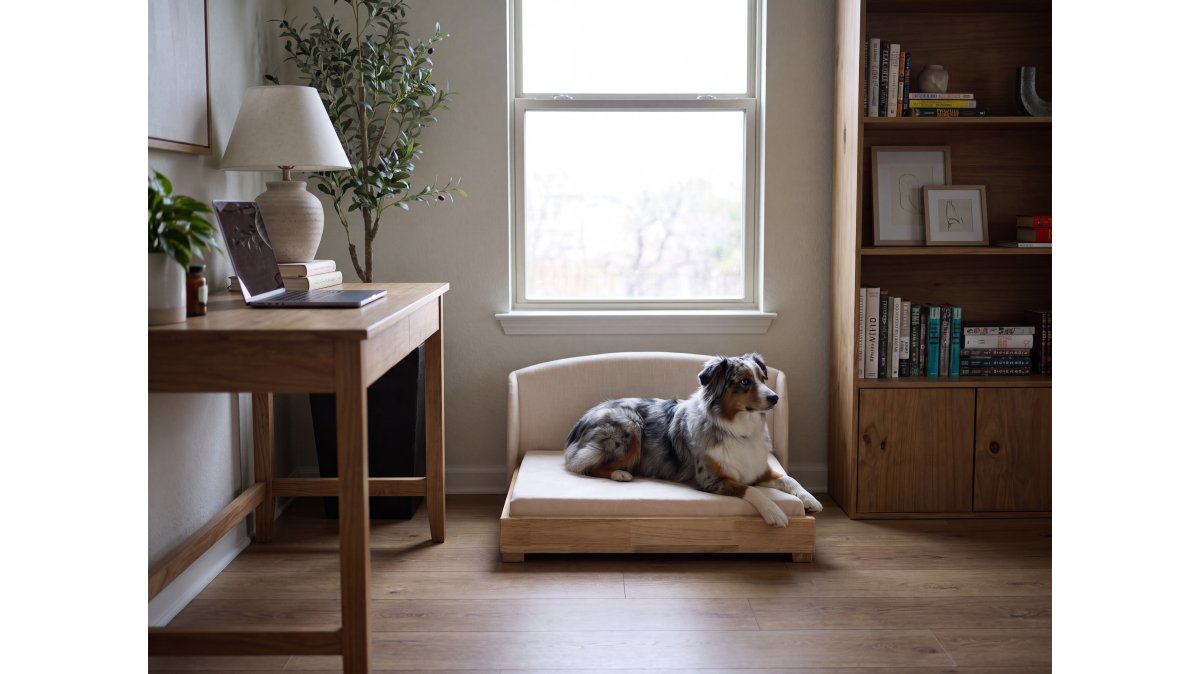
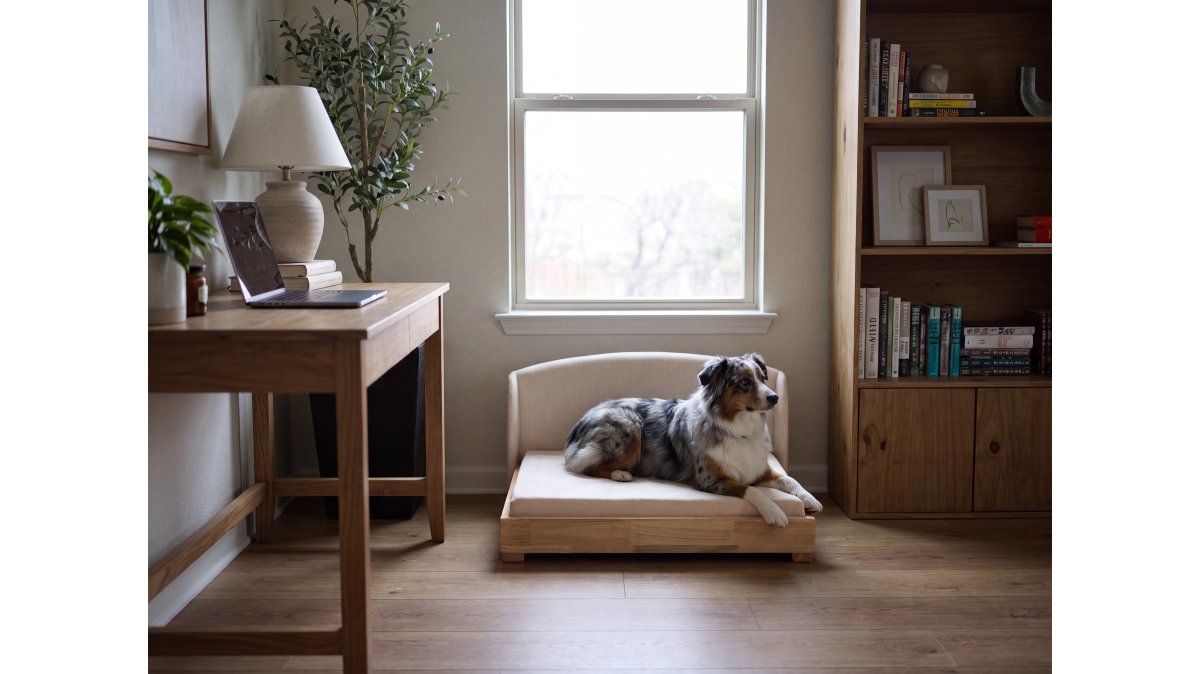
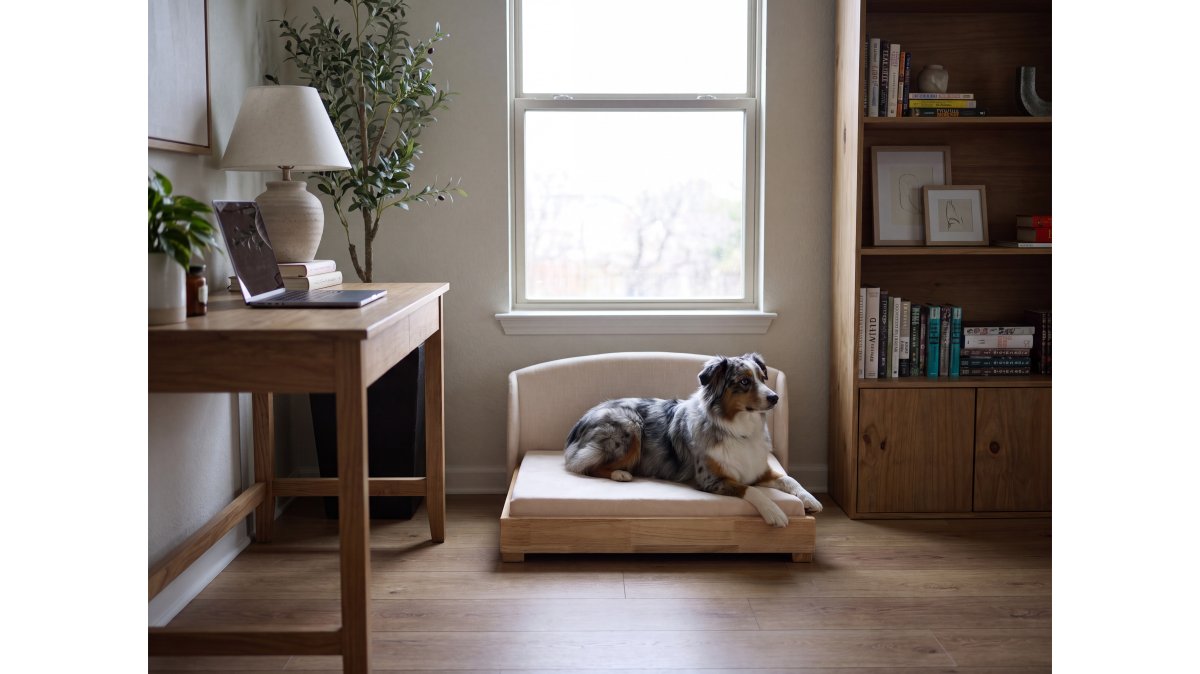
Our top recommendation for most owners is The Haven from Mafé Pets, because it closes the gap between aesthetic furniture and clinical orthopedic support. Priced at $360, it features a solid North American hardwood frame with real joinery, not particleboard, and a high-density orthopedic memory foam mattress.

What genuinely sets this bed apart is its construction and warranty. The mattress is protected by a waterproof liner, so accidents and spills don't reach the foam core, and the cover is removable and machine-washable. This directly answers the durability question: the foam won't flatten because it's high-density, and the frame won't break because it's solid wood. Mafé Pets backs this with a ten-year structural warranty, the longest in the category, which signals confidence that the bed will outlast ordinary dog beds by years Mafé Pets product page for The Haven.
For a lower-profile lounge style, The Modern Day Bed at $175 offers a high-density foam cushion with a bolster backrest in boucle fabric. For a sculptural centerpiece in a smaller space, The Circle at $125 provides a round, ottoman-style silhouette with the same high-density foam core.
The Verdict: Is the Price Gap Justified?
The price gap between budget beds and luxury dog beds is justified only when the luxury bed delivers genuine structural quality. A $60 bed is disposable; over five years, that's $300 spent on declining comfort and zero support. A $360 bed like The Haven should still provide excellent support in year five, making it the more economical choice.
Luxury dog beds justify their price through superior materials, construction, and longevity. The real value calculation isn't the sticker price; it's the cost per year of genuine comfort and joint support.
Winner: Mafé Pets The Haven for owners who want furniture-grade durability and real orthopedic support. Choose The Modern Day Bed if you prefer a lower-profile lounge style, or The Circle for a compact, sculptural option that fits smaller spaces and budgets.
Choosing between budget options and a true luxury dog bed comes down to short-term savings or long-term quality and support for your dog's health. Mafé Pets builds beds with solid North American hardwood, high-density orthopedic memory foam, waterproof liners, and machine-washable covers, all backed by a ten-year structural warranty. Get started with Mafé Pets and give your dog a bed that supports their joints and your home's design for years to come.
Frequently Asked Questions
What features define a true luxury dog bed?
A true luxury dog bed is defined by its materials and construction, not just its price. Look for high-density foam that holds its shape, durable materials like solid hardwood frames or tear-resistant fabric, and a design that integrates with your home. Orthopedic support and a waterproof liner with a removable, machine-washable cover are practical features that protect your investment and your dog's joint health.
Are furniture-grade dog beds better for joint support?
Yes, furniture-grade dog beds are often better for joint support because they prioritize structure. A solid frame prevents the bed from sagging at the edges, keeping your dog's weight distributed evenly on the supportive cushion. This stability, paired with a high-density orthopedic memory foam mattress, provides consistent pressure relief for hips and joints, which is especially important for aging or active dogs.
How is Mafé's 10-year warranty different from Lenoof's?
Mafé's 10-year structural warranty covers the integrity of the solid hardwood frame and joinery. This warranty signifies that the frame is built to withstand years of daily use without warping or breaking, protecting your purchase against structural failure.
Is orthopedic memory foam only for senior dogs?
No, orthopedic memory foam is not just for senior dogs. While it is critical for older dogs with joint issues, it is also valuable for young, active breeds. High-density foam provides a supportive base that helps distribute weight evenly, which can help prevent pressure points and support healthy joint development in growing dogs. Investing in orthopedic support early can contribute to long-term joint health and sleep quality.