Memory Foam vs Polyfill Beds: What Dog Owners Need to Know
Table of Contents
- Memory Foam vs Polyfill: How These Two Fillings Compare
- Support and Firmness: Why Memory Foam Wins for Joint Health
- Durability and Lifespan: Which Filling Holds Up Longer?
- Temperature, Allergens, and Off-Gassing: What to Watch For
- Pet Bed Maintenance and Cleaning Tips for Each Type
- Cost, Sustainability, and Motion Isolation: The Trade-Offs
- Making the Right Choice for Your Dog and Your Home
- Frequently Asked Questions
Last Updated: October 4, 2026
Memory Foam vs Polyfill: How These Two Fillings Compare
The memory foam vs polyfill comparison comes down to what each filling does under your dog's weight. Memory foam is a dense, viscoelastic material that molds to the body and springs back slowly.
Polyfill, sometimes sold as fiberfill, is a synthetic stuffing made from polyester strands that are blown into a cover like a pillow. Memory foam is a solid foam layer that responds to heat and pressure, which is why it feels firm at first and softens as it warms.
Below, we cover the seven decisions that matter most: support and firmness, lifespan, temperature and allergens, cleaning, cost, motion isolation, and how to choose for your dog and your home.
Support and Firmness: Why Memory Foam Wins for Joint Health
Memory foam wins on orthopedic support because it spreads weight across a wider area instead of compressing into a single low spot.

Density is the spec that separates a bed that holds up from one that does not. Foam is graded by density and by ILD, or Indentation Load Deflection, which measures how much force it takes to compress the surface.
Polyfill beds are not useless here. A well-stuffed polyfill bed suits a young, lightweight dog that just needs a soft place to nap. The trouble starts when a heavier dog or an older dog needs real pressure relief and the fiber packs down within a few weeks.
Durability and Lifespan: Which Filling Holds Up Longer?
Memory foam outlasts polyfill in almost every real-world comparison, because solid foam resists compression better than loose fiber. Polyfill's weakness is migration: the strands shift away from pressure points and clump in the corners, leaving a flat crater in the middle. Once that happens, no amount of fluffing brings the loft back for long.
Durable dog beds for chewers and heavy sleepers usually lean on dense foam for the same reason. The filling does not move, so there is nothing to redistribute.
- Memory foam: holds shape for years when the density is high; may soften slightly over time
- Polyfill: comfortable for months, then flattens; needs re-stuffing or replacing
- Shredded foam: a middle ground that stays lofted but can still shift
- Hybrid construction: foam support core plus a fiber topper for softness
A common mistake is judging a bed by how plush it feels in the store. Plush is a first-week impression. Density is a third-year one.
Temperature, Allergens, and Off-Gassing: What to Watch For
Both fillings run warm, but the mechanism is different, and the difference matters more than most buyers expect. Polyfill traps body heat in the air pockets between loose fibers, so a densely stuffed polyfill bed can feel like a sleeping bag on a July night.
Allergen Profiles: The Factor Most Guides Skip
This is the part of the comparison that almost no competitor covers, and it is one of the first questions a bedding buyer asks. Here is the honest breakdown.
- Dust mites: Neither polyfill nor memory foam feeds dust mites the way natural fillers such as down, wool, or cotton can. Both are synthetic, and both are generally considered inhospitable to mites. That is a genuine point in favor of each.
- Mold and mildew: Polyfill dries faster after a spill because air moves through the loose fiber. Memory foam is a closed, dense block; once moisture reaches the core, it stays there, and a damp foam core is a mold risk. A waterproof liner is not optional for foam if your dog has accidents or drools.
- Dander, saliva, and pollen: These accumulate on the cover regardless of filling. A removable, machine-washable cover does more for allergen control than the choice of filling does. Wash covers every two to four weeks, and weekly during shedding season.
- Off-gassing: New memory foam can release volatile organic compounds for a few days after unboxing, which is the new-bed smell owners notice. Polyfill typically has less off-gassing because it is a simpler fiber, though cheap polyfill can carry a manufacturing odor too. Neither is a known health hazard at typical bedding levels, but sensitive dogs and sensitive households may notice the difference.
Performance in Different Climates
Climate changes the recommendation. In hot, humid regions, polyfill's breathability is an advantage, but only if the bed is not over-stuffed; a packed polyfill bed loses that advantage entirely. In cold, dry regions, memory foam's heat retention becomes a feature rather than a flaw, especially for short-coated or senior dogs that struggle to stay warm. Flat-faced breeds and thick-coated dogs run hot year-round and benefit from a breathable cover and a bed that does not hug the body.
If your dog runs hot, look for a breathable cover fabric and a bed that is not over-stuffed. If your dog runs cold, foam's warmth is a benefit, not a bug.
Pet Bed Maintenance and Cleaning Tips for Each Type
Pet bed maintenance and cleaning tips start with one rule: protect the core, wash the cover. Foam should never go in a washing machine, because water breaks down the cell structure and heat from a dryer can warp it.
Here is how to keep each type in shape:
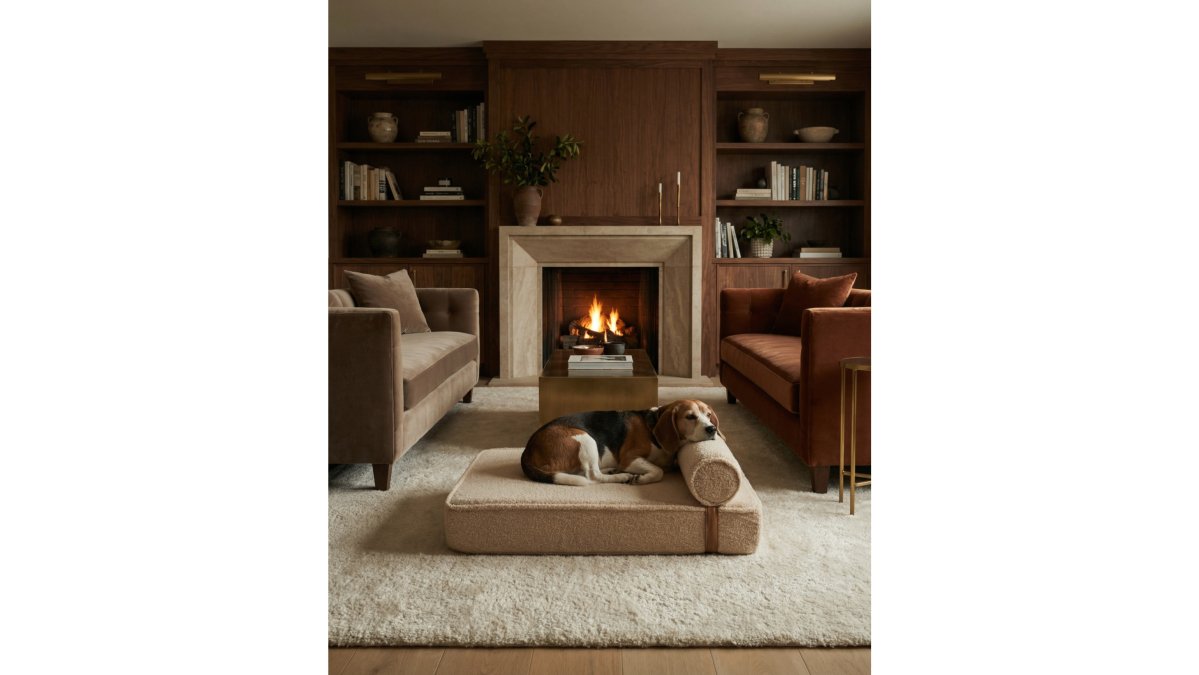
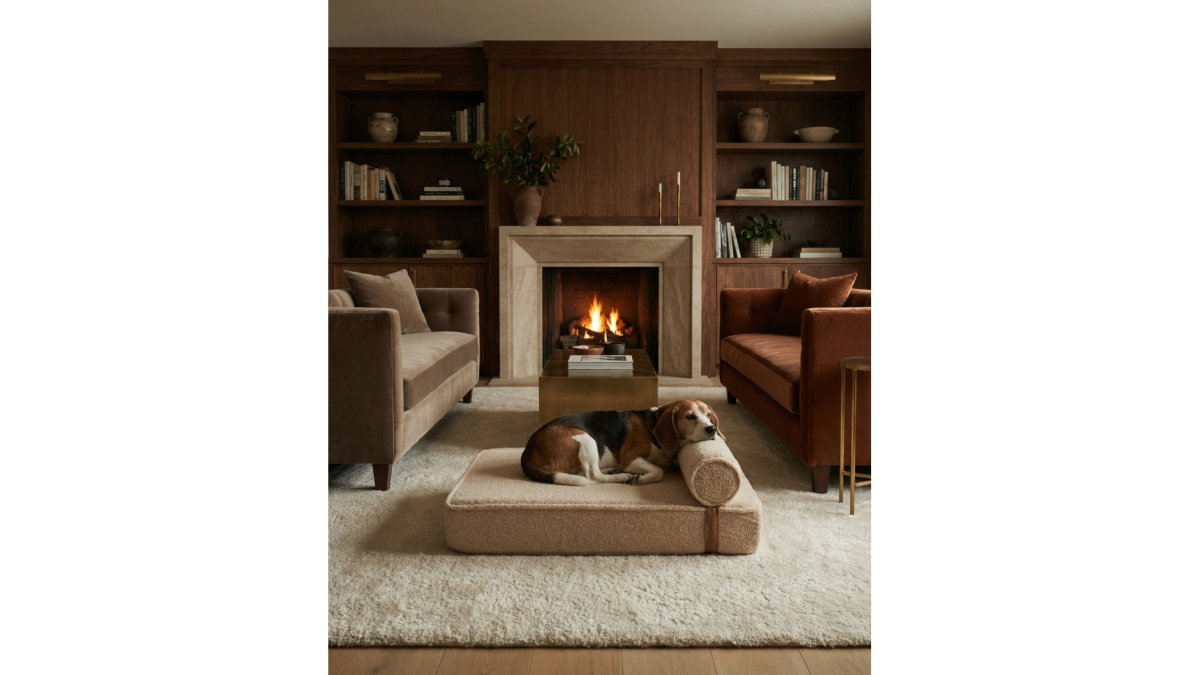
The Modern Day Bed — Boucle Lounge Dog Bed | High-Density Foam, Waterproof →
- Memory foam: vacuum the surface, spot-clean stains, air it out monthly, and wash only the removable cover
- Polyfill: wash the insert on a gentle cycle if the label allows, then tumble on low with a tennis ball to re-loft
- Both: use a waterproof liner under the cover to block accidents before they reach the filling
- Both: wash covers every two to four weeks, or weekly during shedding season
A waterproof liner is the single cheapest way to extend the life of either filling. It turns a soaked mattress into a five-minute cover swap.
That is where Mafé Pets built its beds differently. Our furniture-grade dog beds pair a high-density orthopedic memory foam mattress with a waterproof liner and a zip-off, machine-washable cover, so the foam core stays protected while the part your dog actually touches goes straight in the wash.
Cost, Sustainability, and Motion Isolation: The Trade-Offs
Polyfill beds cost less up front. That is the entire advantage, and it is real, but it is also short-lived. A polyfill bed that flattens in a year costs more over three years than one foam bed that holds its shape, because you buy the polyfill bed two or three times. That math is the whole argument for buying once, and it is the argument most polyfill listings avoid making.
| Factor | Memory Foam | Polyfill |
|---|---|---|
| Up-front cost | Higher | Lower |
| Lifespan | Several years | Often under a year |
| Support | Contours, relieves pressure | Soft, flattens at pressure points |
| Heat retention | Can sleep warm | Traps heat in fibers |
| Cleaning | Cover washable, core spot-clean | Cover and sometimes insert washable |
| Motion isolation | Absorbs movement well | Little to no isolation |
| Sustainability | Petroleum-based, long-lived | Synthetic, sheds microplastics |
| Weight | Heavy, stays put | Light, easy to move |
Motion Isolation: The Quiet Advantage
Motion isolation is the factor nobody mentions, and it matters more than buyers expect. Memory foam absorbs movement because the viscoelastic cells deform and recover slowly; when one dog shifts position, the disturbance stays local. Polyfill transfers motion straight through the loose fill, so a restless sleeper wakes everyone on the bed. If two dogs share a bed, or your dog sleeps beside your bed, foam is the better choice. If your dog sleeps alone in a corner, motion isolation is a non-issue and you can weight the other factors more heavily.
Sustainability: Neither Is a Clear Winner
On sustainability, neither filling wins outright, and any article that claims otherwise is oversimplifying. Both are petroleum-based synthetics. Polyfill sheds microplastics as the fibers break down through washing and compression, and those fibers are a documented source of environmental microplastic pollution. Foam's edge is longevity: a bed that lasts years generates less waste than three that do not, even though the material itself is not biodegradable. The most sustainable choice is usually the one you replace least often, which points back to density and construction rather than filling type. You can read more on textile and microplastic waste guidance from the EPA.
Weight and Portability
Weight and portability cut the other way. Polyfill beds are light and easy to move room to room or pack for travel, which matters for RV owners, campers, and anyone who relocates the bed daily. Foam beds are heavier, which is the price of density, but that weight also keeps the bed from sliding across a hard floor. If portability is your priority, polyfill wins. If stability is your priority, foam does.
Weight and portability cut the other way. Polyfill beds are light and easy to move room to room or pack for travel. Foam beds are heavier, which is the price of density. If you relocate your dog's bed daily, that weight is worth weighing before you buy.
Making the Right Choice for Your Dog and Your Home
Match the filling to the dog, not to the trend. Memory foam is the better choice for aging dogs, large breeds, dogs with joint issues, and any home where the bed sits in a shared living space and needs to look intentional.
Our recommendation leans toward memory foam for most households, because the durability math and the orthopedic benefit both point the same way. The catch is that not all foam is equal.
If you want a bed that supports your dog's joints, holds its shape for years, and fits your living room instead of clashing with it, Mafé Pets builds exactly that.
Frequently Asked Questions
Why is orthopedic memory foam better for dogs than polyfill?
Memory foam responds to your dog's body heat and weight, contouring to joints and pressure points instead of pushing back like polyfill clusters. That contouring reduces pressure on hips and elbows, which matters most for aging dogs or breeds prone to joint issues. Polyfill offers loft and cushioning but compresses under steady weight, so it provides less consistent ergonomic support over a long night's sleep. For dogs needing real orthopedic dog bed benefits, memory foam is the stronger choice.
How long does a memory foam pet bed last compared to polyfill?
A quality high-density memory foam bed can hold its shape for several years, especially when paired with a waterproof liner and washable cover. Polyfill tends to flatten faster because loose fiberfill shifts and compresses with repeated use. Shredded foam sits between the two, offering decent resilience but less structural support than a solid memory foam core. If longevity matters, look for high-density foam and a warranty that backs the construction.
Are memory foam beds easier to clean than polyfill beds?
Cleaning depends more on the cover and liner than the filling. Polyfill beds often have a sewn-in filling that can't be removed, so stains soak into the fiber. Memory foam beds with a waterproof mattress liner and a zip-off, machine-washable cover let you strip the outer layers and wash them while protecting the foam core. That setup handles accidents, drool, and shedding far better than a single-piece polyfill bed.
Do memory foam beds sleep hot or cause off-gassing concerns?
Traditional memory foam can retain heat because it's dense and viscoelastic, which some dogs notice in warm weather. Modern high-density foams and hybrid constructions with breathable covers reduce that trapped-heat effect. New foam may have a mild off-gassing smell for a few days; airing it out in a ventilated room usually clears it. If your dog runs hot, a bed with a breathable cover and good airflow around the foam helps.