Best Alternatives to Cheap Polyester Dog Beds
Table of Contents
- Why Cheap Polyester Dog Beds Fail: The Real Cost of Replacement
- Orthopedic Memory Foam Dog Beds: Pressure Relief That Lasts
- Non-Toxic Dog Bed Materials: What to Avoid and What to Choose
- Furniture-Grade Dog Beds: Hardwood Frames That Outlast Fabric
- Fabric Durability Compared: Canvas, Oxford Cloth, and Cotton
- Washability and Maintenance: Keeping Your Dog Bed Hygienic
- Cost-Per-Use Analysis: Why Spending More Now Saves Later
- Frequently Asked Questions
Last Updated: September 30, 2026
Why Cheap Polyester Dog Beds Fail: The Real Cost of Replacement
A $40 polyester dog bed that flattens in six months isn't a bargain, it's a subscription. This guide from Mafé Pets ranks the best alternatives to cheap polyester dog beds by how long they last, and breaks down the materials, construction, and cost math that separate a bed you buy once from one you keep rebuying.

Orthopedic Memory Foam Dog Beds: Pressure Relief That Lasts
Orthopedic memory foam dog beds solve the flattening problem: dense foam holds its shape, spreading a dog's weight instead of concentrating it at the hips and shoulders.
How Memory Foam Supports Aging Joints
Memory foam responds to body heat and pressure, molding to a dog's frame and easing the load on joints, for senior dogs or those with hip and elbow concerns, that can mean deeper, less interrupted sleep.
Weight-Bearing Capacity: What to Look For
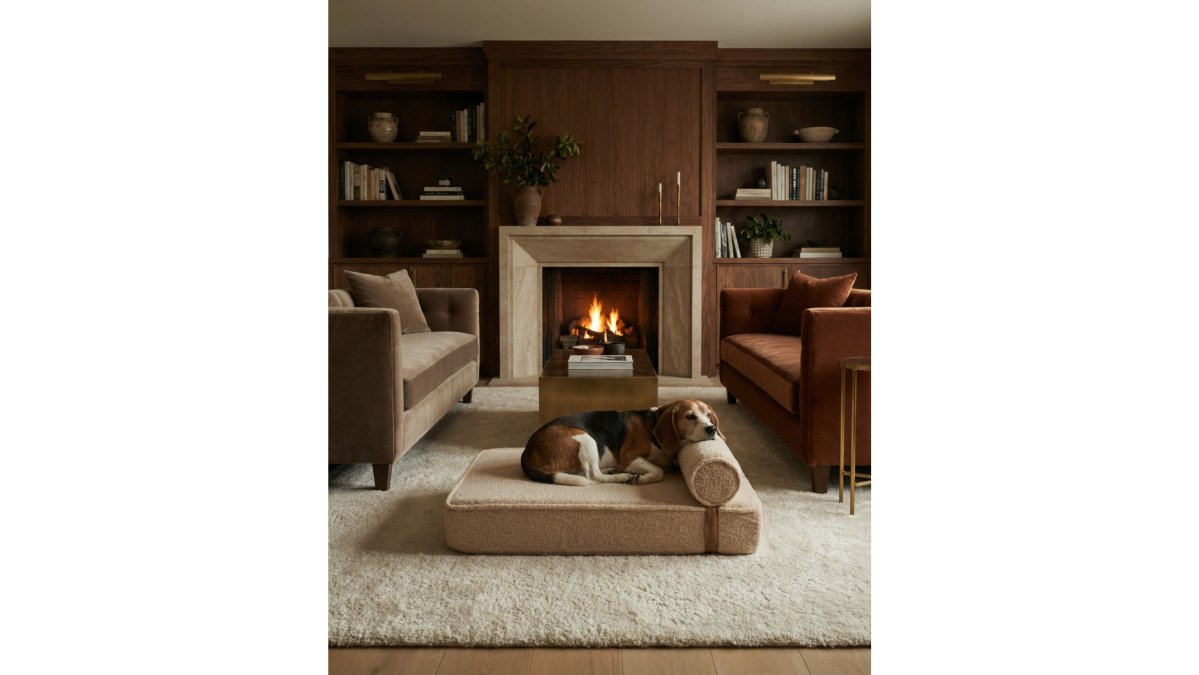
A practical benchmark: the Haven's sleeping surface measures 35" × 26" with a curved 20" backrest, sized for dogs up to 55 lb, or roughly 33" nose to tail.
Non-Toxic Dog Bed Materials: What to Avoid and What to Choose
Non-toxic dog bed materials are fabrics and fills free of chemical flame retardants, harsh dyes, and off-gassing foams. A dog spends eight to fourteen hours a day pressed against a bed, nose buried in the cover, so what it's made of matters more than most owners realize. Here's what's inside a cheap bed, and how to read a label.
Flame Retardants, Fiberfill, and Hidden Chemicals
Flame retardants are the biggest concern in cheap beds. Polyurethane foam is highly flammable, so manufacturers add chemical flame retardants to meet flammability requirements, most commonly polybrominated diphenyl ethers (PBDEs) and organophosphate flame retardants like TDCPP. These migrate out of foam as dust, and because a dog's nose is inches from the surface for hours, that dust ends up on fur and paws, then gets licked off.
Allergy-Friendly Fabrics: Organic Cotton, Hemp, and Bamboo
For allergy-prone dogs, the cover fabric matters as much as the fill. Organic is a farming standard, not an allergy guarantee, what matters is fiber structure, dye chemistry, and moisture handling.
What to Avoid
- Polyurethane foam with undisclosed additives, if the listing doesn't say "CertiPUR-US certified" or name the foam type, assume it contains flame retardants and off-gassing agents.
Furniture-Grade Dog Beds: Hardwood Frames That Outlast Fabric

Repairability: Fixing Wear Points Before They Spread
On a framed bed, you address the wear point: replace the cover, refresh the mattress, tighten the joinery. That's what turns a higher upfront price into a lower long-term cost.
Fabric Durability Compared: Canvas, Oxford Cloth, and Cotton
Fabric durability comes down to weave density and fiber strength, but "durable" means something different for a 12 lb terrier than a 110 lb mastiff. A fabric that resists a chewer's teeth isn't the same one that resists a heavy dog's weight eight hours a night. Here's how the four common bed fabrics perform.
| Fabric | Weave / Weight | Tear Strength | Best For | Trade-Off |
|---|---|---|---|---|
| Canvas (cotton or poly-cotton) | Tight plain weave, 10-18 oz per square yard | High | Heavy use, chewers, large breeds | Stiff at first, can shrink |
| Oxford cloth | Basket weave, 200-600 denier | Moderate to high | Easy cleaning, water resistance | Thinner weave punctures under sharp claws |
| Cotton (plain weave) | Loose weave, 4-8 oz | Low to moderate | Allergy-prone dogs, cool sleepers | Wears and pills fastest |
| Polyester (standard) | Knit or loose weave | Low | Budget beds only | Compresses, pills, short lifespan |
Matching Fabric to Dog Size
Weight-bearing is where fabric choice stops being cosmetic. A 15 lb dog puts roughly 15-20 psi through its paws and elbows when it shifts; a 90 lb dog can exceed 60 psi at the same contact points, and that difference determines which fabrics survive.
- Small dogs (under 25 lb): Almost any tightly woven fabric works. Cotton and Oxford cloth are fine because the load is light. Prioritize washability over tear strength.
- Medium dogs (25-60 lb): Canvas or a heavy Oxford cloth (400D+) is the sweet spot. Standard cotton will pill and thin at the elbow contact points within a year.
- Large dogs (60-100 lb): Canvas at 12 oz or heavier, or a reinforced Oxford with a bonded backing. Loose-weave cotton fails at the seams first, not the fabric.
- Giant breeds (100 lb+): Canvas alone isn't enough, the failure point moves to the seams and the frame. Look for double-stitched or bar-tacked seams, and a fabric weight of 14 oz or higher.
How Each Fabric Fails
- Canvas fails at the seams under sustained load, not the fabric itself. The weave is strong; the stitching is the weak link. Double-stitched seams and reinforced corners extend life significantly.
- Oxford cloth fails by puncturing, a sharp claw or a determined chewer's canine tooth goes through the weave. It's water-resistant and easy to wipe, but not chew-proof.
- Cotton fails by abrasion. It thins and pills at friction points (elbows, hips) and eventually tears. It's the most breathable and hypoallergenic, but it's a wear item.
- Polyester fails by compression and pilling. The fabric itself doesn't tear easily, but the fill inside collapses and the cover loses shape, which is why cheap polyester beds look flat long before they look torn.
The Chewer Question
No fabric is chew-proof. Canvas is chew-resistant, it takes longer to destroy, but a determined dog will get through it. For destructive chewers, structure matters more than fabric: a hardwood frame with a replaceable cover means a chewed cover is a replacement, not a $400 bed thrown away.
The Haven | Solid Hardwood Orthopedic →
What to Look For on the Label
- Fabric weight in ounces per square yard (canvas) or denier (Oxford). Higher is stronger.
- Weave type, tight plain weave for tear strength, basket weave for flexibility.
- Seam construction, double-stitched or bar-tacked at stress points.
- Backing or liner, a bonded backing adds puncture resistance; a separate waterproof liner protects the fill.
A 10 oz canvas cover with double-stitched seams will outlast a 600D Oxford cover with single stitching, even though the Oxford sounds more technical. Weave and construction beat marketing terminology every time.
Washability and Maintenance: Keeping Your Dog Bed Hygienic
Washability determines whether a bed stays hygienic or becomes a source of odor and allergens. A bed you can't wash properly will hold dander, dirt, and bacteria no matter how good the materials are.
- Remove and wash the cover every two to four weeks, or weekly for heavy shedders
- Wipe the waterproof liner with a damp cloth after any accident
- Air-dry the foam core if moisture ever reaches it, never put foam in a dryer
- Vacuum the sleeping surface between washes to lift dander and hair
Cost-Per-Use Analysis: Why Spending More Now Saves Later
Here's the framework to run it yourself:
- Estimate how long each option realistically lasts
- Divide the price by that lifespan in months
- Add replacement costs for the cheap option over the same period
- Factor in the time and hassle of rebuying
- Compare the totals, not the sticker prices
For owners of medium breeds who want a bed that fits a real room, Mafé Pets offers the Haven at $399, the Modern Day Bed at $175, and the Circle at $125. Each uses high-density foam and a waterproof lined, machine-washable cover, so the maintenance routine stays simple across all three.
Frequently Asked Questions
What is the best budget-friendly alternative to a cheap polyester dog bed?
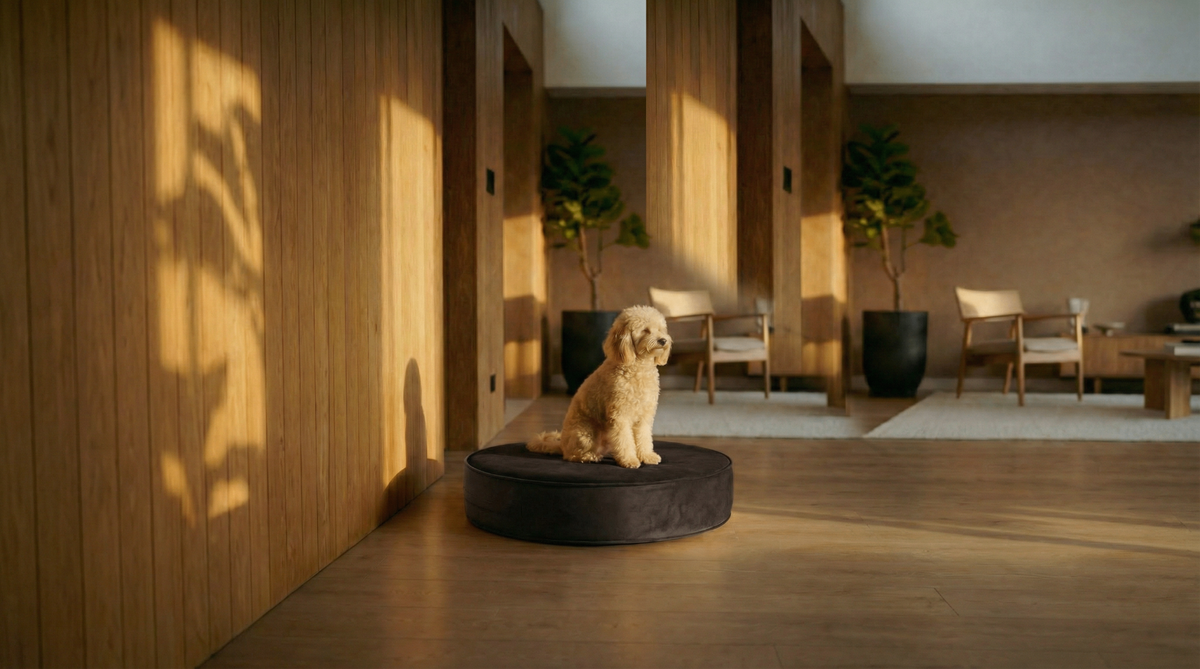
A high-density foam bed with a waterproof liner and washable cover is the most cost-effective alternative. While the upfront price is higher than polyester, the foam holds its shape for years instead of flattening in months. Look for a bed with a machine-washable cover and a sealed liner to protect the foam core. The Circle round ottoman dog bed at $125 offers this construction without the premium price of a hardwood frame.
What is the best fabric for a dog bed that lasts?
Canvas and Oxford cloth are the most durable common fabrics because of their tight weave and high tear strength. Whatever fabric you choose, a zip-off cover that machine-washes cold will extend the bed's life far more than the fabric type alone.
What do veterinarians recommend for dog beds, especially for aging dogs?
Vets typically recommend orthopedic memory foam for dogs with joint issues because it distributes weight evenly and reduces pressure on hips and shoulders. For senior dogs or breeds prone to arthritis, a bed with a solid base and high-density foam prevents the sagging that worsens joint strain. A waterproof liner is also important for older dogs who may have accidents, as it keeps moisture out of the foam.
How do non-toxic dog bed materials compare to standard polyester?
Standard polyester beds often contain flame retardants, dyes, and fiberfill that can off-gas or trigger allergies. Non-toxic options use materials like organic cotton or hemp, which are free from added chemicals. These materials cost more but are safer for dogs who chew or lick their beds. Check for certifications or clear material lists before buying.
Are machine-washable covers enough to keep a dog bed hygienic?
Machine-washable covers handle surface dirt, dander, and odors, but they don't protect the foam core from accidents or spills. A waterproof liner between the cover and the foam is essential for true hygiene. Without it, moisture seeps into the foam and creates mold and bacteria that washing the cover alone won't fix. Look for beds with a sealed liner and a cover that zips off completely.
The cycle of replacing cheap polyester dog beds ends when you buy construction that holds up. Mafé Pets builds furniture-grade beds with solid North American hardwood frames, high-density orthopedic memory foam, sealed waterproof liners, and machine-washable covers, all backed by a ten-year structural guarantee and rated 5.0 by owners. Get started with Mafé Pets and stop buying the same bed twice.