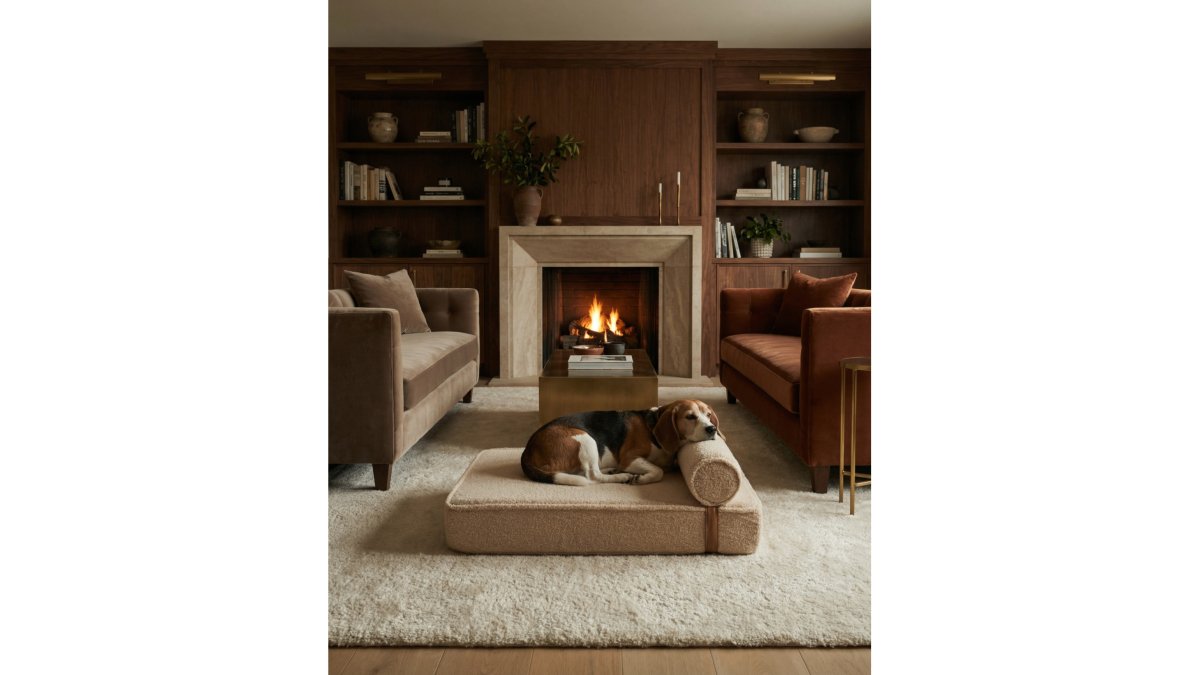
Benefits of Solid Wood Dog Furniture for Your Home
Table of Contents
- Why Solid Wood Dog Furniture Outlasts Everything Else
- The Best Dog Beds for Interior Design: Matching Your Home's Aesthetic
- How to Choose Furniture-Grade Dog Beds: A Buyer's Checklist
- Orthopedic Support and Joint Health: Why Memory Foam Matters
- Safety, Non-Toxic Finishes, and Chew Resistance
- Maintaining Solid Hardwood Pet Furniture for Decades of Use
- Environmental Impact and Long-Term Value of Solid Wood
- Frequently Asked Questions
Last Updated: September 16, 2026
Why Solid Wood Dog Furniture Outlasts Everything Else
Solid wood dog furniture is built from a single piece of kiln-dried hardwood rather than glued wood particles, and that difference in construction is why it survives years of daily use while cheaper beds collapse. At Mafé Pets, we build frames from solid North American hardwood because the material itself does the work that particleboard cannot.

Hardwood Construction vs. Particleboard: What Actually Matters
Particleboard is sawdust and resin pressed into a sheet. It holds a screw once, maybe twice, then crumbles at the fastening point. Solid hardwood holds a joint for decades because the wood fibers run continuously through the frame rather than stopping at a glue line.
How Real Joinery Prevents the Sag and Squeak
Mortise-and-tenon and doweled joints distribute weight across the frame instead of concentrating it at a few screws. That is the difference between a bed that stays quiet after two years and one that announces every time your dog jumps in.
The Best Dog Beds for Interior Design: Matching Your Home's Aesthetic
The best dog beds for interior design read as furniture first and pet gear second, so they sit in a living room without looking like an apology. Mafé Pets finishes each Haven frame by hand in Cream or Cocoa, two neutral tones chosen to sit beside hardwood floors and upholstered sofas rather than fight them.
Furniture-Style Crates vs. Wire Crates: A Visual Comparison
| Feature | Furniture-Style Wood Crate | Wire Crate |
|---|---|---|
| Living room appearance | Reads as an end table or bench | Reads as a cage |
| Noise level | Muffled, insulated panels | Metal rattle on movement |
| Ventilation | Slatted or paneled airflow | Open mesh on all sides |
| Chew resistance | Solid wood, hard to grip | Bars bend under pressure |
| Cleaning | Wipe frame, wash cover | Hose down tray |
Wire crates win on price and portability. They lose on everything a guest sees when they walk through your front door.
How to Choose Furniture-Grade Dog Beds: A Buyer's Checklist
Furniture-grade means the piece is built to the same standard as a side table: solid stock, real joinery, and a finish that can be repaired rather than replaced. Work through this list before you commit.
- Frame material: solid hardwood, not MDF, veneer, or particleboard
- Joint type: mortise-and-tenon, dowel, or bolted hardwood, not staples
- Finish: non-toxic, low-VOC, safe if chewed
- Mattress: high-density orthopedic memory foam, not shredded fill
- Liner: waterproof, removable, and fitted to the mattress
- Cover: machine-washable and replaceable
- Warranty: structural coverage measured in years, not months
- Footprint: measured against the actual floor space you have
Size, Weight Capacity, and Breed-Specific Fit
Measure your dog nose to tail while they lie stretched out, then add a few inches of margin. A dog that fills a bed edge to edge will hang over the side within a year, and a frame rated below your dog's weight will flex at the joints under repeated impact.
Orthopedic Support and Joint Health: Why Memory Foam Matters
High-density orthopedic memory foam distributes a dog's weight across the whole mattress instead of concentrating it at the hips and elbows, which is where pressure builds on hard surfaces. That matters for senior dogs, and it matters just as much for a young, active dog who will spend the next decade on the same joints.
Safety, Non-Toxic Finishes, and Chew Resistance
A dog bed lives on the floor, gets chewed, and gets licked, so the finish matters as much as the frame. Most buying guides stop at "look for non-toxic finishes" and never say what that means. Here's the specific breakdown.
What "Non-Toxic Finish" Actually Means
- Water-based polyurethane or acrylic: Low-VOC, dries hard, and is the standard for pet and children's furniture. Cures in days, not weeks.
- Plant-based oil finishes (tung, linseed, walnut): Penetrate the wood rather than coating it, so a chew mark scuffs rather than flakes. Require periodic re-oiling.
- Conversion varnish or catalyzed lacquer: Extremely durable, but solvent-heavy during application. Fine once fully cured, but ask the maker how long the piece off-gassed before shipping.
- What to avoid: Heavy-metal driers (cobalt, lead, manganese), solvent-based stains without a sealed topcoat, and any finish the supplier can't name by chemistry.
Ask the maker three questions: What is the finish? Is it water-based or solvent-based? How long did it cure before shipping? A supplier who can't answer all three is a supplier who doesn't know what's on the wood.
Chew Resistance: Hardness and Grip
Hardness alone isn't enough. A dog can grip a square rail; a rounded, tapered rail slides out of the jaw. That's why the best chew-resistant frames combine a hard species with a profile that offers no purchase.
Breed-Specific Chew and Anxiety Profiles
Heavy chewers, Labs, Golden Retrievers, Pit Bulls, German Shepherds, and most terriers. These dogs need a Janka-hard species (maple, hickory, or walnut), a rounded rail profile, and a finish that scuffs rather than flakes. Avoid soft pine entirely, and skip any frame with exposed staples or thin metal trim.
Maintaining Solid Hardwood Pet Furniture for Decades of Use
Solid hardwood pet furniture lasts decades when you keep moisture off the frame, control the humidity around it, and clean the cover before grime works into the weave. The routine is short, but the timing matters more than the effort.
The Monthly, Seasonal, and Annual Routine
- Weekly: Vacuum or brush the frame to lift embedded hair before it works into the grain. A rubber pet brush pulls fur out of slats faster than a vacuum attachment.
- Monthly: Wipe the frame with a cloth barely dampened with water and a drop of mild dish soap, then dry immediately. Standing water is the enemy, it swells end grain and lifts finish at the joints.
- Seasonally: Wash the cover on a standard cycle and air-dry or tumble low. Skip the dryer sheet; the residue coats the fabric and traps odor.
- Annually: Check every joint and hardware point with a screwdriver or hex key. Wood moves with the seasons, and a quarter-turn on a loose bolt in October prevents a squeak in January.
- Every few years: Re-oil or touch up the finish if the wood looks dry or chalky. A penetrating oil (tung or linseed) feeds the fibers; a film finish (polyurethane or lacquer) sits on top and only needs spot repair.
Why Humidity Control Matters More Than Cleaning
Solid wood is hygroscopic, it absorbs and releases moisture with the air around it. Most practitioners find that indoor relative humidity between 35% and 55% keeps a hardwood frame stable year-round. Below 30%, the wood shrinks and joints loosen; above 60%, it swells and can cup or crack along the grain. A $20 hygrometer next to the bed tells you more about its long-term health than any cleaning product.
How Joints Hold Up Over Time
Mortise-and-tenon and doweled joints distribute a dog's landing impact across the frame rather than concentrating it at a few fasteners. Over a decade of daily jumping, the failure modes look different:
- Stapled or screwed particleboard: Fastener holes wallow out, the panel crumbles at the screw, and the joint fails suddenly.
- Bolted hardwood: Bolts may need a seasonal quarter-turn, but the wood around them holds its threads for decades.
- Glued mortise-and-tenon: The joint is mechanically locked; even if the glue line eventually fatigues, the tenon still carries load.
Environmental Impact and Long-Term Value of Solid Wood
Solid wood furniture carries a lighter environmental load than most people assume, because a single hardwood frame outlives several disposable beds made from resin binders and synthetic fill. Every replacement you avoid is one less piece of furniture in a landfill. The U.S. Environmental Protection Agency on reducing waste frames source reduction as the most effective waste strategy, and buying one durable piece instead of five cheap ones is exactly that.
Frequently Asked Questions
What are the disadvantages of a wooden dog crate?
Wooden dog crates can be heavier and cost more than wire crates, and they may not be ideal for heavy chewers unless built with solid hardwood and chew-resistant joinery. Some lower-quality wooden crates use particleboard that can warp or break. However, well-made solid wood dog furniture like the Haven uses real joinery and non-toxic finishes, which addresses these concerns. The trade-off is a higher upfront cost for years of durability and a piece that fits your home's interior design.
Is solid wood furniture worth the investment for pets?
Yes, if you want a piece that lasts. Solid wood dog furniture resists warping, holds its shape, and can be refinished if scratched. Cheaper alternatives like particleboard often degrade within a year or two. A solid wood bed with a ten-year structural warranty, such as the Haven, costs $399 but replaces multiple flimsy beds over the same period. It also supports your dog's joints with orthopedic memory foam, which is a health benefit that cheap beds rarely provide.
How do you maintain solid wood dog furniture?
Dust the frame weekly with a soft cloth, and wipe spills immediately with a damp cloth and mild soap. Avoid harsh chemicals or abrasive cleaners that can dull the finish. For the mattress, remove the cover and machine wash it according to the care label; the waterproof liner protects the foam from accidents. Check screws and joints every few months and tighten as needed. With this routine, maintaining solid hardwood pet furniture keeps it looking new for decades.
Is solid wood furniture safe for dogs that chew?
Solid hardwood is more chew-resistant than soft woods or particleboard because it is dense and holds up to gnawing. However, no wooden furniture is completely chew-proof. If your dog is a determined chewer, provide appropriate chew toys and consider a bed with a frame that has no exposed soft edges. Non-toxic finishes are critical; avoid furniture with lead-based paints or unknown stains. The Haven uses a hand-finished, non-toxic finish and solid North American hardwood, making it a safer choice for dogs that chew.
Cheap dog beds are a subscription, not a purchase. If you want a piece that holds its shape, matches your living room, and supports your dog's joints for the next decade, Mafé Pets built the Haven for exactly that: solid North American hardwood with real joinery, a high-density orthopedic memory foam mattress with a waterproof liner, a machine-washable cover, and a ten-year structural warranty. Get started with Mafé Pets and give your dog a bed that outlasts the room it sits in.