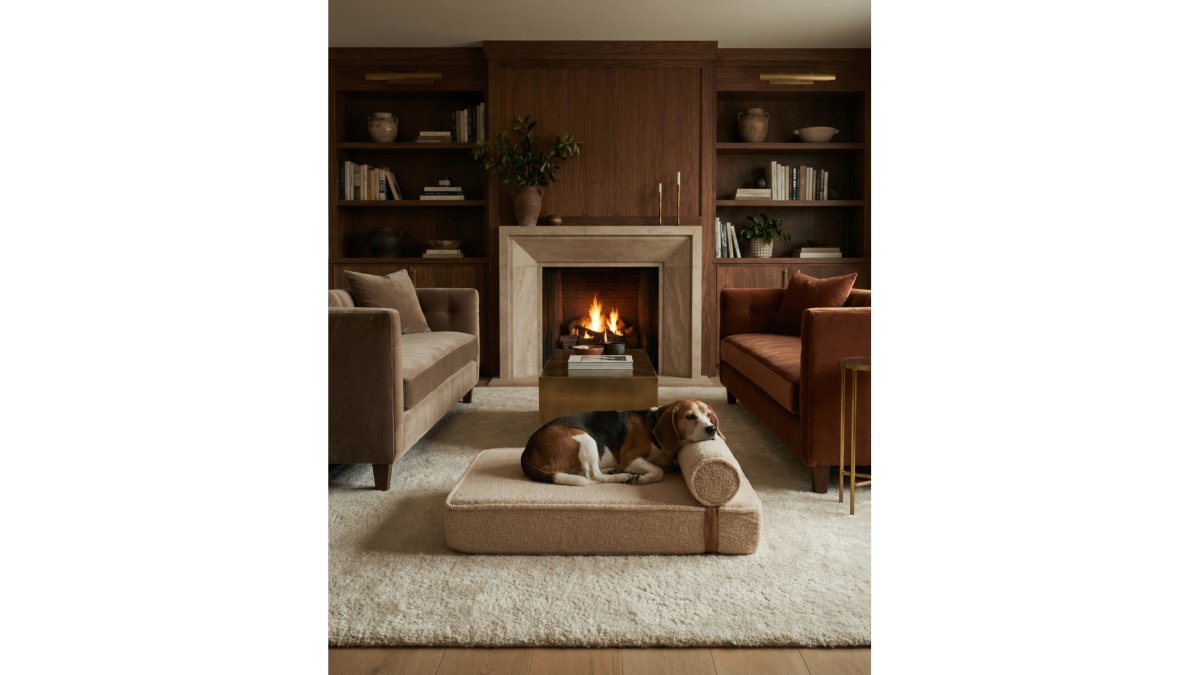
Benefits of Memory Foam Dog Beds: Comfort & Joint Care
Table of Contents
- How Memory Foam Dog Beds Relieve Joint Pain and Pressure Points
- Signs Your Dog Needs an Orthopedic Bed
- Memory Foam vs Egg Crate Dog Bed: Which Actually Supports Your Dog?
- Orthopedic Dog Beds for Large Breeds: Weight Distribution and Durability
- Toxicity, Off-Gassing, and What CertiPUR-US Means for Your Dog
- Age-Specific Recommendations: Puppies, Adults, and Senior Dogs
- Maintenance and Hygiene: Keeping Memory Foam Dog Beds Clean and Lasting
- Frequently Asked Questions
Last Updated: September 17, 2026
How Memory Foam Dog Beds Relieve Joint Pain and Pressure Points
Memory foam dog beds distribute a dog's weight evenly across the sleep surface, reducing the concentrated pressure that worsens joint pain in the hips, elbows, and shoulders. Unlike standard stuffed beds that compress flat under body weight, high-density memory foam contours to your dog's shape and then returns to form, keeping joints cushioned through the night.

The mechanism matters more than most owners realize. When a dog lies on a thin or lumpy bed, pressure concentrates at the heaviest contact points, which restricts circulation and stiffens already-sensitive joints. Memory foam spreads that load. The result is better weight distribution, less tossing, and noticeably easier mornings, especially for dogs with arthritis or limited mobility.
Spine alignment plays a supporting role too. A foam base that holds its shape keeps the spine level rather than letting the midsection sink, which takes strain off the back and hips.

Signs Your Dog Needs an Orthopedic Bed
The clearest sign your dog needs an orthopedic bed is a change in how they get up, lie down, or move after resting. Dogs rarely complain about pain directly, so owners have to read the behavior. Watch for:
- Stiffness or hesitation when standing after a nap
- Reluctance to climb stairs, jump on furniture, or use a ramp
- Shifting position repeatedly instead of settling
- Avoiding hard floors in favor of rugs or carpet
- Whining, panting, or restlessness at night
- Visible limping that eases once they've moved around
Age alone isn't the trigger. An active four-year-old with early joint wear can benefit just as much as a senior dog, particularly large breeds prone to hip and elbow issues. If you're seeing two or more of these signs, an orthopedic bed is one of the simplest, lowest-risk changes you can make.
Memory Foam vs Egg Crate Dog Bed: Which Actually Supports Your Dog?
Memory foam provides genuine orthopedic support, while egg crate beds offer only light cushioning. That's the honest difference, and it comes down to density and resiliency.
Egg crate beds use a convoluted foam with peaks and valleys. They feel soft and add some airflow, but the foam is low-density, so it flattens quickly under a dog's weight. For a healthy young dog, that may be fine. For a dog with joint pain, it does little to relieve pressure points.
Memory foam is denser and more responsive. It compresses where weight lands, then recovers, so the support is consistent rather than collapsing overnight. Here's how the two compare:
| Feature | Memory Foam | Egg Crate |
|---|---|---|
| Support level | High, orthopedic | Light cushioning |
| Pressure relief | Strong | Minimal |
| Durability | Years with care | Months before flattening |
| Best for | Arthritis, seniors, large breeds | Healthy, light dogs |
| Cost | Higher | Lower |
If joint health is the goal, memory foam is the better investment. Egg crate is a stopgap, not a solution.
Orthopedic Dog Beds for Large Breeds: Weight Distribution and Durability
Large breeds punish cheap beds. A 90-pound dog puts concentrated load on the hips and elbows every time it lies down, and low-density foam compresses into a flattened crater within weeks. For big dogs, the deciding factors are foam density, foam thickness relative to body weight, and the rigidity of the base underneath.
Density is the number that matters. Memory foam is rated in pounds per cubic foot (lb/ft³). A common industry split:
| Foam density | Typical feel | Realistic lifespan under a large dog |
|---|---|---|
| 2.5-3 lb/ft³ | Soft, budget | Months before permanent compression |
| 4 lb/ft³ | Firm, supportive | 1-3 years with a good cover |
| 5 lb/ft³ and up | Orthopedic, slow-recovery | Several years, holds shape under load |
A four-inch bed of 2.5 lb foam supports far less than a two-inch bed of 5 lb foam. Thickness sells; density performs. When a listing only advertises "4-inch orthopedic foam" with no density figure, treat that as a gap, not a feature.
Weight distribution works through two layers. The top memory foam layer conforms to the dog's contours and spreads load across the contact area, which is what relieves pressure at the hips and elbows.
Durability signals to look for:
- A stated foam density (4 lb/ft³ or higher for large breeds)
- A separate support base, not just a thick foam slab
- A waterproof liner protecting the foam core
- A removable, machine-washable cover
- A structural warranty measured in years, not months
Toxicity, Off-Gassing, and What CertiPUR-US Means for Your Dog
A new foam bed can carry a chemical smell for a few days, a process called off-gassing. It's worth understanding before your dog spends eight hours a night breathing near it.
Age-Specific Recommendations: Puppies, Adults, and Senior Dogs
The right bed changes as your dog ages, and matching the bed to the life stage prevents wasted money and discomfort.
Maintenance and Hygiene: Keeping Memory Foam Dog Beds Clean and Lasting
Memory foam lasts years when the cover and liner do their job, and that means protecting the foam from moisture above all else. Foam itself should never go in a washing machine; water breaks down its cellular structure, and trapped moisture invites mold and mildew that no amount of airing will fully remove. This is the part most guides skip: how to actually wash a memory foam bed without ruining the foam.
The weekly routine
- Shake out the bed outdoors to dislodge hair and dander
- Vacuum the cover with an upholstery attachment to pull embedded fur from the seams
- Spot-clean accidents immediately with a damp cloth and mild soap, never soak the foam
The monthly wash (cover only)
- Zip the cover off and check the care tag before anything else
- Machine-wash on a gentle cycle in cold or lukewarm water, hot water can shrink covers and warp foam if any foam is sewn in
- Use a mild, pet-safe detergent; skip fabric softener and bleach, which leave residue that irritates skin and breaks down fibers
- Tumble dry on low, or air-dry flat. High heat is the enemy of both the cover fabric and any foam it touches
- Never put the memory foam core in the washer or dryer, even on a gentle cycle
If the foam itself gets wet:
- Blot, don't rub, to pull out as much moisture as possible
- Press the foam between dry towels to wick water from the cells
- Stand it on edge in a well-ventilated room with a fan, out of direct sun
- Allow 24-48 hours to dry fully before the dog uses it again
- If a musty smell persists after drying, the foam has likely begun to mildew and should be replaced
Frequently Asked Questions
Are memory foam beds good for dogs?
Memory foam dog beds distribute a dog's weight evenly, reducing pressure on joints and hips. This matters most for senior dogs, large breeds, and dogs recovering from surgery. The foam also isolates motion, so dogs sharing a bed won't disturb each other. High-density foam holds its shape longer than standard polyester fill, which compresses within months. For dogs with arthritis or mobility issues, the cushioning and spine alignment support can make daily movement noticeably easier.
What are the downsides of memory foam dog beds?
Memory foam can retain heat, which bothers dogs that run warm or live in humid climates. Some lower-cost foams off-gas a chemical smell for days after unboxing, so look for CertiPUR-US certified foam. Memory foam also costs more upfront than egg crate or polyester-filled beds. Finally, memory foam cannot go in a washing machine. You need a waterproof liner and a removable, machine-washable cover to protect the foam core from accidents and odors.
At what age should a dog start using an orthopedic bed?
Most dogs benefit from orthopedic support by age 7, when joint stiffness and arthritis become more common. Large breeds age faster and may need support as early as 5 or 6. Active younger dogs can also use memory foam after intense exercise or surgery. Watch for signs like difficulty rising, reluctance to jump, or shifting weight off one leg. If your dog shows these signs, an orthopedic bed is worth trying regardless of age.
Are there specific maintenance requirements for memory foam dog beds?
Memory foam cores cannot be machine washed. Instead, use a bed with a waterproof liner that blocks accidents and spills from reaching the foam, plus a zip-off cover you can wash in a standard machine. Vacuum the foam surface monthly and spot-clean stains with a mild enzyme cleaner. Air the foam outdoors periodically to reduce moisture and odor. This routine keeps the foam supportive and extends the bed's lifespan by years.
Choosing a bed that genuinely supports your dog's joints comes down to density, durability, and how well it holds up to daily life. Mafé Pets builds furniture-grade beds with high-density orthopedic memory foam, solid North American hardwood frames, waterproof liners, and machine-washable covers, all backed by a ten-year structural warranty. If you want support that lasts as long as your dog needs it, shop the Haven and give your companion the comfort their joints deserve.