How to Stop Puppy From Chewing Bed
Table of Contents
- Why Do Dogs Tear Up Their Beds
- How to Interrupt and Redirect Puppy Chewing
- Step-by-Step Training Plan to Stop Bed Chewing
- Why Durable Dog Beds for Chewers Matter
- Choosing the Best Dog Bed for Puppies That Chew
- Common Mistakes to Avoid
- Frequently Asked Questions
Last Updated: October 10, 2026
Why Do Dogs Tear Up Their Beds
Puppies chew beds for specific reasons. Understanding why your puppy is destroying bedding is the first step to learning how to stop puppy from chewing bed. Most bed destruction falls into three categories: natural development, boredom, or stress.
Teething and Natural Chewing Urges
Puppies chew because their teeth hurt. Between 3 and 6 months old, puppies lose baby teeth and grow adult teeth. This process creates discomfort.
Natural chewing urges don't stop after teething ends. Adult dogs chew to keep their jaws strong and their minds engaged.
The key is redirecting that need toward appropriate objects. A puppy chewing their bed isn't being destructive on purpose. They're doing what puppies do.
Boredom and Insufficient Enrichment
Puppies have energy and curiosity. Without outlets for both, they find their own. A bored puppy will chew whatever is available. Often, that's the bed.
Puppies need mental stimulation and physical exercise daily. A 3-month-old puppy needs multiple play sessions. A 6-month-old needs even more.
This is where many owners miss the real problem. They focus on stopping the chewing without addressing the boredom underneath it.
Anxiety and Stress-Related Chewing
Some puppies chew beds when anxious. Separation anxiety is common in young dogs. A puppy left alone may chew their bed as a way to self-soothe.
Stress from loud noises, changes in routine, or new environments can trigger chewing too. A puppy that only chews when you leave or during storms is likely experiencing anxiety, not just teething.
Recognizing the difference matters. Anxiety-driven chewing needs a different approach than boredom-driven chewing.
How to Interrupt and Redirect Puppy Chewing
Stopping bed chewing requires two things: catching the behavior and offering an alternative. You can't change what you don't see. Supervision is essential.
Catching the Behavior in Action
Watch your puppy closely. When you see them chewing the bed, interrupt calmly. Don't yell or punish. A simple "no" or a redirect works better.
The moment your puppy stops chewing the bed, offer praise. This teaches them that stopping gets attention. Attention is rewarding.
Consistency matters here. Every time you catch the behavior, respond the same way. Inconsistent responses confuse puppies and slow progress.
Offering Appropriate Chew Toys
The best way to stop bed chewing is to give your puppy something better to chew.
Rotate toys to keep them interesting. A toy that's always available becomes boring. A toy that appears sometimes feels special.
Hard rubber toys, rope toys, and puzzle toys all work. Match the toy to your puppy's age and chewing style.
Reward your puppy when they chew toys instead of the bed.
| Chew Toy Type | Best For | Safety Notes |
|---|---|---|
| Hard rubber toys | Heavy chewers | Supervise; remove if pieces break off |
| Rope toys | Interactive play | Remove if threads separate; choking risk |
| Puzzle toys | Mental stimulation | Fill with treats; monitor for damage |
| Plush toys | Gentle chewers | Remove stuffing if torn; supervision needed |
Step-by-Step Training Plan to Stop Bed Chewing
A structured plan works better than hoping the behavior stops on its own. However, the right plan depends on why your puppy is chewing. Before you start, identify the root cause. The interventions for teething differ from those for boredom or anxiety. Treating the wrong cause wastes time and frustration.
Diagnosing the Root Cause
Teething-driven chewing: Occurs between 3 and 6 months old. Puppy chews constantly, including on toys, furniture, and hands. Gums may appear swollen or red.
Boredom-driven chewing: Occurs at any age. Puppy chews primarily when alone or when you're home but not engaging with them.
Anxiety-driven chewing: Occurs when puppy is left alone, during loud noises (storms, fireworks), or after changes in routine. Puppy may also pace, whine, or have accidents.
Step 1: Supervise and Remove Access (All Causes)
Keep your puppy in sight when they're awake. Unsupervised time is when bed chewing happens. If you can't watch them, confine them to a safe space without the bed.
Remove the bed when you can't supervise. Put it away at night and when you leave.
Once your puppy is reliable around the bed, reintroduce it slowly. Start with short periods (15-30 minutes) while you're present. Gradually increase time as the behavior improves.
Step 2: Interrupt and Redirect (All Causes)
When you catch your puppy chewing the bed, interrupt calmly, this is key to how to stop puppy from chewing bed.
The moment your puppy stops chewing the bed, offer an appropriate chew toy and praise. This teaches them that stopping gets attention and that toys are more rewarding than bedding.
Consistency is critical. Every time you catch the behavior, respond the same way. Inconsistent responses confuse puppies and slow progress.
Step 3: Provide Cause-Specific Interventions
For teething puppies:
- Offer cold chew toys. Freeze a damp rope toy or rubber toy for 30 minutes. Cold numbs sore gums and provides relief.
- Rotate toys frequently. A toy that's always available becomes boring. A toy that appears sometimes feels special.
- Offer a variety of textures. Some teething puppies prefer soft rubber; others like hard nylon. Experiment to find what your puppy gravitates toward.
- Do not restrict chewing during teething. Chewing relieves pain. Redirect it to appropriate toys rather than trying to stop it.
- Teething intensity peaks around 4-5 months and subsides by 6-7 months. Once adult teeth are in, chewing urges naturally decrease.
For boredom-driven chewing:
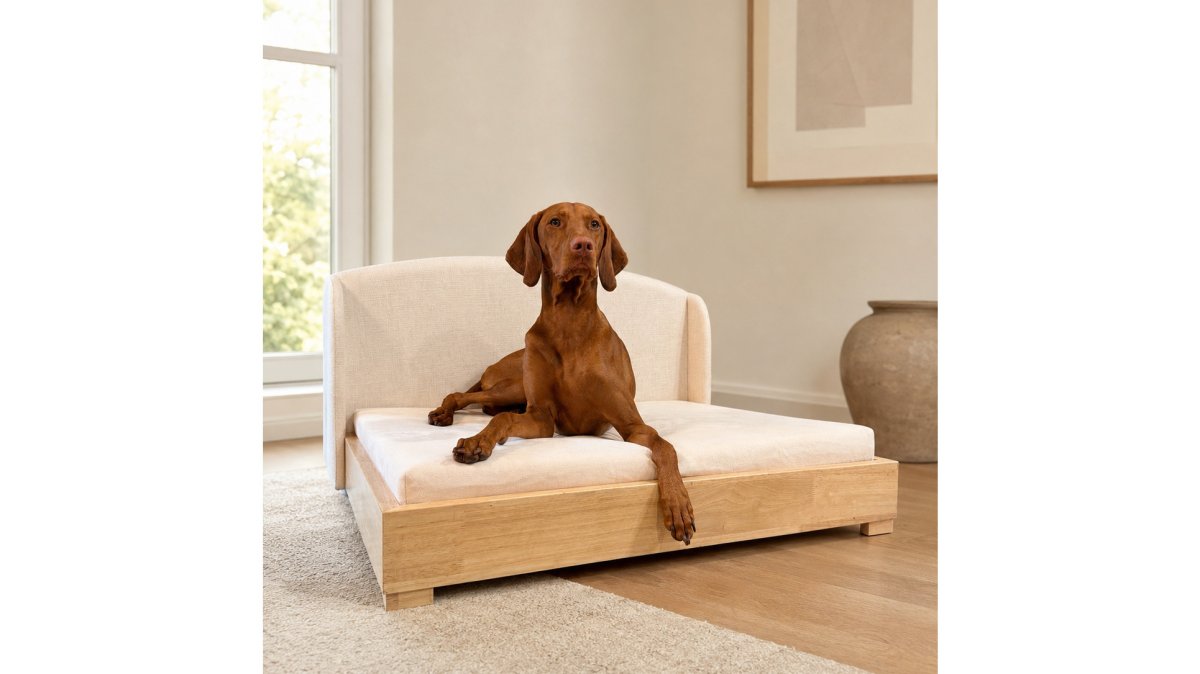
The Haven | Solid Hardwood Orthopedic Dog Bed →
- Increase daily exercise. A 3-month-old puppy needs at least three 15-minute play sessions daily. A 6-month-old needs longer sessions and more of them. A tired puppy is less likely to chew.
- Add mental stimulation. Training sessions, puzzle toys, sniff games, and interactive play tire puppies out faster than physical exercise alone. A mentally tired puppy is less destructive.
- Rotate toys to maintain novelty. Keep some toys hidden and rotate them every few days. This makes toys feel new and interesting.
- Use puzzle toys and treat-dispensing toys. These keep puppies engaged for 15-30 minutes and satisfy the urge to work for food.
- Leave the puppy with a chew toy or puzzle toy when you leave. Do not leave them with the bed.
For anxiety-driven chewing:
- Address the underlying anxiety first. Bed chewing is a symptom, not the problem. A puppy chewing to self-soothe needs help managing stress, not just redirection.
- Practice gradual alone-time training. Start with 2-3 minutes alone in a safe space. Return before the puppy cries. Gradually extend the time. This teaches the puppy that you always come back.
- Create a safe space. A crate, pen, or small room with familiar scents (a blanket that smells like littermates or the breeder) helps the puppy feel secure.
- Use calming aids. Consult your veterinarian about calming supplements, pheromone diffusers, or anxiety wraps. These can help during the training process.
- Avoid making departures and arrivals dramatic. Do not make a big fuss when you leave or return. This teaches the puppy that your absence is not a crisis.
- If anxiety is severe (excessive panting, drooling, destructiveness, or accidents), consult a veterinarian or certified professional dog trainer. Anxiety may require behavioral medication or professional guidance.
Step 4: Reward Calm Behavior Around the Bed
When your puppy is near the bed without chewing it, reward them. Use treats, praise, or play. Make calm behavior around the bed the most rewarding thing.
This teaches your puppy that the bed is for resting, not chewing. Consistency is critical. Every calm moment near the bed should get positive attention.
Step 5: Establish a Crate and Alone-Time Routine
Crates prevent unsupervised chewing. A properly introduced crate becomes a safe space, not a punishment. Puppies naturally avoid soiling where they sleep.
Start crate training early. Make it positive. Feed meals inside. Leave treats and toys in there.
Begin with short periods. Leave your puppy for 5 minutes. Return before they cry. Gradually extend the time.
Do not leave bedding in the crate if your puppy chews it.
Step 6: Reintroduce Bedding Gradually
Once your puppy has gone 2-3 weeks without chewing the bed, begin reintroducing it. Start with short periods while you're present and supervising. Gradually increase time.
If chewing resumes, remove the bed again and extend the timeline. Do not rush this step.
If chewing persists after 8-12 weeks of consistent training, consult a certified professional dog trainer or veterinary behaviorist.
Why Durable Dog Beds for Chewers Matter
Not all dog beds survive a chewing puppy. Standard beds fall apart. Their stuffing becomes a choking hazard. Fabric tears easily.
A durable bed designed for chewers changes everything. It survives the puppy stage. It lasts into adulthood. It's an investment that pays off.
Our beds use high-density orthopedic foam and solid hardwood construction. This matters because a bed your puppy destroys teaches them that beds are toys.
Choosing the Best Dog Bed for Puppies That Chew
The right bed makes training easier. It survives the chewing phase. It stays comfortable as your dog ages.
Safety Risks From Swallowing Bedding
Puppies can choke on bedding stuffing. Fabric pieces can block their intestines. This is serious. It can require surgery.
A bed with a sealed waterproof liner prevents your puppy from reaching the foam.
Choose beds where the cover is removable and the liner is sealed. Avoid beds with loose stuffing or exposed foam. These are dangerous for chewing puppies.
Waterproof Liners and Machine-Washable Covers
Puppies have accidents. A waterproof liner protects the foam from urine, which can damage it and create odors.
A machine-washable cover makes cleanup easy. Accidents happen.
The Haven from Mafé Pets includes both features. The waterproof liner protects the orthopedic foam. The tailored cover zips off and washes cold.

For puppies that chew, this design matters. You're not replacing the bed after every accident. You're cleaning it and moving on.
Common Mistakes to Avoid
Punishment doesn't work. Yelling at your puppy after they've chewed the bed teaches them to hide.
Don't leave your puppy unsupervised with the bed. Habits form fast.
Avoid cheap beds. They fall apart. Their stuffing becomes a hazard. You'll replace them repeatedly.
Don't skip exercise and enrichment. A tired puppy chews less. Boredom drives destructive behavior.
Puppy bed chewing is frustrating. It's also fixable. Its waterproof liner and machine-washable cover handle accidents.
Frequently Asked Questions
Why is my puppy chewing up their bed?
Puppies chew beds for several reasons: teething discomfort (typically ages 3-6 months), boredom from insufficient enrichment, anxiety when left alone, or simply exploring their environment. Identifying the root cause helps you address the behavior effectively. Puppies with high energy or those spending long periods unsupervised are most likely to tear up bedding. Once you understand why your puppy is chewing, you can implement targeted solutions like appropriate chew toys, exercise, and training.
Is it safe for a puppy to chew on a dog bed?
Chewing on fabric bedding poses real safety risks. Puppies can swallow pieces of stuffing, fleece, or foam, which may cause intestinal blockages requiring emergency surgery. Waterproof liners and sealed foam cores reduce this risk, but supervision remains essential. Durable dog beds for chewers are designed with materials that resist tearing and prevent easy access to filling. If your puppy has already ingested bedding material and shows lethargy, vomiting, or loss of appetite, contact your veterinarian immediately.
What's the best dog bed for puppies that chew?
The best dog bed for puppies that chew combines durability, safety, and easy cleaning. Look for beds with sealed waterproof liners that prevent access to foam, high-density foam that resists tearing, and machine-washable covers for quick cleanup after accidents. Hardwood frames with hand-joined construction outlast cheaper alternatives. The Haven from Mafé Pets ($399) features solid hardwood, orthopedic memory foam, a sealed waterproof liner, and a ten-year warranty, making it a long-term investment that survives heavy chewing better than standard beds.
How do I redirect my puppy's chewing to appropriate toys?
Redirect by offering attractive chew toys the moment you catch your puppy chewing the bed. Praise and reward with treats when your puppy chooses the toy instead. Rotate toys to maintain interest and select ones designed for puppies: rubber toys, rope toys, and puzzle feeders work well. Make chew toys more appealing than the bed by applying pet-safe deterrent sprays to bedding. Consistency matters, every family member must redirect the same way. Over time, your puppy learns that chew toys bring rewards and attention, while the bed does not.