Best Snoozer Pet Products Alternatives: 2026 Guide
Table of Contents
- Quick Comparison: Three Snoozer Pet Products Alternatives
- What Makes Snoozer-Style Beds Worth Replacing
- The Haven: A Luxury Orthopedic Dog Bed Built Like Furniture
- The Modern Day Bed: Low-Profile Comfort for Modern Interiors
- The Circle: A Sculptural Ottoman Bed for Small Dogs
- How to Pick Stylish Dog Beds That Match Home Decor
- Matching the Bed to Your Dog's Size and Sleep Style
- Frequently Asked Questions
Last Updated: September 14, 2026
Quick Comparison: Three Snoozer Pet Products Alternatives
Snoozer-style beds earned their reputation on deep-bucket comfort, but a growing number of owners now want the same burrowing security wrapped in furniture-grade materials that hold up in a living room. If you are hunting for the best Snoozer pet products alternatives, the three beds below cover the widest range of sizes, budgets, and interior styles. This guide from Mafé Pets compares construction, washability, and warranty side by side so you can match a bed to your dog and your decor without guessing.
| Bed | Price | Frame or Core | Best For | Warranty |
|---|---|---|---|---|
| The Haven | $360 | Solid North American hardwood + orthopedic memory foam | Dogs up to 55 lbs, senior joints | 10-year structural |
| The Modern Day Bed | $175 | High-density foam with bolster backrest | Medium dogs, low-profile spaces | Standard |
| The Circle | $125 | High-density foam core, round silhouette | Small dogs, open floor plans | Standard |
A common mistake is choosing by color swatch alone. The material under the cover decides whether the bed survives year three.

What Makes Snoozer-Style Beds Worth Replacing
Nesting instinct drives most of the behavior you see at bedtime. Dogs circle, paw, and press into a bed because that motion signals safety, and a deep bolster mimics the den-like shape they instinctively seek. Traditional bucket beds deliver that feeling well. Where they fall short is longevity, and the failure is almost never the cover. It is what is underneath.
The Three Failure Points, Ranked by How Often They Happen
Most owners replace a burrowing bed for one of three reasons, and they tend to fail in a predictable order:
- Foam collapse. Poly-fill and low-density foam lose loft under repeated point loading, the weight of a dog's elbows and hips concentrated in the same two spots every night. Once the walls flatten, the bed stops being a burrowing bed and becomes a mat.
- Zipper and seam failure. The zipper is the cheapest component in most beds and the one under the most stress, because it is loaded every time the cover comes off for washing. A plastic coil zipper on a thin tape will separate long before the foam dies.
- Cover wear. Fabric pilling, seam separation at the bolster, and fading are cosmetic but usually the trigger that sends people shopping.
Why 'Knock-Off' Beds Fail Faster Than the Price Suggests
The gap between a budget alternative and a durable one is not the fabric swatch. It is measurable in three places:
- Foam density. Better beds use high-density foam, the kind that springs back to shape when you press a palm into it and release. Budget beds use low-density foam or shredded fill that compresses permanently. A quick in-store test: press the center of the cushion firmly for five seconds, release, and watch how fast it recovers. Slow recovery or a visible dent that lingers is a warning sign.
- Zipper hardware. Metal or heavy-duty molded zippers on a wide tape outlast thin plastic coils. If the zipper teeth feel sharp or the tape is narrow, expect it to fail within a couple of wash cycles.
- Frame or core construction. A hardwood frame with real joinery distributes weight across the whole bed. Particleboard and cam-lock assemblies loosen at the joints, and a foam-only core with no frame relies entirely on foam density to hold its shape.
What Actually Justifies Replacement
Replacement is usually about three things: the foam collapsed, the zipper failed, or the bed no longer matches the room. American Kennel Club guidance on canine orthopedic health notes that senior dogs benefit from consistent, supportive resting surfaces, which makes a bed that holds its shape a practical purchase rather than a cosmetic one. If your dog is a heavy digger, the kind that paws and rearranges before settling, the foam and seams take more abuse than average, and the failure timeline shortens accordingly.
The Haven: A Luxury Orthopedic Dog Bed Built Like Furniture
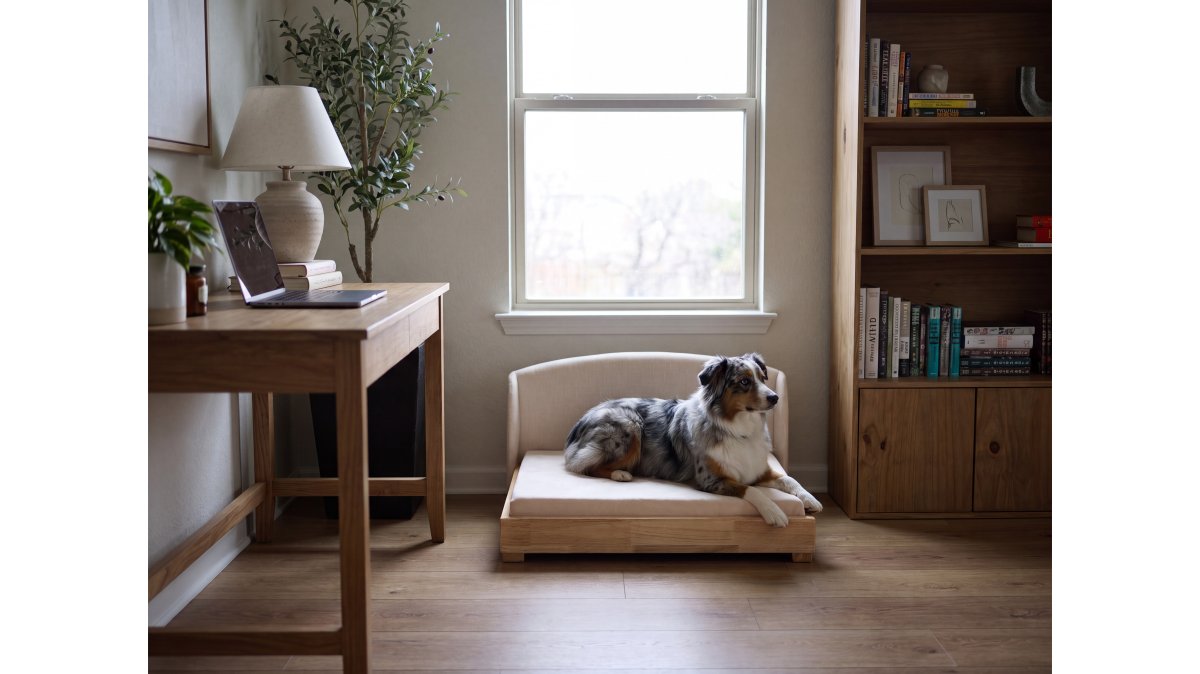
The Haven is the closest thing to replacing a Snoozer bed with an actual piece of furniture. The frame is solid North American hardwood assembled with real joinery, not particleboard and cam locks. That footprint suits dogs up to roughly 55 pounds.

The mattress is high-density orthopedic memory foam with a waterproof liner between the foam and the cover. That liner is the detail most reviews skip. It means an accident does not soak into the core, so the foam never develops the smell that forces people to throw out an otherwise fine bed. The cover unzips and goes in the washing machine.
Construction, Warranty, and Who It Fits
What separates The Haven from cheaper lookalikes comes down to stitching integrity and frame material. Ten-year structural warranty coverage backs the wood, which is unusual in a category where most beds carry nothing at all.
The honest limitation: at $360, this is a considered purchase. If your dog is a destructive chewer or still in the puppy stage, wait. Buy it when the chewing stops.
The Modern Day Bed: Low-Profile Comfort for Modern Interiors
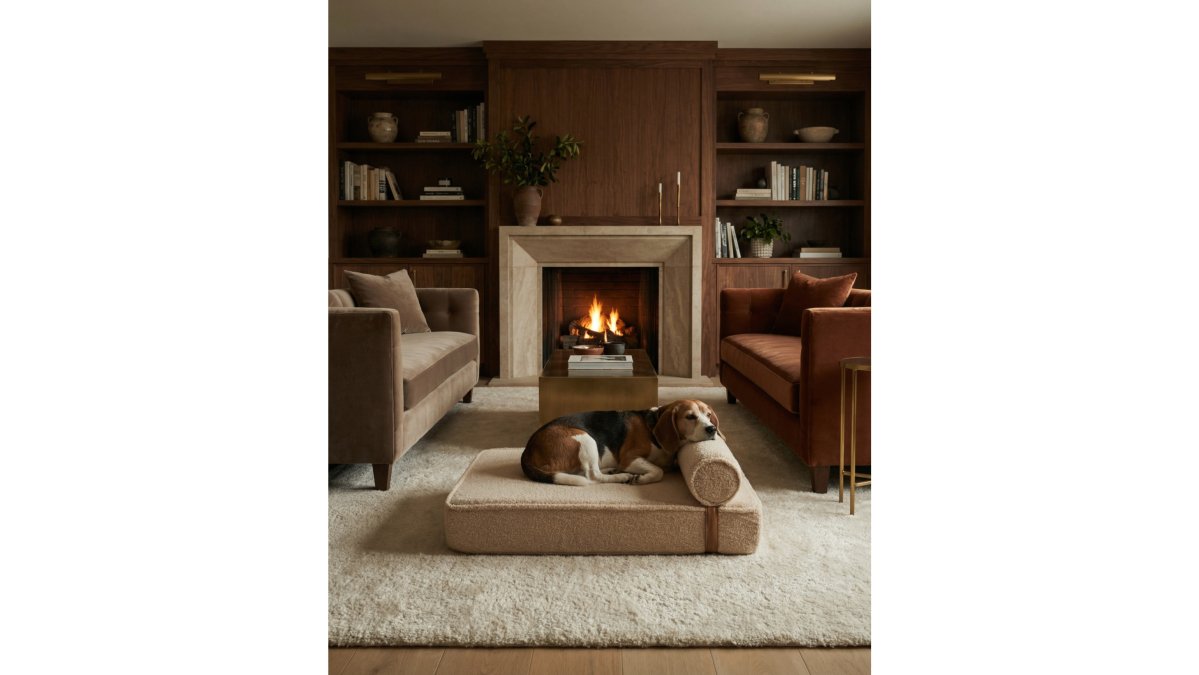
Low-profile design is the whole point here. The Modern Day Bed sits close to the floor in a boucle cover that reads as a lounge piece rather than pet gear, which matters in open-plan rooms where a tall bed blocks sightlines.
The cushion is high-density foam rather than poly-fill, so it resists the flattening that plagues budget beds. A bolster backrest runs along one side, giving your dog a place to rest its head and a sense of enclosure without the full bucket shape. The mattress is waterproof lined, and the cover zips off for machine washing.
At $175, it lands in the middle of the range. Best for medium dogs and households where the bed doubles as extra seating.
The Circle: A Sculptural Ottoman Bed for Small Dogs
Round ottoman beds solve a specific problem: most dog beds look like dog beds. The Circle is built to sit in the middle of the room as a centerpiece, with a sculptural silhouette that works as a footstool-adjacent accent when your dog is elsewhere.

Inside is a high-density foam core that holds its shape over time, wrapped in a waterproof lined mattress and a zip-off machine-washable cover. The compact footprint fits bedrooms, offices, and tight living rooms. At $125, it is the most accessible of the three. Best for small dogs and owners who want the bed visible rather than tucked into a corner.
How to Pick Stylish Dog Beds That Match Home Decor
Stylish dog beds that match home decor start with three decisions: upholstery tone, frame material, and height. Get those right and the bed disappears into the room instead of announcing itself. But the decision that actually determines whether you still like the bed in year three is not the swatch, it is how the bed comes apart, goes back together, and holds up to washing. Most buying guides skip that part. This one does not.
Match the Room First
- Match undertone, not exact color. Cream and Cocoa sit near most wood and textile palettes. A bed that matches your sofa exactly looks like a mistake; one that echoes it looks intentional.
- Choose material by room, not by trend. Boucle suits soft, textured living rooms. A hardwood frame suits rooms with real furniture in them.
- Watch the height. Low-profile beds preserve sightlines in open plans. Taller frames suit corners and reading nooks.
The Washability and Reassembly Test
A removable, machine-washable cover is table stakes. What separates a bed you will actually keep clean from one you will dread washing is what happens after the wash. Before you buy, ask three questions:
- How many pieces come apart? A single zip-off cover is easy. A cover with an inner liner, a separate bolster, and a foam insert that must be re-stuffed is where people give up.
- Is the foam encased or loose? Encased foam (foam inside a sewn liner) holds its shape and slides back into the cover cleanly. Loose shredded fill shifts and clumps, and re-distributing it after every wash is the number-one complaint in owner forums.
- Does the zipper run the full length? A zipper that opens the entire side makes reassembly a two-minute job. A partial zipper turns it into a wrestling match.
A practical routine that most owners settle into: vacuum the cover weekly, spot-clean accidents immediately, and machine wash on cold every four to six weeks, then air-dry. Heat is what kills foam and shrinks covers, skip the dryer.
Budget Versus Premium: Where the Money Actually Goes
If you are comparing a $125 bed to a $360 bed, the difference is rarely the fabric. It is the components you cannot see from a product photo:
| Component | Budget Bed | Premium Bed |
|---|---|---|
| Foam | Low-density or shredded fill | High-density orthopedic foam |
| Zipper | Thin plastic coil | Heavy-duty molded or metal |
| Frame | None, or particleboard | Solid hardwood with joinery |
| Liner | None | Waterproof liner between foam and cover |
| Warranty | None or 30-90 days | Multi-year structural coverage |
The waterproof liner is the single most underrated feature. It is the difference between a bed that survives an accident and one that develops a smell you cannot wash out of the foam. If a listing does not mention a liner, assume there is not one.
For anyone weighing luxury orthopedic dog beds against standard options, the deciding factor is usually the liner and the foam density, not the label.
Matching the Bed to Your Dog's Size and Sleep Style
Size and sleep posture decide the bed more than breed does. Measure your dog nose to tail while stretched out, then add a few inches of margin.
- Curling sleepers: round or bolster designs, like The Circle or The Modern Day Bed, suit dogs that tuck in tight.
- Stretchers: a rectangular footprint, like The Haven, gives a dog room to extend.
- Nesters: a bolster edge to press against satisfies the nesting instinct without a full bucket.
Weight capacity matters too. The Haven is built for dogs up to about 55 pounds. A dog that exceeds a bed's rating will compress the foam faster and stress the frame. For a deeper look at how resting surfaces affect joint health, veterinary guidance on canine arthritis and joint support is worth reading before you buy.
Choosing a bed that survives a puppy, a senior dog, and a decade of living room traffic is harder than it looks. Mafé Pets builds for exactly that timeline: solid North American hardwood frames with real joinery, high-density orthopedic memory foam, a waterproof liner that protects the core, and a machine-washable cover, all backed by a ten-year structural warranty and free FedEx delivery. If you want furniture-grade comfort that outlasts the ordinary bed it replaces, start with The Haven and give your dog a spot worth claiming.
Frequently Asked Questions
Are Snoozer dog beds worth the price?
It depends on what you're comparing against. Snoozer beds typically use foam and fabric construction, and they can cost several hundred dollars depending on size and options. When you're weighing snoozer alternatives, compare the frame material, mattress density, warranty length, and whether the cover and liner are both washable. A furniture-grade bed with a solid wood frame and a 10-year structural warranty often costs less per year of use than a fabric bed you replace every two or three years.
What features should I look for in a luxury orthopedic dog bed?
Start with the foam: high-density orthopedic memory foam holds its shape and relieves pressure on hips and joints, while poly-fill flattens within months. Check the frame material, since solid hardwood with real joinery outlasts particleboard. Confirm the mattress has a waterproof liner and the cover zips off for machine washing. Finally, look at the warranty. A 10-year structural warranty signals the maker expects the bed to survive years of daily use.
How do furniture-grade dog beds compare to standard pet store options?
Standard pet store beds usually combine poly-fill or low-density foam with a fabric shell, and many are not designed to be repaired or re-covered. Furniture-grade beds use solid wood frames, high-density foam mattresses, and removable, machine-washable covers. The trade-off is a higher upfront price, typically $125 to $360, against a shorter replacement cycle for cheaper beds. If your dog sleeps on the bed daily, the construction quality difference shows up within the first year.
Are there more durable alternatives to Snoozer Cozy Caves?
Yes. Cave-style beds appeal to dogs that like to burrow and nest, but the fabric shells can sag and the foam can compress over time. If you want that den-like security with better longevity, look for a bed with a bolsters or raised edges, a high-density foam core, and a waterproof liner under a washable cover. The Modern Day Bed, for example, pairs a bolster backrest with high-density foam at $175, giving the nesting feel without the collapsing walls.
What is the top-rated calming dog bed?
Calming beds work by giving dogs a den-like, enclosed feeling that reduces anxiety. The features that matter most are a bolster or raised edge to lean against, a supportive foam base rather than loose fill, and a non-slip base so the bed stays put. Among snoozer alternatives, the Modern Day Bed's bolster backrest and the Haven's orthopedic memory foam both support that sense of security. Washability matters too, since a clean bed with familiar smells helps dogs settle faster.