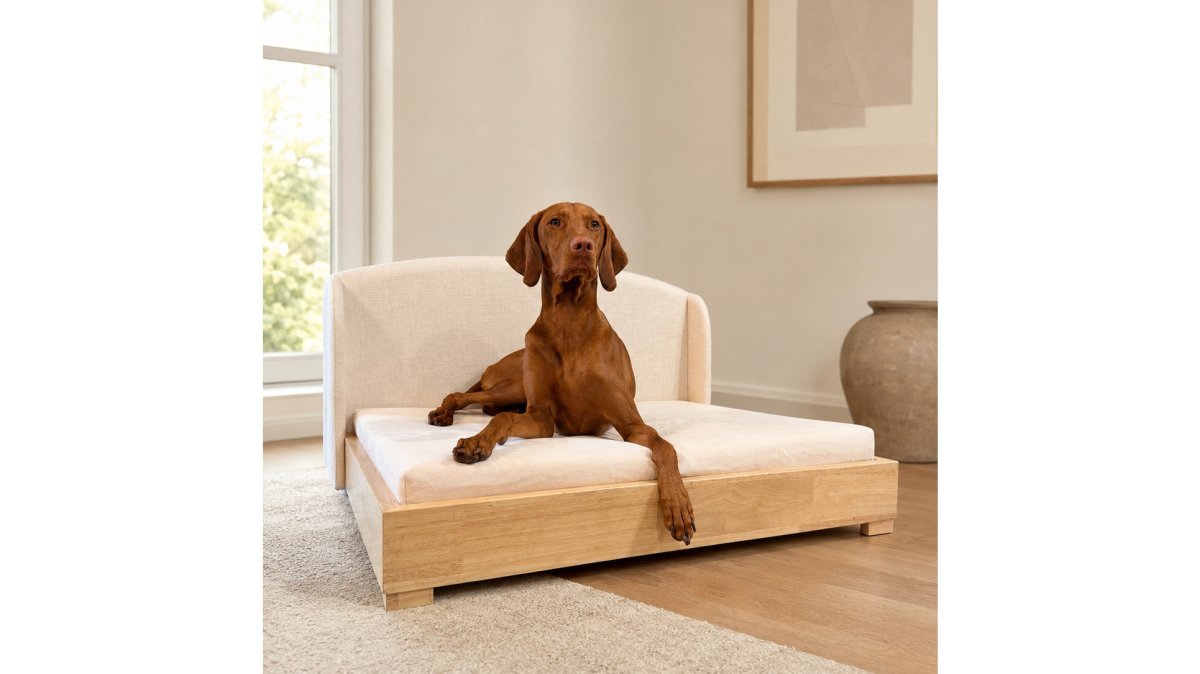
How to Maintain Hardwood Pet Furniture: A Care Guide
Table of Contents
- How to Maintain Hardwood Pet Furniture: Daily and Weekly Habits
- How to Remove Pet Hair from a Dog Bed
- How to Wash a Dog Bed Cover Without Damaging the Wood
- Choosing a Pet-Safe Wood Cleaner
- A Practical Dog Bed Cleaning Schedule
- Protecting Hardwood Pet Furniture from Scratches, Odor, and Moisture
- When to Repair or Replace Hardwood Pet Furniture
- Conclusion
- Frequently Asked Questions
Last Updated: October 15, 2026
How to Maintain Hardwood Pet Furniture: Daily and Weekly Habits
Hardwood pet furniture lasts for years with a simple cleaning routine. At Mafé Pets, we build every frame from solid North American hardwood, so we know what wears these pieces down: grit, moisture, and skipped maintenance.
Hardwood pet furniture is any pet bed or accessory with a solid wood frame, finished like household furniture rather than plastic or laminate. That finish is what you protect.
Here is the routine that works:
- Daily: dust and sweep around the frame
- Weekly: inspect for scratches, moisture, and loose joints
- Monthly: deep clean the cover and treat the wood
Daily dusting and sweeping around the frame
Pet hair and grit act like sandpaper on a wood finish. Daily, run a microfiber cloth or dust mop along the frame rails and under the bed.
Then sweep or vacuum the floor around it, a rubber squeegee pulls hair into a pile on bare floors instead of scattering it.
- Wipe the frame top to bottom with a dry microfiber cloth
- Sweep or vacuum the floor within a few feet of the bed
- Check high-traffic areas where your dog climbs in and out
This takes two minutes. Skip it and grit grinds into the finish every time your dog jumps up.
Weekly inspection for scratches and moisture
Once a week, run your hand along the edges where claws land. Look for light scratches, damp spots or dark patches near the base, and wobbly joints or loose bolts. Catch moisture early: wood swells when wet, leading to cracks and finish failure. Dry any damp spot right away and find the source, usually a spill or a wet dog.
How to Remove Pet Hair from a Dog Bed
Removing pet hair from a dog bed starts with the right tool, not more scrubbing. Dry methods lift hair faster and protect the wood frame from moisture.
Work in this order:
- Lint roller or masking tape: press and lift hair off the cover and bolster
- Rubber gloves or a rubber squeegee: drag across fabric to pull embedded fur into clumps
- Dryer sheet: wipe the frame and cover to cut static so hair releases
For heavy shedding, do a dry pass first, then vacuum with a hard-floor attachment to reach frame edges without scraping the finish. Keep the lint roller next to the bed, thirty seconds a day beats an hour of monthly deep cleaning.
How to Wash a Dog Bed Cover Without Damaging the Wood
Washing a dog bed cover is safe when you follow the maker's directions and keep water away from the wood. Most covers, including ours, zip off and wash cold:
- Unzip the cover and remove the foam mattress
- Check the care tag before washing
- Machine wash cold on a gentle cycle
- Air dry or tumble low, never high heat
- Wipe the frame dry before the cover goes back on
Our Haven cover zips off and machine-washes cold. The mattress sits inside a sealed waterproof liner, so a puppy accident does not reach the foam. One customer put it plainly: "It actually is washable. My puppy had an accident and there was no damage to the mattress thanks to the liner."
Two rules protect the wood:
- Never soak the frame or wipe it with a dripping cloth
- Never put the frame itself in water
A damp towel is fine for spot cleaning. A wet sponge left sitting on the finish is not.
Choosing a Pet-Safe Wood Cleaner
A pet-safe wood cleaner lifts dirt without leaving residue your dog can lick or absorb, and without attacking your piece's finish. The right product depends on how the wood was finished, not the label's pet claims.
Match the cleaner to the finish
Most hardwood pet furniture is finished one of five ways, each reacting differently to water, solvents, and abrasives.
- Sealed (polyurethane, lacquer, or conversion varnish): The most common and forgiving. A damp microfiber cloth with a drop of pH-neutral dish soap handles routine messes. Avoid ammonia-based glass cleaners and anything with acetone or denatured alcohol, they dull the sheen. Wipe dry immediately so water does not sit in seams.
- Oiled (tung, linseed, or hardwax oil): The finish lives in the wood, not on top of it, so it needs periodic re-oiling rather than heavy cleaning. Use a cleaner made for oiled wood, or diluted castile soap. Never use an all-purpose spray, it strips the oil and leaves the grain dry and chalky. Re-oil every 6-12 months, or when water stops beading.
- Waxed (paste wax over oil or shellac): Wax is the most fragile finish around pets. Skip liquid cleaners; a dry microfiber cloth and soft brush do most of the work. Re-wax thin coats rather than scrubbing. Solvent-based cleaners dissolve the wax and leave bare patches.
Ingredient cautions that matter around pets
- Bleach and ammonia: Irritating to airways and paws, and both can dull or discolor finishes. Skip them.
- Quaternary ammonium compounds (often listed as 'quats' or benzalkonium chloride'): Common in disinfecting wipes. Residue stays on the surface and pets pick it up on paws and fur.
- Phenol-based cleaners (often labeled 'pine' or 'original' scent): Particularly risky for cats, which are more sensitive to phenols than dogs.
A practical routine
For everyday messes, a damp microfiber cloth wrung nearly dry plus a drop of pH-neutral soap handles almost everything; dry right after. For deeper cleaning, use a product labeled for your finish and follow the dwell time, leaving cleaner on too long clouds finishes.
A Practical Dog Bed Cleaning Schedule
A dog bed cleaning schedule keeps the work small and predictable. Match frequency to how much your dog sheds and how many pets you have.
| Task | Frequency | Time Needed |
|---|---|---|
| Dust and sweep around the frame | Daily | 2-3 minutes |
| Inspect frame for scratches and moisture | Weekly | 5 minutes |
| Vacuum frame and floor with hard-floor attachment | Weekly | 5 minutes |
| Wash the cover | Every 2-4 weeks | Machine cycle |
| Wipe the frame with a damp cloth | Monthly | 5 minutes |
| Check joints, bolts, and finish | Quarterly | 10 minutes |
Homes with multiple pets or heavy shedders should wash covers closer to every two weeks. One calm dog might go a full month.
The Haven | Solid Hardwood Orthopedic Dog Bed →
Protecting Hardwood Pet Furniture from Scratches, Odor, and Moisture
Protection comes down to three threats: claws, accidents, and water. Each damages wood differently, so each needs a different defense, the difference between a piece that lasts a decade and one that fails in two years.
Scratches: grit and claws
Most 'claw scratches' on hardwood pet furniture are actually grit scratches. Sand and dirt trapped in fur act like sandpaper every time your dog climbs in or out. The fix is layered:
- Felt or silicone pads under every leg to stop floor-side abrasion and dampen vibration that loosens joinery.
- A rubber-backed mat under the bed to trap grit before it reaches the frame or floor.
- Trimmed nails, a monthly trim removes the sharp hook that catches finish edges.
Light surface scratches in a sealed finish can often be buffed out with a wood touch-up marker or wax stick matched to the stain. Deep scratches that reach bare wood need a light sand and re-seal, not just a marker.
Urine and odor: speed beats product
Urine is the hardest thing on hardwood pet furniture because it attacks on two fronts: the liquid swells wood and lifts finish, while uric acid and ammonia leave odor that re-activates with humidity.
The sequence that works:
- Blot, do not rub. Press a clean cloth down and hold. Rubbing pushes liquid deeper into seams and grain.
- Rinse with a pet-safe enzymatic cleaner. Enzymes break down uric acid crystals that soap alone leaves behind. Follow the label's dwell time, usually 10-15 minutes.
- Dry fully. Air movement matters more than heat. A fan pointed at the spot for an hour beats a hair dryer on high, which can warp thin rails.
- Re-check in 24 hours. If odor returns, the urine reached the padding or subfloor, not just the frame.
A waterproof liner between the foam and the cover is the single highest-value protection you can add. It keeps accidents off the foam, so cleanup stays on the wipeable surface instead of soaking into cushioning.
Moisture: the slow failure
Wood swells when it stays wet, and swelling cracks joints and lifts finish. The damage rarely comes from one big spill, it's a wet bowl base, a damp dog, or a dripping cloth left on the surface.
- Keep water bowls off the frame. A silicone mat under the bowl catches splashes.
- Dry your dog after rain, swimming, or a bath before they climb in.
- Wipe spills immediately with a cloth wrung nearly dry, then air-dry.
A quarterly inspection checklist
Set a recurring reminder and walk the piece top to bottom:
- Run a hand along every rail and edge, feel for splinters, lifted finish, or rough spots.
- Check all bolts, screws, and cam locks. Tighten anything that moves.
- Look at the base and feet for dark patches, soft spots, or a musty smell, early signs of moisture.
- Inspect chew-prone corners. Small chew marks can be sanded and re-sealed; deep ones that expose joinery need a repair.
When to Repair or Replace Hardwood Pet Furniture
Repair small damage early. Replace the piece when the structure fails, not when the finish looks tired.
Repair these:
- Light surface scratches: wood touch-up marker or wax stick
- Loose bolts: tighten with the right tool
- Worn felt pads: swap for new ones
- Faded finish: light sanding and re-oiling by a pro
Replace these:
- Cracked or split frame rails
- Joints that stay loose after tightening
- Soft or flattened foam that no longer supports joints
- Water damage that has darkened and softened the wood
A solid hardwood frame with real joinery can be refinished and kept for years, the whole point of furniture-grade construction over a soft-sided bed that sags within a season.
Conclusion
Maintaining hardwood pet furniture is a habit, not a project: five minutes a day keeps the finish clean, and a weekly check catches problems while they are small.
If you want a bed built to be maintained rather than replaced, the Haven is our answer.

Shop the Haven and give your dog a bed that holds up like the furniture around it.
Frequently Asked Questions
How do you clean hardwood pet furniture?
Start by vacuuming loose hair and dust from the frame with a brush attachment. Wipe the wood with a damp microfiber cloth and a pet-safe wood cleaner, then dry immediately with a separate cloth. Never soak the wood or use ammonia-based products. For the mattress, unzip the cover and machine-wash it cold. The Haven from Mafé Pets has a sealed waterproof liner, so spills never reach the orthopedic foam.
How often should you clean a dog bed cover?
Wash the cover every two weeks for heavy shedders or dogs that spend time outdoors. For lighter shedders, once a month works. Spot-clean accidents immediately. A dog bed cleaning schedule that includes weekly vacuuming and biweekly cover washing keeps odor and dander under control. If your dog has allergies or skin issues, wash weekly.
What is the best way to remove pet hair from a dog bed?
Rubber gloves or a rubber squeegee pull embedded fur from fabric faster than a vacuum alone. Work in one direction, then vacuum with a hard-floor attachment along the frame seams. A lint roller handles final touch-ups. Wash the cover cold every two weeks to prevent buildup.
Can you use wood polish on hardwood pet furniture?
Most wood polishes contain silicones or petroleum distillates that leave residue dogs can lick off. Skip them. Use a pet-safe wood cleaner with plant-based surfactants instead, or a diluted vinegar solution for occasional deep cleaning. Always test on a hidden area first. Wipe dry immediately.


