How to Clean Orthopedic Dog Beds: A 2026 Guide
Table of Contents
- Why Orthopedic Dog Beds Need a Different Cleaning Approach
- Step 1: Remove the Outer Cover and Prep the Bed
- Step 2: Spot Cleaning and Stain Treatment for Memory Foam
- Safe Cleaning Products for Dog Beds
- How to Get Urine Smell Out of a Foam Dog Bed
- How Often to Wash a Dog Bed (and When to Spot Clean Instead)
- Drying Memory Foam Safely Without Damaging the Core
- Troubleshooting Damaged Foam and Protecting the Bed Long-Term
- Frequently Asked Questions
Last Updated: September 24, 2026
Why Orthopedic Dog Beds Need a Different Cleaning Approach
Orthopedic dog beds aren't like ordinary pet beds, the memory foam core that supports your dog's joints breaks down fast when soaked or washed wrong.

This guide from Mafé Pets walks through how to clean orthopedic dog beds step by step, from pulling the cover to drying the core without wrecking it. Most people throw the whole bed in the wash, but memory foam holds water like a sponge, and trapped moisture causes mildew, crumbling foam, and odors that never leave.
Step 1: Remove the Outer Cover and Prep the Bed
Unzip the outer cover and pull it off the mattress, setting the foam core aside on a dry, clean surface. Before washing, do a quick pass on the cover:
- Vacuum both sides with an upholstery attachment to lift hair and debris
- Run a lint roller over seams and corners where pet dander collects
- Shake the cover outside to knock loose dirt free
- Check the zipper for snags or stuck fabric
Step 2: Spot Cleaning and Stain Treatment for Memory Foam
Never submerge an orthopedic foam core. Spot clean it, blot, never scrub, but how depends on which foam you have.
Identify Your Foam Type First
Orthopedic beds don't all share the same core. The three common types behave differently when wet.
- Egg-crate foam: The convoluted, bumpy surface. The peaks and valleys trap liquid in the low spots and dry unevenly. The thin peaks tear easily if you scrub.
- Solid slab foam: A flat, dense block, usually high-density memory foam. It holds its shape best but absorbs and holds water the longest because there is more material for moisture to travel through.
- Gel-infused foam: Memory foam with gel beads or a gel layer mixed in or bonded on top. The gel can separate from the foam if it gets soaked or heated, leaving hard spots and dead zones.
Spot Cleaning by Foam Type
Egg-crate foam: Use the least moisture. Press a barely damp cloth into the stain, working with the bumps into the valleys rather than across the peaks, then blot dry. It dries fast but wicks liquid sideways, so treat a wider area than the visible stain.
The Spot Cleaning Solution
Mix cool water with a few drops of pet-safe detergent. Dip a clean cloth, wring it barely damp, and press it onto the stain, working from the outside in. For tougher marks, a vinegar solution (one part white vinegar to three parts water) works on most messes. For fresh accidents, an enzyme cleaner breaks down urine proteins and is the only thing that truly removes the smell.
A few rules that save foam, regardless of type:
- Use cool water only. Heat breaks down the foam structure and can separate gel layers
- Never soak the core. Damp cloth, not wet cloth
- Blot, do not rub. Rubbing pulls foam apart and tears egg-crate peaks
- Let it air dry fully before the cover goes back on
When Spot Cleaning Is Not Enough
If a stain has soaked through a solid slab or gel-infused core, spot cleaning may not reach the contamination and the core may need replacing. Solid and gel-infused cores are often the bed's most expensive part, which is why a waterproof liner matters before an accident, not after.
Safe Cleaning Products for Dog Beds
The safest cleaners for dog beds are pet-safe detergent, white vinegar, baking soda, and enzyme cleaners. Skip bleach, ammonia, and anything with heavy fragrance.
Here is what each one does:
| Product | Best For | How to Use |
|---|---|---|
| Pet-safe detergent | Routine cover washing | Gentle cycle, cool water |
| Enzyme cleaner | Urine and odor removal | Soak the spot, let it sit, blot |
| White vinegar | Deodorizing, light stains | 1:3 mix with water, spray and blot |
| Baking soda | Absorbing odor, freshening | Sprinkle, wait 15 minutes, vacuum |
How to Get Urine Smell Out of a Foam Dog Bed
Enzyme cleaner is the only reliable way to get urine smell out of a foam dog bed, it breaks down the uric acid crystals that soap and water leave behind.
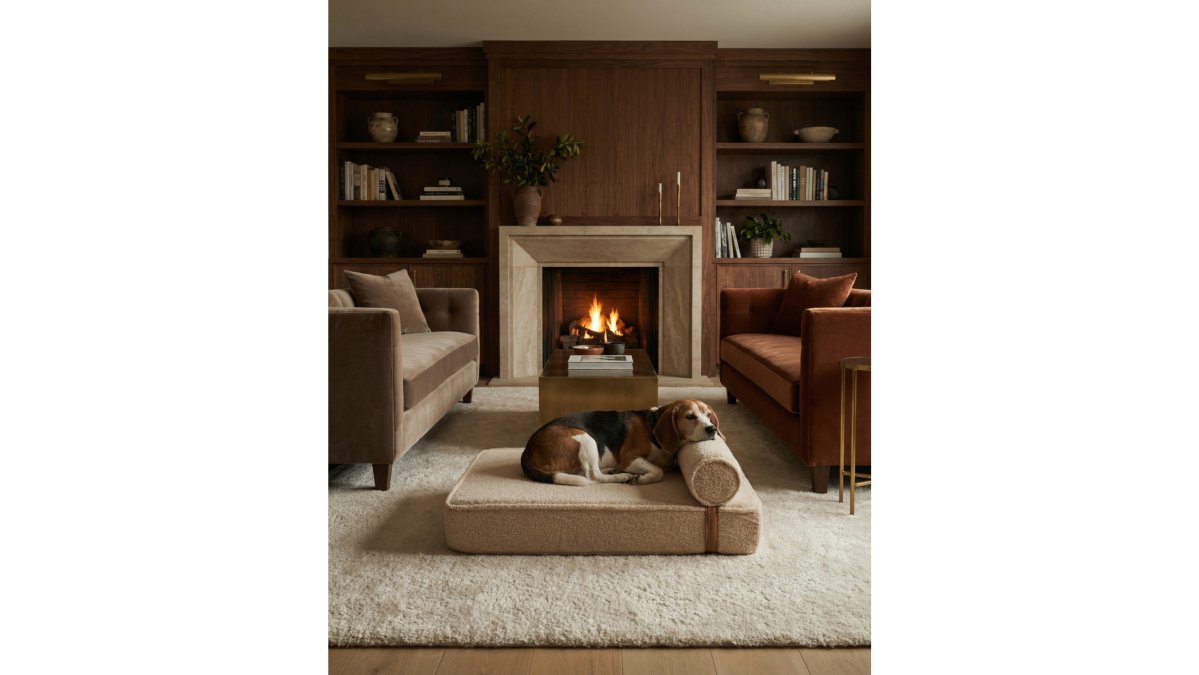
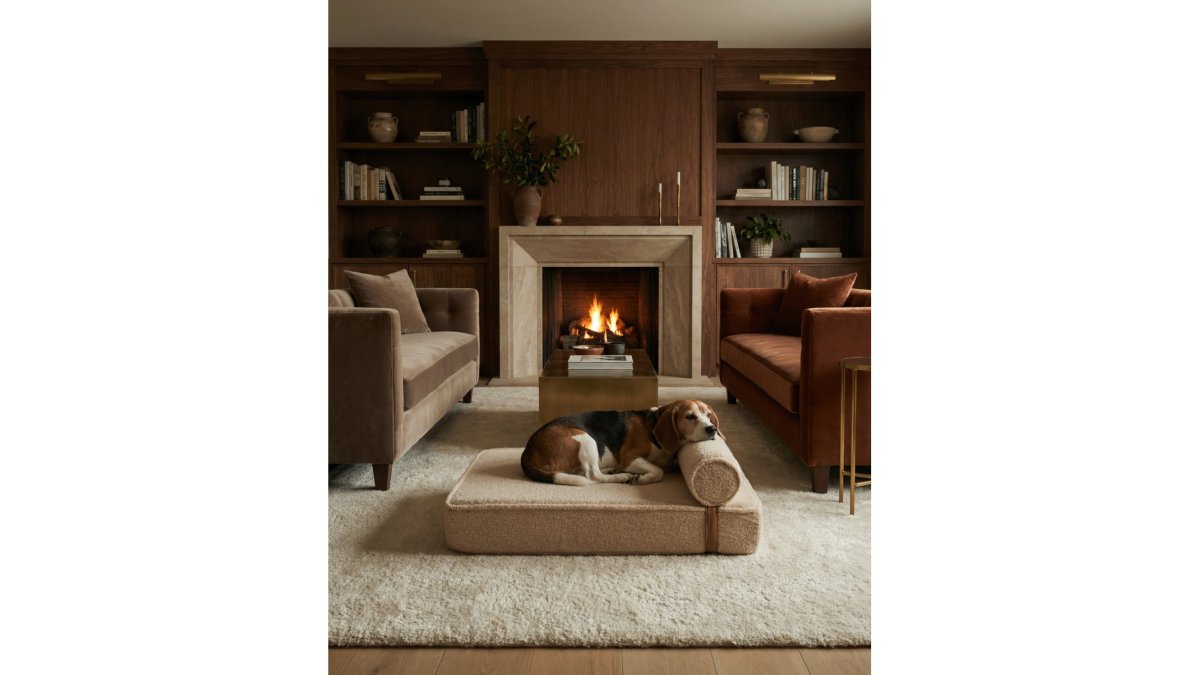
The Modern Day Bed — Boucle Lounge Dog →
Here is the process:
- Blot up as much liquid as possible with a dry towel
- Press down hard. Do not rub
- Spray the area with enzyme cleaner until it is damp, not soaked
- Let it sit for the time on the bottle, usually 10 to 15 minutes
- Blot dry with a clean towel
- Sprinkle baking soda over the spot and let it sit for a few hours
- Vacuum the baking soda up
How Often to Wash a Dog Bed (and When to Spot Clean Instead)
Wash the outer cover every two to four weeks for most dogs, and spot clean the foam core only for a spill, stain, or odor.
Your dog's habits change the schedule:
- Shedding dogs: vacuum weekly, wash every two weeks
- Dogs with allergies or skin issues: wash weekly
- Senior dogs with accidents: spot clean as needed, wash cover weekly
- Clean, short-haired dogs: every three to four weeks is fine
Drying Memory Foam Safely Without Damaging the Core
Air dry memory foam. Never put it in a dryer, and never leave it in direct sun for hours. Heat and tumbling both break down the foam.
Why Heat Destroys Orthopedic Foam
Memory foam is an open-cell polyurethane structure; the trapped air in those cells gives it slow-recovery support. Heat softens the polymer walls between cells and expands the moisture inside them. Tumble the core in a dryer and those softened walls collapse, leaving the foam flatter, denser, and permanently compressed. A single hot cycle can turn a supportive core into a flat slab.
The Right Way to Air Dry a Foam Core
- Lay the core flat, not folded or leaning against a wall, since a fold line becomes a permanent weak spot.
- Elevate it on a drying rack or upside-down laundry basket so air moves under it. Foam flat on a floor stays damp at the bottom for days.
- Point a box fan on low a few feet away, moving air speeds evaporation significantly.
- Flip it every few hours so top and bottom dry evenly.
- Keep the room at normal indoor temperature. A warm, well-ventilated room is ideal, just not direct heat on the foam.
Most cores dry in 12 to 24 hours at normal indoor humidity; in a humid climate or damp basement, plan on 24 to 48.
How to Tell If the Core Is Actually Dry
The surface dries long before the center. A core that feels dry can still hold moisture an inch down, the trapped moisture that causes mildew and that sour smell that never washes out.
Drying the Cover
The cover is fabric, so it takes more heat than the foam, but not much. Tumble dry low or hang it. High heat shrinks the fabric, warps the zipper, and delaminates any waterproof membrane bonded to the cover. Hang drying is safest; if you tumble dry, pull the cover while still slightly damp and let it finish air drying on the bed frame.
Troubleshooting Damaged Foam and Protecting the Bed Long-Term
A little surface wear is normal; cracking, crumbling, or a permanent flat spot usually means moisture got in.
- Surface pilling: normal, no action needed
- A soft dip where your dog sleeps: normal compression, flip the core monthly
- Cracking or crumbling edges: moisture damage, the core is failing
- A smell that returns after cleaning: the liner has failed
Frequently Asked Questions
Can a memory foam dog bed go in the washing machine?
No. The memory foam core should never go in a washing machine. Agitation and water break down the foam's cell structure, causing it to flatten and lose the support your dog needs. Only the outer cover is machine washable. For the foam core, spot clean with a damp cloth and mild pet-safe detergent, then air dry completely before putting the cover back on.
How do I get urine smell out of a foam dog bed?
Blot the area immediately with a clean towel, then apply an enzyme cleaner designed for pet stains. Let it soak for 10 to 15 minutes so the enzymes break down uric acid crystals. Blot again and air dry away from direct heat. For deeper odors, sprinkle baking soda over the dry foam, let it sit for several hours, then vacuum it off. A waterproof liner prevents urine from reaching the foam in the first place.
How often should I wash my dog bed?
Wash the cover every two to four weeks for most dogs. Dogs who shed heavily, drool, or have allergies may need weekly washing. Spot clean accidents and visible stains right away. If your dog has a waterproof-lined bed like the Haven or The Modern Day Bed, the foam core stays protected between washes, so you only need to launder the cover regularly.
What are safe cleaning products for dog beds?
Stick with enzyme cleaners formulated for pet stains, mild pet-safe detergent, white vinegar diluted with equal parts water, and baking soda. Avoid bleach, ammonia, and heavily scented cleaners because dogs are sensitive to strong fumes and may lick residue. Always rinse thoroughly and let the cover dry completely before your dog uses the bed again.