Dog Home Decor: Stylish Ideas for Every Room
Table of Contents
- Dog Home Decor That Works With Your Space, Not Against It
- Dog Room Ideas: Designing a Dedicated Space That Looks Intentional
- Modern Dog Beds: Furniture-Grade Pieces That Belong in the Room
- Pet-Friendly Rugs and Fabrics That Handle Real Life
- Dog-Themed Wall Art and Portraits Without the Clutter
- Matching Dog Decor to Your Existing Interior Style
- Budget Tiers: Where to Splurge and Where to Save
- Conclusion
- Frequently Asked Questions
Last Updated: October 6, 2026
Dog Home Decor That Works With Your Space, Not Against It
Dog home decor means choosing furniture, textiles, and accessories for your dog that match your home's style instead of clashing with it.
Pet owners now treat dogs as family, and family members get real furniture. A plastic crate in the living room stopped feeling normal.
Here is the tension most guides ignore: cute dog decor is easy to buy and hard to live with.
Dog Room Ideas: Designing a Dedicated Space That Looks Intentional
A dog room works when it is designed like any other room: one function, one palette, and storage that hides the ugly parts. Every dog room needs three zones:
- Rest zone: one bed sized to your dog's full stretch, not their curled-up size
- Feeding zone: a raised bowl station on a washable mat
- Storage zone: a closed bin for food, a basket for leashes, a hook for the walking bag
For small dogs, a repurposed closet or stair landing works. Medium dogs need roughly a 4-foot by 4-foot footprint. Without a spare room, carve the same three zones out of a mudroom or hallway end.
Modern Dog Beds: Furniture-Grade Pieces That Belong in the Room
Modern dog beds have moved past the puffy donut. The best are built like furniture: a real frame, a supportive mattress, and a removable, washable cover. That is the category we build in, in three shapes.

The Haven: Solid Hardwood and Orthopedic Support
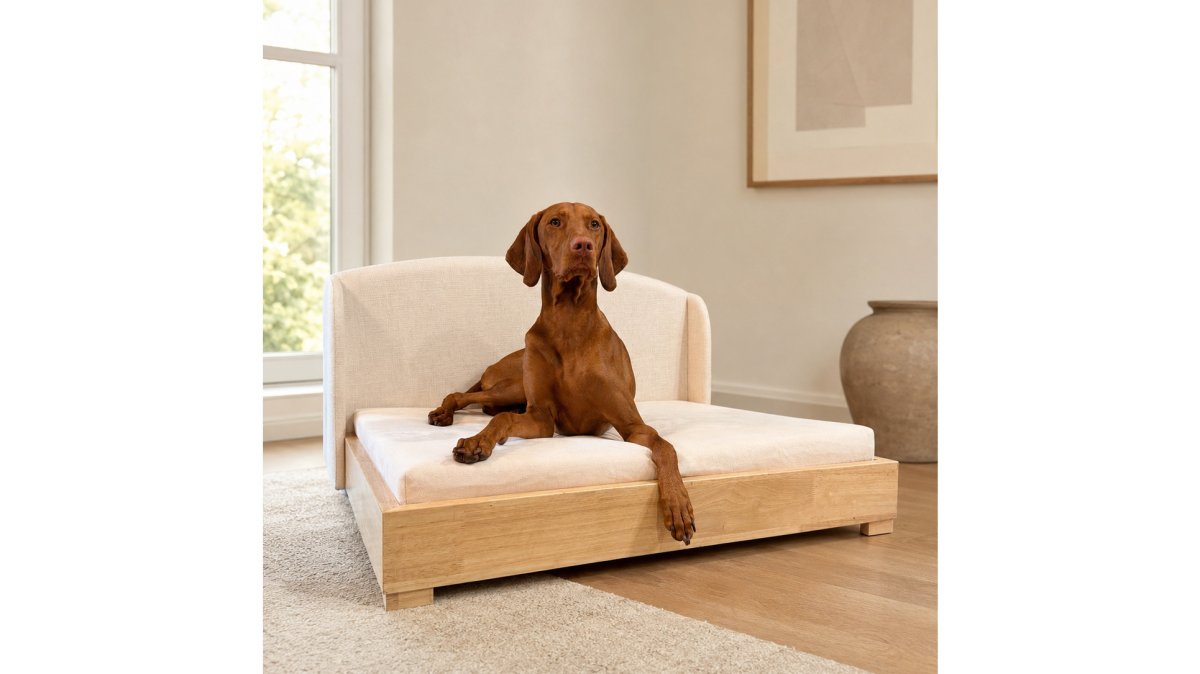
The Haven is our answer to the bed that flattens. A solid North American hardwood frame, cut and joined by hand, sits over high-density orthopedic memory foam.
Two details matter more than the look. The foam spreads a dog's weight instead of loading hips and shoulders, helping at every age.
At $399, it is the piece you buy once. The frame carries a ten-year guarantee.
The Modern Day Bed and The Circle: Low-Profile and Sculptural Options
Not every room wants a backrest.
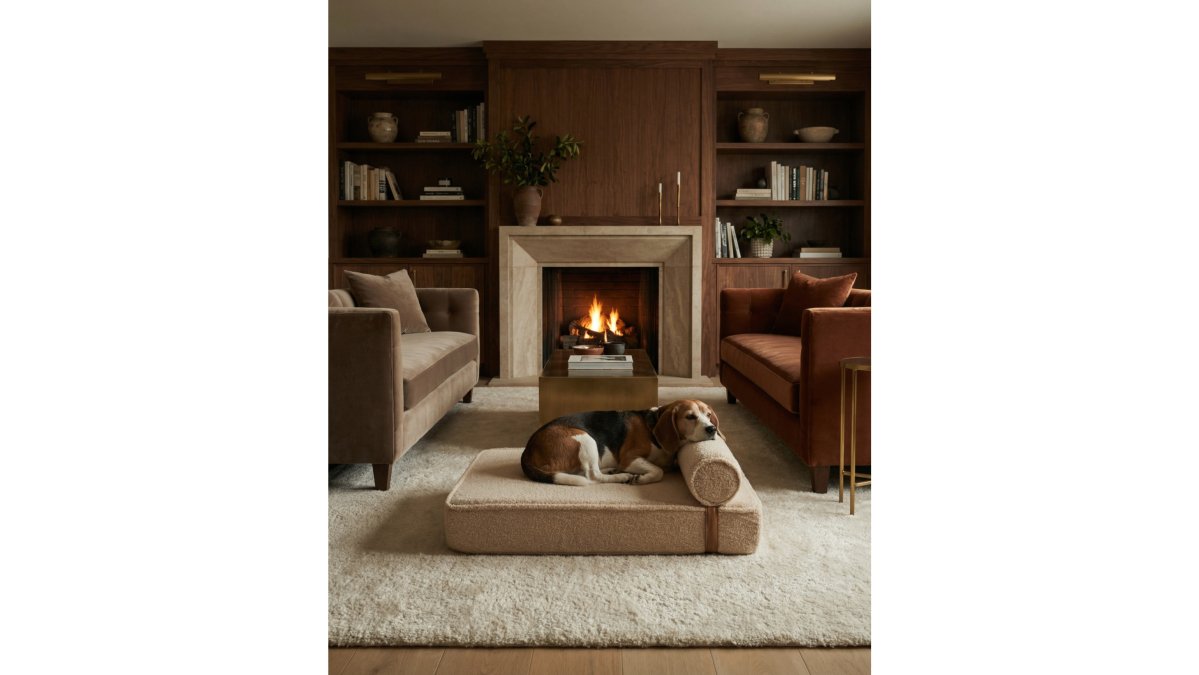
The Modern Day Bed is a low-profile boucle lounge piece on a high-density foam cushion with a bolster, the same waterproof liner, and a zip-off washable cover.
The Circle is a round, ottoman-style bed with a sculptural silhouette meant for the middle of the room. Same foam core, liner, and machine-washable cover, at $150. Best for small dogs and compact apartments.
| Bed | Price | Best For | Standout Detail |
|---|---|---|---|
| The Haven | $399 | Medium dogs up to 55 lb, aging joints | Solid hardwood frame, 10-year guarantee |
| The Modern Day Bed | $205 | Modern living rooms, low-profile styling | Boucle cover, bolster backrest |
| The Circle | $150 | Small dogs, apartments, open floor plans | Round ottoman silhouette as a centerpiece |
Pet-Friendly Rugs and Fabrics That Handle Real Life
Pet-friendly rugs and fabrics survive muddy paws, accidents, and shedding without showing it. The rule is simple: pattern hides, texture forgives, and flat weaves clean. But "pet-friendly" means different things for a chewer, a shedder, a senior dog with accidents, and a puppy in training. Here are the materials, cleanup mechanics, and safety questions that decide whether a rug or sofa survives the year.
What works, and why
- Wool and polypropylene rugs in a tight flat weave. Wool's scaly outer layer keeps liquids on the surface longer, giving you time to blot. Polypropylene is solution-dyed, so color runs through the fiber and does not fade from cleaning. Both vacuum clean and resist crushing under furniture.
- Performance fabrics on sofas and cushions, usually polyester blends. Look for a stain-release finish rather than a topical spray, which wears off.
- Leather and faux leather seating. Hair and dust wipe off in seconds and liquids bead. The trade-off is scratches: a determined chewer can mark leather permanently, and faux leather can peel at seams.
What does not work
- Long shag pile. Traps hair where a vacuum cannot reach, and liquids soak through to the pad.
- Silk and light solid-color velvet. Both show every paw print and hold every hair. Velvet also crushes permanently where a dog lies.
- Jute and sisal. Natural, but they stain and fray where a dog scratches.
Stain cleanup, by stain type
The material matters less than how fast you get to the spill. The rug usually survives because of the first two minutes, not the fiber content.
- Accidents (urine). Blot, do not rub. Then use an enzymatic cleaner, which breaks down the uric acid crystals that cause lingering odor. Vinegar and water neutralize surface odor but do not fully break down uric acid, so it is a stopgap.
- Mud. Let it dry completely, then vacuum. Wet mud smears deeper into the weave.
- Vomit and food. Scrape solids off with a spoon, then blot with cool water and mild dish soap. Hot water can set protein stains.
On a washable cover, cold water and a gentle cycle are the safe default. Hot water shrinks many performance fabrics and can set stains.
Shedding, scratching, and chewing
Fabric choice should follow the dog, not the other way around.
- Heavy shedders. Smooth, tight weaves release hair on the vacuum pass; textured and looped weaves hold it. Choose flat over plush every time.
- Scratchers. Dogs that dig before lying down fray looped and woven textures. Tight flat weaves and cut-pile rugs tolerate it better than loops, which snag and pull.
- Chewers and puppies. Fabric is not the defense here. Keep cords, tassels, and loose trim out of reach, and choose furniture with no exposed stuffing. A chewed cushion is a choking hazard, not just a mess.
Non-toxic finishes and what to look for
Pet-safe is a real consideration, not a marketing phrase. Dogs lie on rugs and sofas for hours, and puppies chew. A few practical checks:
- Look for rugs and textiles labeled free of PFAS and other persistent stain treatments. Many manufacturers now offer PFAS-free stain resistance.
- For wood furniture and dog bed frames, water-based finishes and low- or zero-VOC sealants are safer in a room a dog uses daily.
- Avoid mothball-style odor treatments and strong fragrance sprays on anything a dog lies on. Heavy scent is a common cause of avoidance.
Matching fabric to the room
Color and fiber should work with the room, not against it. A mid-tone patterned rug in a warm neutral hides hair and stains in a busy living room.
The goal is not a house that looks like a dog does not live there. It is a house where the dog's favorite spots are also the spots that clean up easiest.
Dog-Themed Wall Art and Portraits Without the Clutter
Dog-themed wall art works best treated like any other art: one or two considered pieces, framed properly, at the right height. The difference between charming and cluttered is restraint. Most rooms can carry one statement piece or a tight grouping of three. Beyond that, the wall reads as a pet shrine rather than a designed space.
The Haven | Solid Hardwood Orthopedic Dog Bed →
Sizing and hanging, by the numbers
Art sizing follows the furniture under it, not the wall. A piece should span roughly two-thirds to three-quarters of the width of the sofa, console, or bench beneath it.
Hanging height is the other half. Gallery convention places the artwork's center at about 57 inches from the floor, near average eye level.
For a three-print row, space frames 2 to 3 inches apart. Wider gaps break the grouping; tighter gaps crowd it.
Three approaches that hold up
- A single large portrait of your own dog, printed in black and white and framed in thin black or natural wood. Black and white sidesteps color clash and reads as intentional in almost any palette.
- A small gallery of three prints in matching frames, hung in a row at eye level, roughly 57 inches to center. Matching frames do the heavy lifting; mismatched frames turn a gallery into a collection.
- A vintage-style dog poster in a hallway or mudroom, where a bolder graphic suits the space. These run larger and louder, so give them a wall of their own.
Skip the wall of paw print decals and mismatched novelty signs. One good frame beats six cheap ones.
Frame and print choices that survive a dog household
Framing is where most people underspend. A $30 print in a proper frame reads as art; the same print taped to the wall reads as a college dorm. A few practical points for homes with dogs:
- Glass versus acrylic. Glass looks cleaner but shatters. Acrylic glazing is lighter, safer around a wagging tail, and the default for larger pieces. If a frame hangs low enough for a dog to bump, choose acrylic.
- Matting. A 2-to-3-inch mat gives a print breathing room and keeps artwork off the glazing, which matters in humid rooms. Pre-cut mats are inexpensive and make a basic frame look custom.
- Hanging hardware. Use two hooks per frame so the piece cannot swing off-level when a dog brushes the wall. For frames over 20 pounds, anchor into a stud or a rated drywall anchor.
Where wall art fits in the room
The best spot for dog art is usually the one place a dog already owns: the entry, the mudroom, or the wall above the bed. Those are the rooms where the theme feels earned rather than pasted on.
In a dedicated dog room, treat the art as you would anywhere else: one focal piece on the main wall, nothing competing with it, and the same 57-inch center line.
Matching Dog Decor to Your Existing Interior Style
Matching dog decor to your interior comes down to three variables: color, material, and scale. Get those right and the piece reads as intentional in any style. A quick framework:
- Warm and traditional: wood tones, cream or cocoa upholstery, a classic silhouette
- Modern and minimal: low profiles, boucle or linen textures, neutral palette, no visible logos
- Eclectic and colorful: a sculptural shape like a round ottoman bed in a bold cover, treated as a statement piece
Scale is the one people miss. A large bed crowds a small room; a tiny bed next to a deep sofa looks like a mistake. Match the bed's footprint to the furniture around it, not to your dog's ego.
Budget Tiers: Where to Splurge and Where to Save
Spend on the frame and the mattress; save on everything you can replace. That is the whole budget rule.
Splurge tier: the bed itself. A furniture-grade piece with a hardwood frame, orthopedic foam, a waterproof liner, and a washable cover costs more up front and lasts years. The Haven at $399 is the clearest example, backed by a ten-year frame guarantee.

Save tier: bowls, mats, leashes, and storage baskets. Buy them plain, buy them washable, and replace them without guilt.
DIY options worth the afternoon: a raised feeding station built from a low wooden crate, and a leash hook mounted inside a closet door.
Conclusion
The hard part of dog home decor is not finding cute pieces. It is choosing the few that survive a muddy January and still look right in July.
That is the problem we built Mafé Pets to solve. Every bed uses solid North American hardwood, high-density orthopedic memory foam, a sealed waterproof liner, and a cover that zips off and machine-washes cold.
Shop the Haven and give your dog a bed that belongs in the room.
Frequently Asked Questions
How can I decorate my home for my dog without it looking like a pet store?
Choose pieces that read as furniture first. A solid hardwood bed like The Haven ($399) sits beside a sofa rather than in a corner. Limit dog-themed items to one or two focal points, such as a single framed portrait or a paw print accent, and keep the rest of the room in your existing palette. Machine-washable covers in Cream or Cocoa blend with neutral interiors.
What materials are easiest to clean in a dog-friendly home?
Look for sealed waterproof liners and zip-off covers you can machine-wash cold. The Haven, The Modern Day Bed, and The Circle all use a waterproof mattress liner that keeps accidents out of the foam, plus covers that zip off and wash clean. For rugs, choose flat-weave or low-pile styles in darker tones that hide dirt and vacuum quickly.
Where should I put a dog bed in my home?
Place it where your dog already chooses to rest. Most dogs pick a spot with sightlines to the entry and near the family's main gathering area. A low-profile bed like The Modern Day Bed ($205) fits at the foot of a sofa, while The Circle ($150) works as a centerpiece in a living room or office. Avoid high-traffic walkways and drafty spots near doors.
Do I need orthopedic foam for a young, active dog?
Orthopedic memory foam spreads weight across the sleeping surface instead of loading it onto hips and shoulders. For a four-year-old active dog, it is not a medical necessity, but it supports joint health over the dog's lifetime and prevents the flattening that happens with cheaper fill. The Haven uses high-density orthopedic foam and carries a ten-year frame guarantee.