Article: Dog and Crate Alternatives: 7 Safe Options That Work
Dog and Crate Alternatives: 7 Safe Options That Work
Table of Contents
- Why Owners Look for Crate Alternatives
- Dog Playpen vs Crate: Which Fits Your Dog
- Exercise Pens, Playpens, and X-Pens in Practice
- How to Dog-Proof a Room for Dogs
- Baby Gates and Pet Gates: Where They Work
- Crate Alternatives for Large Dogs
- Puppy Confinement Without a Crate
- Conclusion
- Frequently Asked Questions
Last Updated: October 17, 2026
Why Owners Look for Crate Alternatives
A crate is a useful tool, but not the only one.
The reasons tend to fall into four groups.
- Crate aversion. Some dogs never settle in confinement. They pace, pant, drool, or chew at the bars, and no amount of treats changes it.
- Size. A large dog needs a crate with real floor space, and few homes have a spare corner that size.
- Recovery and aging. A dog recovering from surgery or living with joint pain may struggle to step over a crate lip.
At Mafé Pets, we build furniture-grade dog beds rather than crates, so we have a clear bias: a bed is not a cage. But a bed is also not a management tool.

Below, we break down seven options, from playpens to dog-proofed rooms, and match each one to the dog and home it actually suits.
Dog Playpen vs Crate: Which Fits Your Dog
A dog playpen is an enclosed area with open floor space; a crate is a small, fully covered den.
That difference decides most of the choice. Crates discourage a dog from soiling where it sleeps, which is why trainers lean on them during potty training.
| Option | Floor Space | Best For | Main Trade-off |
|---|---|---|---|
| Wire or plastic crate | Minimal | Housebreaking, travel, vet rest | Confinement stress in some dogs |
| Exercise pen (X-pen) | Moderate | Pups, recovery, short absences | Can be climbed or pushed |
| Dog-proofed room | Large | Long absences, big dogs | Requires real setup work |
| Baby or pet gate | Doorway only | Blocking off a safe zone | Not containment on its own |
| Indoor kennel | Minimal to moderate | Dogs that like dens | Cost and footprint |
If your dog already rests calmly in a crate, keep it. A crate alternative matters most for dogs that fight confinement, and forcing the issue rarely ends well.
Exercise Pens, Playpens, and X-Pens in Practice
An exercise pen, or X-pen, is a folding ring of panels that creates a temporary enclosure. It is the closest thing to a crate alternative that still contains a dog, and it suits puppies, post-surgery rest, and short absences better than a closed box.
Setup is quick. Most X-pens fold flat, making them apartment-friendly and easy to move between rooms or onto a patio. Look for panels tall enough that your dog cannot jump them and heavy enough that a chewer cannot shift the base.
Three practical notes from how these pens actually get used:
- Height beats length. A tall, narrow pen contains an escape artist better than a wide, short one.
- Anchor the corners. Zip-tie or clip panels to a wall or heavy furniture so the pen cannot be pushed across a hard floor.
- Skip the bed inside unless it is washable. Puppies have accidents, and a pen with a soft bed and no liner becomes a laundry problem fast.
How to Dog-Proof a Room for Dogs
Dog-proofing a room means removing or securing everything a dog can chew, swallow, knock over, or injure itself on, then giving the dog a clear place to rest.
The five hazards that actually cause injuries
Most room-confinement failures fall into five categories. Walk the room once per category, not once per object.
- Entrapment. Gaps behind furniture, between a bed frame and the wall, or under a recliner can trap a dog's head or paw. A dog that can wedge its muzzle into a gap will try. Block gaps narrower than a dog's head width with a rolled towel, foam noodle, or furniture strap.
- Chewing and ingestion. Electrical cords, remote controls, shoe insoles, dryer sheets, and children's toys are the usual culprits. Cord covers and closed cabinets solve most of it. Remember that a dog chewing a live cord risks oral burns and electrical shock, not just a ruined cable.
- Tipping and crushing. Bookcases, TVs, dressers, and floor lamps should be anchored to the wall or removed. A dog that jumps against a tall, light piece of furniture can pull it over.
A practical setup sequence
Work through the room in this order, because each step depends on the one before it:
- Anchor or remove tall furniture, then block gaps behind and beside it
- Move electrical cords behind furniture or into cord covers
- Store cleaning products, medications, and food in closed cabinets with latches
The ASPCA's guide to poisonous plants is the reference to check before leaving any plant within reach. The American Kennel Club's crate training guidance also makes the point that confinement only works when the dog has been gradually introduced to it, which applies to a dog-proofed room just as much as a crate.
Cost, space, and setup trade-offs
A dog-proofed room is the cheapest containment option to buy, often under $100 in gates, latches, cord covers, and a washable bed, but costs the most in setup time and floor space.
One insider note: the room fails at the doorway, not the floor. A dog that can nose a door open will do it. A latch or gate solves more problems than an hour of tidying.
Baby Gates and Pet Gates: Where They Work
A baby gate or pet gate is a barrier, not an enclosure.
Where gates earn their place:
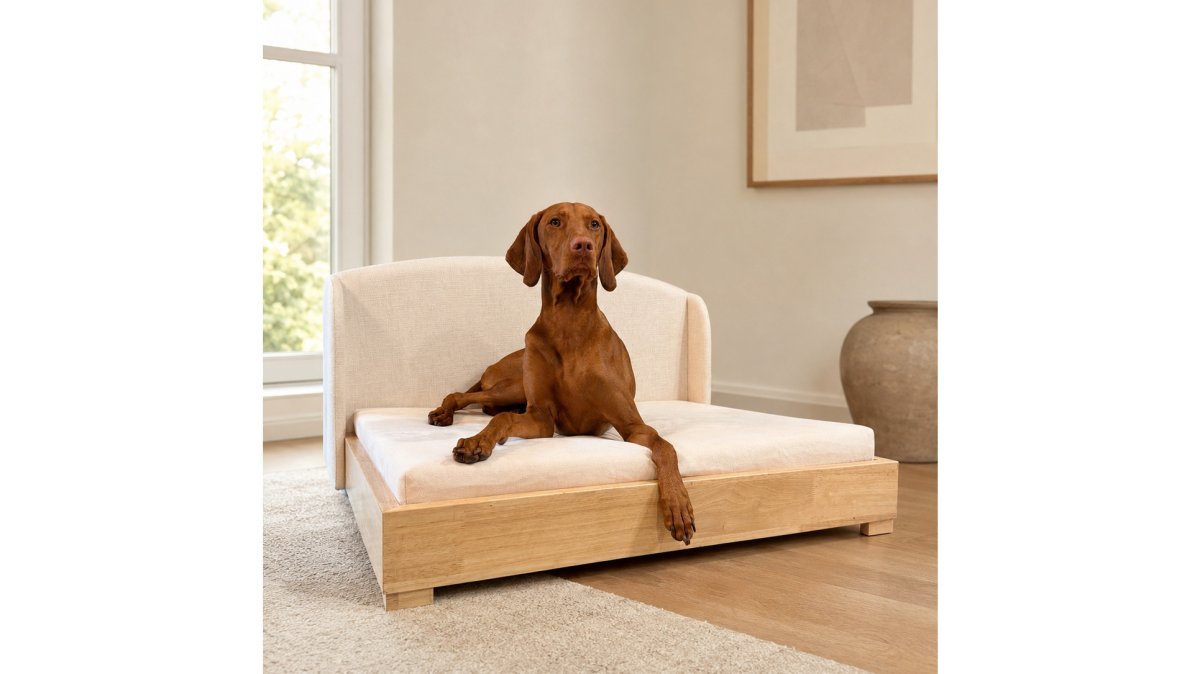
The Haven | Solid Hardwood Orthopedic Dog Bed →
- Kitchen boundaries during cooking and mealtimes
- Stairwells for puppies and senior dogs with joint issues
- Doorway control when paired with a dog-proofed room
Pressure-mounted gates suit doorways and are easy to move. Hardware-mounted gates are safer at the top of stairs, where a leaning dog can push a pressure gate loose.
What gates do not do is contain a dog for hours. A jumper clears most standard heights, and a chewer can work at the mesh.
Crate Alternatives for Large Dogs
Large dogs are the hardest case, and the reason many owners go looking for crate alternatives for large dogs in the first place. A crate big enough for a 70-pound dog takes serious floor space, and many large breeds dislike the tight fit anyway. The right answer depends less on weight than on three behaviors: how it chews, how it escapes, and how it settles.
Match the option to the behavior, not just the size
- The chewer. A dog that works at mesh or bars will defeat most soft-sided pens and many pressure-mounted gates. A dog-proofed room with anchored furniture and cord covers is the safer bet, because there is less to chew and nothing to push over.
- The jumper and climber. A dog that clears a 36-inch pen will clear a 48-inch pen given a foothold. Look for pens with vertical bars rather than mesh, no crossbar near the top, and panels tall enough that the dog cannot stand on a bed or box and vault out. Height beats length every time.
- The pusher. A dog that leans on a pen and slides it across a hard floor needs corner anchoring, zip-ties to a wall, heavy furniture at two corners, or a pen with floor-gripping feet.
The realistic options, ranked by how well they hold up to a large dog:
- A dog-proofed room. The best fit for most large dogs. A spare bedroom or a sectioned-off corner of a living room gives the dog room to turn around, stretch out, and settle, and it is the hardest option to defeat.
- A heavy-duty exercise pen. Look for taller panels, vertical bars, and a frame that cannot be shifted. Large dogs test the base first, so anchor the corners before you trust it.
- A gated zone. Combine a wide, hardware-mounted gate with a dog-proofed area rather than relying on the gate alone.
What does not work well is a small pen or a tight crate used as a long-term solution. A large dog that cannot stand, turn, and lie flat will let you know, and a dog uncomfortable in confinement is more likely to chew, dig, or escape.
Cost and space at a glance
A dog-proofed room costs the least to buy (often under $100 in gates, latches, and cord covers) and the most in floor space. A heavy-duty exercise pen runs roughly $80-$250, folds flat, and takes a modest footprint.
This is also where the resting surface matters. A large dog spends more hours on its bed than anywhere else, and a thin cushion flattens within months.
Puppy Confinement Without a Crate
Puppy confinement without a crate is workable, but it demands a schedule rather than a box. Puppies need frequent trips outside, and the system rests on getting them out before an accident happens.
A workable routine looks like this:
- Morning: straight outside, then food and water, then outside again within 15 minutes
- Every 1 to 2 hours during the day: a trip outside, with praise and a treat on success
- After every nap, meal, and play session: outside immediately
The pen or dog-proofed area does the crate's job: it limits space so accidents are easier to catch and clean. The difference is that you must be more deliberate about timing, because a pen does not discourage soiling the way a snug crate does.
A waterproof liner earns its keep here. Our beds ship with a sealed liner under a zip-off cover that machine-washes cold, which turns a puppy accident into a load of laundry.
Conclusion
Choosing among dog and crate alternatives comes down to one question: does your dog need containment or a place to rest? Many dogs need both, usually a pen or gated room for management plus a proper bed for recovery.
That second piece is where we can help. The Haven suits dogs up to 55 lb, The Modern Day Bed brings a low-profile lounge shape to modern rooms, and The Circle works as a sculptural ottoman-style bed for smaller dogs.

Get started with Mafé Pets and give your dog a resting place worth coming home to.
Frequently Asked Questions
What can I use instead of a dog crate?
The main crate alternatives are exercise pens, baby or pet gates, a dog-proofed room, and indoor kennels. Each trades some containment for more space. A pen suits dogs that need room to move but not the run of the house. A gated room works for calm dogs that settle easily. For dogs that chew or climb, a sturdy pen with a top panel is usually the safer pick. Match the option to your dog's size, temperament, and escape habits rather than picking the cheapest one.
Are dog playpens a good alternative to crates?
Playpens work well for many dogs, especially puppies and dogs that dislike tight spaces. The dog playpen vs crate choice comes down to purpose. A crate is small and limits movement, which helps with housebreaking and travel. A pen gives more room and is easier to leave a dog in for longer stretches. Pens are less effective for escape artists, so check the height and latch strength. For dogs that jump or climb, look for a pen with a cover or a taller panel height.
Can I leave my dog in a dog-proofed room instead of a crate?
Yes, if the room is genuinely dog-proofed and your dog settles there without stress. Remove cords, trash, toxic plants, and anything chewable. Block access to furniture edges and closets. Test the room in short sessions first, starting with 15 to 20 minutes and building up. A dog-proof room for dogs suits calm, older, or lower-energy dogs best. Dogs with separation anxiety often do worse with more space, not better, so watch for stress signals before extending alone time.
What is the safest crate alternative for a large dog?
For large dogs, a heavy-gauge exercise pen with reinforced latches or a dedicated indoor kennel is usually the safest option. Standard baby gates are too low and too light for a determined large dog. Look for pens at least 48 inches tall with welded frames and ground stakes if used outdoors. Crate alternatives for large dogs also need enough floor space for the dog to stand, turn, and lie flat. Check the weight rating before buying, and never rely on a lightweight pen for a dog that has already escaped one.
How can I keep a puppy safe at home without a crate?
Puppy confinement without a crate works best with a small pen or a gated, dog-proofed area near where you spend time. Keep the space free of cords, small objects, and toxic plants. Set a potty schedule: out first thing, after meals, after naps, and every one to two hours while awake. Take water up two hours before bed. Use washable bedding with a waterproof liner, since accidents will happen. Supervise free time and shorten it until the puppy reliably settles.

